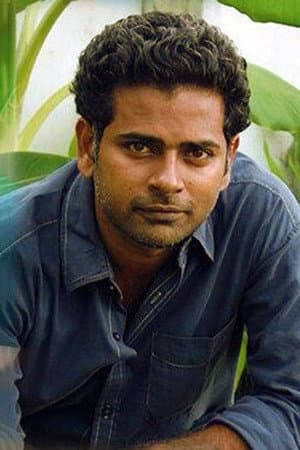
Malayalam cinema's real strength is its bench. The performers who carry scenes without carrying the poster are what allow the industry to make as many films as it does, and Vishak Nair sits firmly in that group. Look across his filmography and the through line is recognition rather than scale: a dozen titles, several of them among the most watched Malayalam films of their years, with the roles varying widely in size. For readers outside the region, it helps to know how the industry is built. Malayalam cinema, the film industry of Kerala, produces a large number of relatively modestly budgeted films each year. Behind its leads sits a deep pool of supporting performers who move between projects, often several in a single year. A career like this one is best read as a record: what appeared, when, and what each part shows about how the industry works.
A Body Of Work Built On Recognition, Not Scale
The Early Roles: Aanandam And The Campus Film
The campus film is one of Malayalam cinema's most durable formats. It builds a story around a group of students rather than a single lead, so the weight is shared across an ensemble. In 2016, Vishak Nair appeared in Aanandam as Kuppi, and the part is a useful illustration of what such a film asks of a young performer. An ensemble has no room for passengers. Every member of the group has to register, and a character like Kuppi gives an early career a foothold precisely because the format is familiar and widely watched. Context, not comment: the film gave him a place in a format the audience already knew well.
The Films, And What Each One Added
The filmography is the spine here, and steady employment tells its own story.
Three titles arrived in 2017: Chunkzz as Yoodha Thaddeus, Puthan Panam as Sunil and Chembarathipoo as Balu. Three films in one year, across different kinds of stories, says something simple about how the industry uses a reliable supporting performer. A performer who can slot into different productions is a performer who keeps working.
The move into films with large youth audiences came with Hridayam (2022) as Andrew and Dear Friend (2022) as the brother of Shyam. Both parts are defined by their relationship to a central character. That is the normal shape of a supporting role in a youth film: the story belongs to someone else, and the job is to make that someone else's world feel populated.
Then the smaller titles and the bigger formats. Footage (2024) as Boy is a smaller entry in the filmography, and the brief supplies no plot, so the plain fact of it is what stands: a working performer's list includes modest films as well as large ones. Officer on Duty (2025) as Christy Savio and Identity (2025) as Nakul sit in two formats that depend on a deep cast, the police procedural and the thriller. Officer on Duty follows a demoted inspector investigating a counterfeit jewellery racket. Identity places him in a thriller, another genre that cannot run on its leads alone.
Lokah Chapter 1: Chandra (2025) cast him as Man at the pub, a small, named part in a film with a large audience. The plot follows Chandra, a reclusive woman working night shifts at a cafe in Bangalore, watched by two aimless bachelors across the road. The lesson for a reader is direct: a single scene can place a performer inside a hit.
The most recent entries are Chatha Pacha: The Ring of Rowdies (2026) as Cherian Maani and Unmadham (2026) as CPO. The first is a large ensemble comedy set in Fort Kochi around costumed wrestling; the second is a cold case story built around a police constable. CPO stands for civil police officer, the constable rank in the Kerala police. The spread of years and character names is itself the argument: a working performer's career is a list, not a single breakthrough.
The Kinds Of Roles He Returns To, And Why The Name Matters
The patterns are clear enough to group. There is the friend or brother in youth films, as in Hridayam and Dear Friend. There is the named supporting part in a thriller or procedural, as in Identity and Officer on Duty. There is the ensemble player in comedy, as in Chunkzz and Chatha Pacha. What connects them is that the characters exist in relation to someone else, in films that are watched widely. That is not a claim about craft; it is what the filmography shows.
For a reader outside the region, this is why the name is worth knowing. Malayalam cinema travels now, and the performers a viewer sees again and again across those films are the reason the industry feels like a coherent world rather than a series of one-offs. Vishak Nair appears in enough of those films, across enough years, that his name functions as a marker of a certain kind of Malayalam movie. Reference sources such as IMDb and Wikipedia maintain fuller film records for readers who want to trace the list. The plain point to close on: an industry is not only its leads, and a career like this one is the clearest evidence of that.