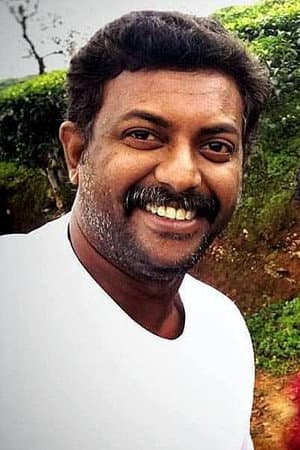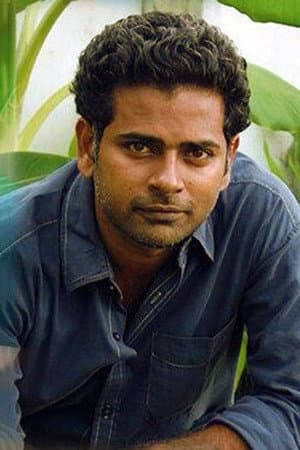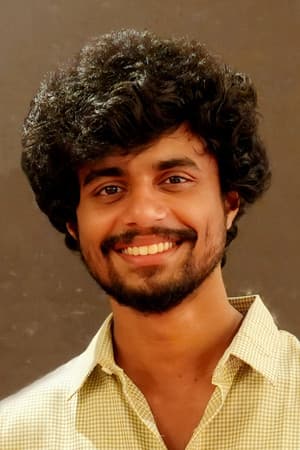
Sandeep Pradeep is a performer in Malayalam cinema whose record is built from the edges of the story rather than its centre. Six credited films make up the confirmed filmography: Pathinettam Padi (2019), Antakshari (2022), Falimy (2023), Padakkalam (2025), Alappuzha Gymkhana (2025) and Eko (2025). For readers new to how Indian cinema is described in English-language writing, "filmography" simply means the list of films a person has worked on. Read straight through, that list is not a run of leads. It is a run of named parts inside ensembles, double acts and group stories. That is the first thing worth knowing about this body of work: you meet the performer through a film's whole world, not through a single title role. The six titles also reveal a working pattern across genres, and it is that pattern, rather than any one film, that defines Sandeep Pradeep: A Career In Malayalam Cinema.
A Body of Work Built On The Edges Of The Story
Pathinettam Padi (2019), as Puthran, gave the filmography its earliest confirmed entry and its first look at a performer fitted into a young ensemble. The film, set among students of two Thiruvananthapuram schools divided by income, puts its cast inside a story about class friction and adolescent drift. One set of students struggles for survival while the other finds joy in drugs, and the two groups keep finding reasons to clash. A credit here is a credit in a crowded, socially minded film rather than a showcase part.
Antakshari (2022), as Karthik, moved the work into a narrower frame. It marks the point where the filmography lines up a named character at the centre of a film's dramatic business, and it shows range across the gap between a school film and a more contained adult story.
Falimy (2023), as Abhijith Chandran, contributed something different again. A family film is an ensemble by nature, and a role inside one tests whether a performer can hold a place among many. Coming between Antakshari and the three 2025 titles, it is the middle of the arc and the clearest evidence that the work travels between formats.
Then comes a cluster of three films in 2025, each in a separate register. Padakkalam, as Jithin, places the performer among four comic book enthusiasts whose school routine is interrupted by a charming new professor and a run of supernatural events: a young-cast comedy built on curiosity and a shared group. Alappuzha Gymkhana, as Shifas Ahammed, goes into sports and teenage failure, following students who fall short of their plus two exams and try to enter a common college through the sports quota by taking up boxing. By luck they survive the district-level competitions, and the question the film leaves open is what happens at the higher levels. Eko, as Peeyoos, is the furthest remove. In the misty hills of Kaattukunnu, an aging woman and a servant boy struggle to survive the ghosts of the past while the hunt for Kuriachan, a legendary dog breeder and outlaw, blurs the line between myth, memory and vengeance. A servant boy in a rural fable is a small part in a large frame, and it shows the filmography can stretch from school corridors to hill country without losing its footing.
The Thread Through The Titles
What connects the six is not a genre. It is a job description. In each film the performer is one member of a working group, and the group carries the story. That asks for something specific: the ability to be legible inside a crowd, to give a film its texture rather than its plot.
For a reader outside the region, this is the industry vocabulary worth learning. Malayalam cinema is widely discussed in terms of its ensemble storytelling, and its supporting players are the reason those ensembles feel inhabited. Reference sources such as the TMDb listings for these titles and the general overview of Malayalam cinema on Wikipedia treat the industry as one built on deep casts rather than a handful of names. Sandeep Pradeep's filmography is a clear case of that craft.
Roles Returned To, And Where The Name Sits
The parts return to a few kinds of character without repeating themselves. There is the young man in a school or college world, in Puthran in Pathinettam Padi and Abhijith Chandran in Falimy. There is the character anchored to a specific pursuit, whether boxing in Alappuzha Gymkhana or comic books in Padakkalam. And there is the witness to an older world, which is what Peeyoos in Eko amounts to. Karthik in Antakshari sits closest to the first of those. The throughline is youth under pressure: exam results, family expectations, a haunted hillside. The performer returns to that pressure again and again.