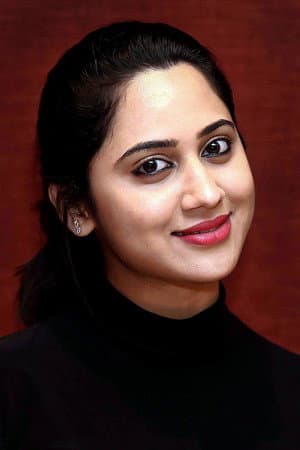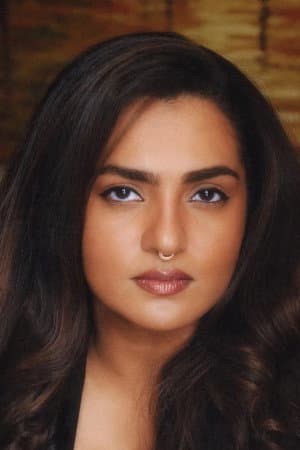
Parvathy Thiruvothu: A Career In Malayalam Cinema is not a story of volume. It is a story of selection. In an industry that rewards visibility, she has built a reputation on the parts she takes and the weight she gives them. The clearest proof of how that work is regarded came when she won the 2015 Kerala State Film Award for Best Actress for her performances in Ennu Ninte Moideen and Charlie in the same year. The Kerala State Film Awards are the state government's annual honours for Malayalam cinema, decided by a jury rather than by public vote, so a win there reflects peer judgement of craft rather than popularity. That distinction matters for anyone following her from outside Kerala. Her standing rests on what fellow practitioners make of the work.
Shaping a Career on Character
What connects her films is a preference for roles with an inner life. In each, the character carries the weight of a decision or a loss, and the performance is asked to hold the film together rather than decorate it. That pattern runs from her earliest work to her most recent, and it explains why her name on a cast list signals a certain seriousness of intent.
Recognition, in her case, is less about trophies than about trust. A jury honour is one marker, but the steadier one is the way filmmakers keep building parts that require an interior life. The performer who can carry a decision on screen without announcing it becomes the performer directors reach for when a story needs a centre. That is the shape of this career. It is not loud. It is deliberate.
The Films and What Each Added
Her debut came in 2006 with Notebook, as Pooja Krishnan, followed by Out of Syllabus the same year. Notebook stretched her range across a story of youth and its consequences. Time (2007), as Mary Thomas, kept her working steadily through a period when many young performers stall. Those early years established a working rhythm rather than a single breakthrough, and the range came before the reputation did.
The middle years brought the roles that define her reputation. Bangalore Days (2014) cast her as RJ Sarah, a radio jockey, the term for a presenter who hosts music and talk segments on air, a part that showed warmth and ease inside a large ensemble. Ennu Ninte Moideen (2015) gave her Kottatil Kanchanamala, a role of endurance in a story of separation. Charlie (2015) placed her as Tessa opposite a more elusive central figure, a film built on atmosphere and suggestion.
Take Off (2017) turned her towards suspense, as Sameera, one of a group of Malayali nurses stranded in Iraq and caught up in a hostage crisis. My Story (2018) put her at the centre as Tara. Virus (2019) placed her in an ensemble as Dr. Annu in a dramatisation of the Nipah virus outbreak in Kerala and the effort to contain it. Uyare (2019) gave her Pallavi Raveendran, and Aarkkariyam (2021) cast her as Sherley in a film of quiet, mounting unease.
The two 2026 titles extend the range again. In Pradhama Drishtiya Kuttakkar she plays Aleena, a widow who joins the police force through a compassionate appointment and finds herself in a contest of nerve and judgement. Compassionate appointment is a provision that allows a family member to take up a government post left vacant by a death in service. In I, Nobody she is Meera, while the story follows Rajeevan, a government employee who witnesses something he should not have and is drawn into a crime.
Roles She Returns To, and Why the Name Travels
Across these films a recurring figure emerges: a woman with a job and a public role who is tested by circumstances beyond her control. The radio jockey, the nurse, the doctor, the police recruit. The setting changes, the pressure does not. She also moves comfortably between films built around her and ensembles where she is one voice among several, which is part of why directors keep returning to her.
For a reader outside Kerala, the name matters because it tracks the industry's own movement. Malayalam cinema has built a reputation for tightly written, performance-led films that travel well beyond the region, and she sits at the centre of that current. Following her filmography is a practical way to chart it, from romance and drama to suspense and the procedural. Her place in Malayalam cinema is that of a performer whose choices, rather than their frequency, define the career. For background on the industry's wider reach, the Kerala State Chalachitra Academy and the National Film Development Corporation both document its institutional life.
That is the case for the name. Not output, but judgment. Not noise, but a steady line of decisions that has made her one of the more dependable presences in the cinema she works in.