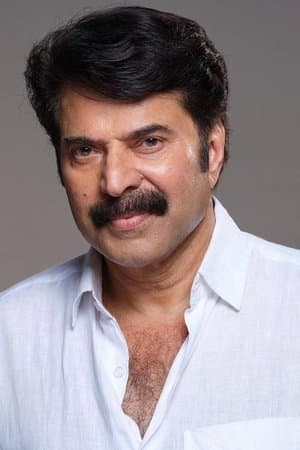
Mohanlal is one of the most recognisable faces in Indian film. Yet for viewers outside the south of the country, his name often arrives without context. He works in Malayalam cinema, the film industry of Kerala, a state on India's southwestern coast. That industry is modest in size compared with the Hindi-language output of Mumbai. It has long been regarded, though, as one of the most story-driven and technically accomplished in the country. Within that world, Mohanlal: A Career In Malayalam Cinema is not a story of one breakout role. It is a story of range, longevity and a willingness to keep changing shape.
 Photo: TMDb
The Many Faces of Mohanlal
Mohanlal Vishwanathan Nair made his acting debut in the unreleased film Thiranottam in 1978. His first release came in 1980, Manjil Virinja Pookkal, where he played the lead antagonist. That is worth pausing on. An antagonist is the figure who works against the main character, the obstacle or villain of the story. Many performers build a whole career from that slot. Mohanlal used it as a starting point.
Antagonistic parts followed in several films before he moved into leading roles, playing a wide variety of character types across comedy and action. The turning point in how the industry viewed him came in 1986 with the success of Rajavinte Makan, in which he played an underworld don. A "don" in this context is a crime boss, a gangland leader. That film earned him the label of superstar of Malayalam cinema, a tag that stuck even as his choices kept pulling against it.
What connects the work is not a single persona. It is an instinct for the specific. He tends to disappear into the ordinary textures of a character rather than announcing a performance. That quality is hard to sell in a poster and easy to feel on screen, and it is the thread running through everything below.
A Filmography of Extremes
The confirmed filmography is unusually wide, and a few titles show the spread.
In Khalifa: The Ruler (2026) he plays Mambarakkal Ahmed Ali, rendered in the story as Aamir Ali, a notorious gold smuggling kingpin who inherited a multi-million dollar criminal enterprise from a lineage of gangsters and is drawn into a web of vengeance, legacy and power. It is the kind of larger-than-life criminal register he helped define decades earlier, now played with age and weight behind it.
Drama (2018) sits at the opposite pole. Set in the United Kingdom, it follows the hilarious yet enthralling journey of a funeral director who sets out to fulfil the final wish of one of his clients. Here he plays Rajagopal, and the film trades on understatement and gentle comedy rather than scale.
Drishyam 3 (2026) returns him to Georgekutty, a character he first embodied in earlier instalments of the series. In this one, Georgekutty faces an organised new threat as he tries to protect his family and their dark secret, and the walls close in as cracks widen. The question the film poses is how much more he is willing to sacrifice. It is a study in an ordinary man under extraordinary pressure.
No. 20 Madras Mail (1990) casts him as Tony Kurushingal. En route to Madras by train, three friends are falsely accused of a mysterious homicide, escape, and desperately search for the real killer. It belongs to a looser, more youthful mode: travel, trouble and momentum.
Around these sit roles that show the same restlessness. In Bha. Bha. Ba. (2025) he is Ghilli Bala, known as Balettan. In Bro Daddy (2022) he is John Kattadi. In Red Wine (2013) he plays ACP Ratheesh Vasudevan, an Assistant Commissioner of Police, a senior investigative rank. Udayon (2005) has him as Shooranad Pappoyi and Shooranad Kunju, a double role. Older credits reach back through Cheppu (1987), where he is Ramachandran, and Aa Divasam (1982).
Why Mohanlal Matters Beyond Kerala
For a reader outside the region, the reason to learn the name is that his career maps the last four decades of Malayalam cinema almost single-handed. He has worked as an actor, producer and singer, and he has moved between crime sagas, family dramas, comedies and suspense stories without settling into one register. When a film industry wants to show what it can do, it tends to hand him the script.
There is also a practical reason. Malayalam cinema has grown far more visible to international audiences in recent years, and much of that attention runs back through his performances. Following his filmography is a shortcut to understanding the industry's instincts: dense plotting, moral ambiguity and a preference for character over spectacle.
His work rewards the viewer who arrives curious rather than nostalgic. Start with the extremes. A gangster epic on one side and a funeral director's quiet errand on the other. That gap is the career.
For related coverage of Malayalam cinema's wider output, see the British Film Institute and The Hindu for industry reporting.