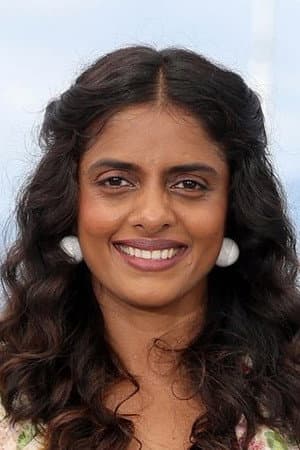
Kani Kusruti's career is easier to trace through choices than through volume. The filmography is short, and almost every entry seems picked rather than accepted. Part of the reason may sit in her training: she studied at L'École Internationale de Théâtre Jacques Lecoq in Paris, a school built around movement, gesture and the physical life of a performer. That background shows on screen. Her work reads as controlled and bodily rather than decorative, even in parts that last a few minutes. In an industry where "character work" means a performer who anchors an ensemble instead of carrying the lead billing, she has built a name almost entirely out of that kind of part.
A Body of Work Built on Small, Exact Choices
Her screen entry came through Kerala Cafe (2009), a segment film: one feature made of several short stories by different directors, shown together as a single whole. The format suits a performer who works in precise, contained units. It also gave her a first recognisable part, as Zeba, in a set of ten interconnected stories unfolding around a roadside railway cafe in Kerala.
From there the line runs to All We Imagine as Light (2024). What connects the two ends is selection rather than output. A performer without a single star vehicle builds a reputation across anthologies and independent features by being memorable in limited time. That is roughly the shape of this career: a handful of early parts in larger productions, a run of supporting roles, then a stretch of ensemble features where the writing gives her room.
📸
The Films and What Each One Added
The early commercial years show range across scale. In Shikkar (2010) she played a Naxalite; in Urumi (2011) a bard in a Chirakkal court. Small parts inside large productions, the kind of casting that tests whether a performer can hold a frame against a much bigger machine. A cluster of 2013 titles followed, among them the Police Commissioner in Oru Indian Pranayakadha, a special appearance in Hotel California (a short turn used to draw attention to a film, often barely a scene), and a role in Natholi Oru Cheriya Meenalla. The Dolphins (2014) gave her a named lead part as Varalakshmi.
Then comes Biriyaani (2021), the most demanding role in the confirmed list. As Khadeeja, a married woman confined within a household and forced to conceal her desires in the name of religious and social expectation, she carries a study of a life remade from the ground up after abandonment. The part asks for endurance rather than display, and it sits at the centre of the arc.
Pada (2022) as Sheeja PK and Super Sharanya (2022), where she appears as a pedestrian in a cameo (a very brief appearance, often a single beat), set a serious ensemble part against a comic walk-on. The recent phase pairs Mura (2024) as Asha with All We Imagine as Light (2024), in which she plays Prabha, a Mumbai nurse whose routine is unsettled by a gift from her estranged husband, and a trip to a beach town.
The Roles She Returns To, and Why the Name Travels
Pull the pattern out of the list and it holds. Women under pressure. Women inside institutions: a hospital ward, a police post, a courtroom, a household. Women whose inner life the film takes seriously rather than explains. The movement between Malayalam productions and independent films made outside the region is the other constant. All We Imagine as Light (2024) and Girls Will Be Girls (2024) carried her name to viewers who do not follow Malayalam cinema at all, and they carried it without changing what she does in a scene.
For a reader outside Kerala, the reason to know the name is simple. This is a filmography short enough to watch through, deliberately chosen, and each confirmed title shows a performer giving a small part the same care as a leading one. The record is the argument.
📸
To follow the industry's wider output, see coverage of Malayalam cinema on this site.
Sources: British Council Film, IMDb