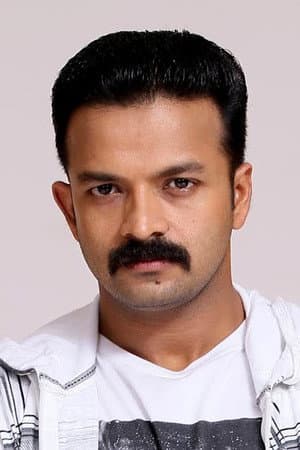
Jayasurya: A Career In Malayalam Cinema is a body of work built on range rather than a single defining role. He works in Malayalam cinema, the film industry centred in Kerala and one of the largest in India by output. His entry came through the smallest possible door: a debut in 2001 in Dosth as a junior artist, meaning a small, often uncredited part on set. The break-out came with Oomappenninu Uriyadappayyan, which gave him his first real foothold. Early work leaned on comedy and light roles, among them Swapnakkoodu, Pulival Kalyanam and Chathikkatha Chanthu. What connects those early parts to the drama-centric roles and character-led leads that followed is a willingness to change register. Here is a performer who moves from broad comedy to ensemble drama to serious character work, and that flexibility is the organising thread of the whole filmography.
Key Films And What Each Contributed
Comedy, ensembles and early range
The comic foundation was laid early. Pulival Kalyanam, Chathikkatha Chanthu and Swapnakkoodu established him as a dependable presence in light, fast-moving material. Classmates in 2006, as Satheeshan Kanjikuzhi, placed him inside a large ensemble, a film whose popularity rests on the group rather than on one lead. Shakespeare M.A. Malayalam and Gulumaal added further examples of comic and mismatched-partnership roles. Twenty 20 in 2008 shows the other end of the spectrum: a brief, tangential presence, appearing only in the song "He Dil Deewana". It is a useful reminder that early appearances ranged from leads to cameos.
The turn toward drama
By the 2010s he had begun taking on drama-centric roles, with Cocktail, Beautiful and Trivandrum Lodge marking the pivot. This was a shift in positioning within the industry, not a sudden change of profession: a performer moving from supporting comedy into heavier leads, a move not every comic performer manages. Kerala Cafe in 2009, as Vishal Krishnan, was part of an anthology, a film built from separate short stories by different directors. Iyobinte Pusthakam in 2014, as Angoor Rawther, is a period drama and one of the more expansive productions in the filmography. The contrast with the lighter roles is striking.
Character-driven and biographical work
Njan Marykutty in 2018 is the centrepiece. He plays Marykutty, also known as RJ Angel and Mathukutty, and produced the film. The story follows a transgender woman's journey through a society that stigmatises gender transformation. A lead role of this kind demands sustained emotional register and asks the performer to carry an unfamiliar perspective without caricature. It is the clearest example of the career's seriousness. Captain in 2018, as V P Sathyan, is a role drawn from a real figure. Vellam in 2021 as Murali and Punyalan Private Limited in 2017 as Joy Thakkolkaran, a film he also produced, add production as a second strand of involvement alongside performing.
The Aadu series and later work
The Aadu films are a comic series built around recurring characters. Aadu 3 Part 1 in 2026, as Shaji Pappan and Padmanabha Thamburaan, sets off reincarnations and multiple timelines, with the humour carrying the premise. Titans in 2026, as Antony Yakuza, a small-time gangster, offers a different tone: a heist premise with a stranger, shiftier edge.
Where He Sits, And Why It Matters
Jayasurya has been consistently present in Malayalam cinema across comedy, ensemble drama and character-led work, with over 75 films to his name. He is neither a niche specialist nor a genre-bound presence but a working performer able to hold comedy and drama in the same career, and he has repeatedly used that position to take on subjects that carry social weight.
Certain interests recur across the filmography: transformation and social stigma in Njan Marykutty, ordinary men in difficult circumstances in Vellam and Punyalan Private Limited, and comedy as a steady base throughout. These read as interests visible across the work rather than as any stated philosophy.
For a reader outside the region, Malayalam cinema is widely followed for its writing and its willingness to carry unusual subjects. A career like this one is a useful entry point because it touches so many registers: comedy in Classmates, social drama in Njan Marykutty, period filmmaking in Iyobinte Pusthakam, character study in Vellam, and the comic franchise energy of the Aadu series.
A short entry list might begin with Classmates for the ensemble, Njan Marykutty for the ambition, Iyobinte Pusthakam for the scale, and Vellam for the quieter register.
What emerges is a career whose value lies in the range itself, not a single role. Jayasurya: A Career In Malayalam Cinema is, finally, the story of a performer who kept changing the question he was asking of himself.