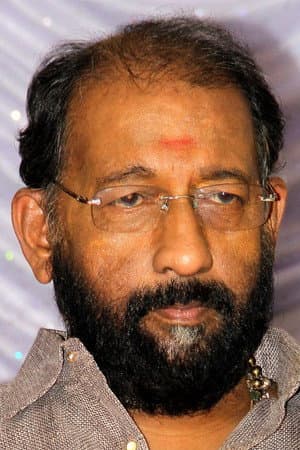
Anyone who watches Malayalam films from outside Kerala runs into the same recognition problem. A face keeps returning. It belongs to a father in one film, a comic foil in the next, a man of authority in a third. The performances change temperature every time, and the performer never steps outside the story to announce himself. That face belongs to Nedumudi Venu, and this is an attempt to put a name to it and trace what the name carried across four decades and into 2021.
The confirmed basics first. He worked in Malayalam cinema as a performer, and the body of work runs across the 1980s, 1990s, 2000s, 2010s and into 2021. Two pieces of vocabulary are worth fixing early, because a large part of this audience follows the industry from a distance. Malayalam cinema describes the film industry of Kerala, making films in the Malayalam language. A character performer, meanwhile, is a player who builds supporting and ensemble roles rather than carrying a film as its lead. Venu belongs in that second category. The distinction is not a downgrade. It is a specialism, and in an industry built on ensembles it is often the specialism that decides whether a fictional household feels lived in or merely assembled.
 Photo: TMDb
The 1980s And The Range Arrives
The record begins, for our purposes, with Football (1982), an early entry best noted as a starting point rather than a role we can describe in detail. What the same year shows is more instructive. In Ente Mohangal Poovaninju (1982) he plays Damu, a credit that places him inside the ordinary world of a romantic drama, the sort of part that asks a performer to be the grounding rather than the spectacle. In Yavanika (1982) he is Balagopalan, and the register is something else entirely. Two credits from one year, two different jobs. That pairing is the argument of this whole section: the range came early, not late.
Oru Kochu Swapnam (1984) gives him the role of Venu, the brother-in-law in a coming-of-age story about Sindhu, a teenage girl living with her sister Sulochana and Venu. He plays the household anchor while the film's tension runs through the younger characters around him, which is its own discipline. A performer holding the calm centre of a film about other people's turbulence has nowhere to hide and nothing to show off.
Mukunthetta Sumitra Vilikkunnu (1988) casts him as Kumaren Nair in a romantic comedy where Mukundan's life unravels when Viswanath, an old college classmate and conman, reappears. Here his place is in the comic machinery, the straight edge that lets the farce cut. Chakkikotha Chankaran (1989) makes him Prabhakaran Thampi, in the household comedy of Raghavan Thampi and Subhadra, whose son Prabhakaran wants to become a mridungam maestro. The mridungam is a classical South Indian drum, and the role is a young man choosing art over the marriage his parents want for him. Across these five credits a pattern is already visible: the same actor can be the romantic world's furniture, a mystery's suspect, a family's spine and a comedy's engine.
The 1990s And 2000s: The Parts That Stay
Manichitrathazhu (1993) is the best known title on the list and the one most likely to be a reader's first encounter with him. He appears as Thampy. It deserves its weight here not because it explains his career but because it is the film through which most viewers outside the region will have met the face. Treat it as the doorway, not the room.
Raktha Sakshikal Zindabad (1998) is a later 1990s title, and its use in this piece is different. It is evidence of continuity rather than a milestone, one of those credits that shows a working performer staying inside the industry's rhythm rather than surfacing only for the large films.
The structural change by this point is worth stating plainly. He has moved from young household roles to the older figures who hold a story's centre of gravity. The type of role shifts with age. The function does not. He remains the person a film places in a room so that the room reads as real, and in an ensemble tradition that is a promotion rather than a narrowing.