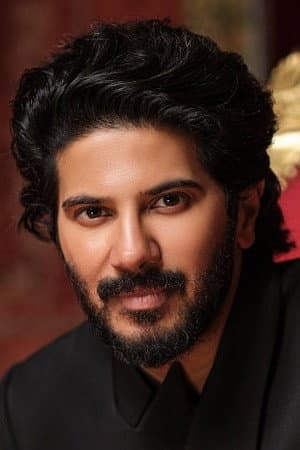
A social media post circulating widely in Malayalam film circles has revived an old question about how audiences perceive Dulquer Salmaan, framing it around his religious identity and asking whether viewers are content to enjoy his work on screen without ever engaging with that part of his life. The headline making the rounds translates roughly to "Didn't you know Dulquer is a Muslim? Is entertainment alone enough for you, Muslims?" The phrasing pushes a pointed argument: that fans from the community should think harder about the actor's identity rather than simply consuming his films as entertainment. No film is attached to the post, and the discussion centers entirely on the actor himself.
Dulquer Salmaan is the son of veteran Malayalam star Mammootty and is known to be a practicing Muslim, a fact that has never been concealed and has rarely been treated as a live topic in mainstream film coverage. He has spoken about his faith in interviews over the years, and his name itself has always carried that association publicly. That makes the premise of the viral post somewhat puzzling: it presents as a revelation something that was never secret. The more substantive question buried inside the provocation is not whether audiences knew, but why a section of commentators believes the fact should change the way his work is received.
The timing is notable. Malayalam cinema has spent the past several years arguing with itself about the relationship between a performer's private life and the public's right to judge it. Casting decisions, political remarks, and family histories have repeatedly spilled out of film pages into larger debates about representation and community loyalty. Posts like this one tend to ride that current, borrowing the language of accountability while offering little beyond rhetorical pressure. Framing a star's religious identity as a test for fan loyalty places an unreasonable burden on both: it asks audiences to sort their affection by community, and it asks an actor to function as a representative rather than a performer.
There is also the practical reality of Dulquer's career to weigh against the post's assumptions. Over roughly a decade and a half he has built a filmography that crosses Malayalam, Tamil, Telugu, and Hindi productions, with commercial hits and deliberately offbeat choices sitting side by side. His audience is not drawn from any single community; it spans languages, states, and generations. Polling that fan base for religious self-identification, as the post implicitly does, misreads how popular cinema actually works. Viewers respond to a screen presence and a body of work, and they are under no obligation to make a demographic statement by buying a ticket.
It is also worth remembering what such posts leave out. Public figures are entitled to a private life, and Dulquer has generally kept his family and religious practice out of the promotional circuit while being open when asked. He does not trade on his identity in marketing, nor has he hidden it. The gap between those two positions is exactly where the viral argument tries to find purchase, but the gap is small. Choosing not to center one's faith in a film's publicity is not concealment, and treating it as though it were says more about the author of the post than about the actor.
For readers who enjoy Malayalam cinema, the useful takeaway is less dramatic than the headline suggests. Dulquer remains one of the busiest and most widely followed performers in the industry, and nothing in this discussion alters the films he chooses or the way he is received at the box office. Whether one watches him as an actor, as a star, or as the son of a legend is a personal matter, and it need not be filtered through community expectations. The viral post is best read as a commentary on the conversation around cinema rather than as film news. It raises a question about fan ethics that has no single answer, and it does so around a man who never made his faith a mystery to begin with.
For Malayalam Movie Buzz, the story here is not a revelation about a star. It is a reminder that social media arguments about identity travel faster than any film release, and that the most provocative headlines are often the least informative.
Source: Filmibeat Malayalam