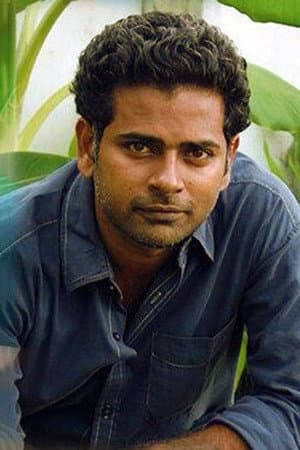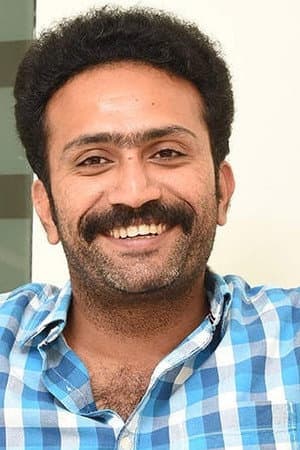
Most screen careers begin with a face. This one began with a tape measure. Indrans: A Career In Malayalam Cinema is, at heart, the story of a craftsman who kept walking toward the light until he stood in it. Before he was a performer, he was a tailor. Before that, he was the person making sure everyone else on screen looked right.
A Tailor's Entry Into The Industry
Indrans trained and worked as a tailor. That is the plainest possible beginning for a figure now counted among Malayalam cinema's most familiar faces. His route in was costume design: the job of choosing, making and sourcing the clothes performers wear on screen. His first film, Choothattam, carried him in both capacities. He designed the costumes and appeared in the film as well. The producer TMN Charley gave him the chance to assist in costume designing, and that role kept him inside the industry for several years. It is easy to underestimate what that means. Costume work puts a person in the rooms where films are actually assembled, among producers, directors and performers. It also teaches the unglamorous truth every production runs on: a film is a hundred small decisions made in order.
While taking minor parts in front of the camera, he learned the rhythm of sets from the wardrobe side first. Directors such as Padmarajan, Venu Nagavally, Shaji N. Karun, Sibi Malayil and K began casting him. That marks the shift from the wardrobe department to the set. For readers outside Kerala, this matters. Malayalam cinema has long absorbed people through craft roles first, letting them learn the trade from the inside before the camera ever notices them. Costume work was the doorway, not the destination.
The Films And What Each One Carries
A note on vocabulary. "Character roles" here means the supporting parts that carry plot and texture rather than the central lead. Indrans has built much of his standing in that register, and the range inside it is wider than the label suggests. In Pachakuthira (2006) he played Abraham Lincoln, a named comic turn from the middle of his working life. In Rakshadhikari Baiju (Oppu) (2017) he was Vilassan. In Udal (2022) he was Kuttichayan. Two roles from different decades of the same working life, and together they show how he moves across tone.
Ensemble work is a habit. Virus (2019), with him as Razak, is a large group film that shows how a supporting part fits into a structure built from many intersecting lives. The newer work stretches further. In Khalifa: The Ruler (2026) he is Hamsa, in a crime and smuggling story of the kind that uses a seasoned face to anchor its edges. Patriot (2026) casts him as Satheeshan in a thriller about a Malayali DRW analyst, DRW meaning the research wing of the police, who goes on the run and becomes a vlogger. Ananthan Kaadu (2026) places Krishnankutty in a period of political unrest and four musical mercenaries in dangerous slums. Bhishmar (2026) gives him Valiya Haji in a chance meeting that turns into a night of romance and action.
The remainder reads like a deliberately varied set of registers: Titans (2026), Aadu 3 Part 1 (2026) with him as P.P Sasi Aashan, Valiya Kelu and Baba, Chinna Chinna Aasai (2026) as Madhavan Mash, and The Third Murder (2026) as Swamy.
Why The Name Matters Beyond Kerala
The volume is the point. Indrans has appeared in over 250 films according to his biography, which places him among the durable working faces of Malayalam cinema rather than its lead-driven names. A reader outside the region can take one simple idea from that number. In Malayalam film, careers can be built on reliability. A familiar face is an asset a film leans on, a way of telling an audience what kind of story they are about to watch before a single line is spoken. For background on the industry's scale and reach, see the Kerala State Chalachitra Academy and the British Film Institute on Indian cinema.
What The Roles Have In Common
Small named parts with distinct identity. Comedy and gravity held together rather than traded off. Ensemble work as a habit rather than a fallback. That combination is why the presence of Indrans signals a particular kind of film: grounded, populated, interested in the people around the centre. For a newcomer, the instruction is simple. Watch for the supporting part that quietly holds a scene together. That is where this career lives.