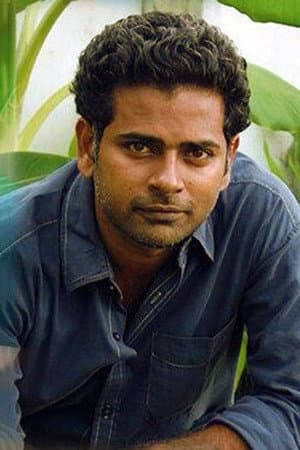
Biju Menon: A Career In Malayalam Cinema is not the story of one signature part. It is the story of a body of work that has moved, across roughly three decades, between lead roles, second leads and antagonistic turns without ever quite settling into a single mould. The confirmed filmography runs from Pathos (2000) to three titles in 2026. The distance between those points is the real subject: a performer who has been asked to carry comedy, domestic drama and outright confrontation, and who has answered each of them in the same recognisable register.
The Shape Of The Career
Malayalam cinema is the Malayalam-language film industry based in Kerala, in southern India. It has a long reputation for writing substantial character parts rather than reserving all depth for the top-billed name. A useful piece of trade vocabulary here is "second lead": the performer billed alongside the main lead, carrying a parallel romantic or comic track rather than the film's central arc. In a film culture that writes such parts generously, a steady second lead can become as familiar to audiences as the person at the top of the poster.
The record confirms that kind of range without spelling out every turn along the way. The earliest confirmed title in this brief is Pathos (2000). The most recent are Avaraachan & Sons (2026), Drishyam 3 (2026) and Valathu Vashathe Kallan (2026). Between them sit comic parts, gentle dramas, small-town men and at least two police officers. The through line is not a genre but a temperament: a performer trusted with the ordinary man, and interesting precisely because the ordinary man is never simple.
The Films And What Each One Adds
Comedy, Kinship And The Neighbourhood
The comic register shows up early in the confirmed list. Vellimoonga (2014) casts him as Mamachen and Mayamohini (2012) as Balakrishnan. Both parts turn on timing and a straight face rather than volume. That restraint is the point: the humour comes from a man behaving as though nothing unusual is happening.
Madhura Naranga (2015), with Salim, draws out the gentler, more sentimental side of the same skill. Marubhoomiyile Aana (2016) as Sheikh Ahmmadi and Orayiram Kinakkalal (2018) as Sreeram occupy the middle ground between comedy and mild drama, where a single change of tone can redirect a whole scene.
The clearest example of likability that has to be earned is Rakshadhikari Baiju (Oppu) (2017). Baiju Kumbalam is a kind-hearted government employee in his forties who spends most of his time with younger people and selflessly steps into the troubles of those around him. A film resting entirely on that man works only if the warmth feels lived in rather than sweetened. This one does.
The Face-Off
Ayyappanum Koshiyum (2020) is the hinge of the whole feature. As Ayyappan Nair, he plays an upright police officer whose principles collide with the pride of a retired army havildar, a non-commissioned rank in the army, who settles in his village. The film becomes a contest of egos. What matters is that the comic performer holds a stubborn, rigid man without softening him for the audience's comfort. Nothing about Ayyappan is played for charm. This is the clearest evidence that the range is deliberate rather than accidental.
The uniform was already in the toolbox. Twenty 20 (2008) casts him as ASP Jacob Eerali, an earlier police part and a reminder that authority figures have been part of the repertoire for a long time. Malayalam cinema has long used the double act as a storytelling form, two opposed men carrying the whole running time between them. This is the film in the list that leans hardest into that structure.
The Franchise And The Wider Bench
Drishyam 3 (2026) places him as Harikumar inside a long-running suspense series, where the plot follows Georgekutty protecting his family from an organised new threat. The value of a part like this is ensemble logic: a series this established works because its edges are populated by performers who can hold a scene without disturbing its centre. The brief makes no claim about how large the part is.
The recent slate shows the volume and variety still coming. Avaraachan & Sons (2026) gives him the title part of Avaraachan, and Valathu Vashathe Kallan (2026) casts him as Antony Xavier. Set against Pathos (2000), the earliest confirmed title here, they mark how far back the record reaches and how little the working pace has slowed.
Why The Name Travels
Where does this career sit? In the dependable middle and upper range of Malayalam cinema: a presence a director uses to steady a scene, whether the scene is comic, domestic or confrontational. It is a career of accumulated trust rather than a single breakthrough, built part by part until the face itself carries reassurance.