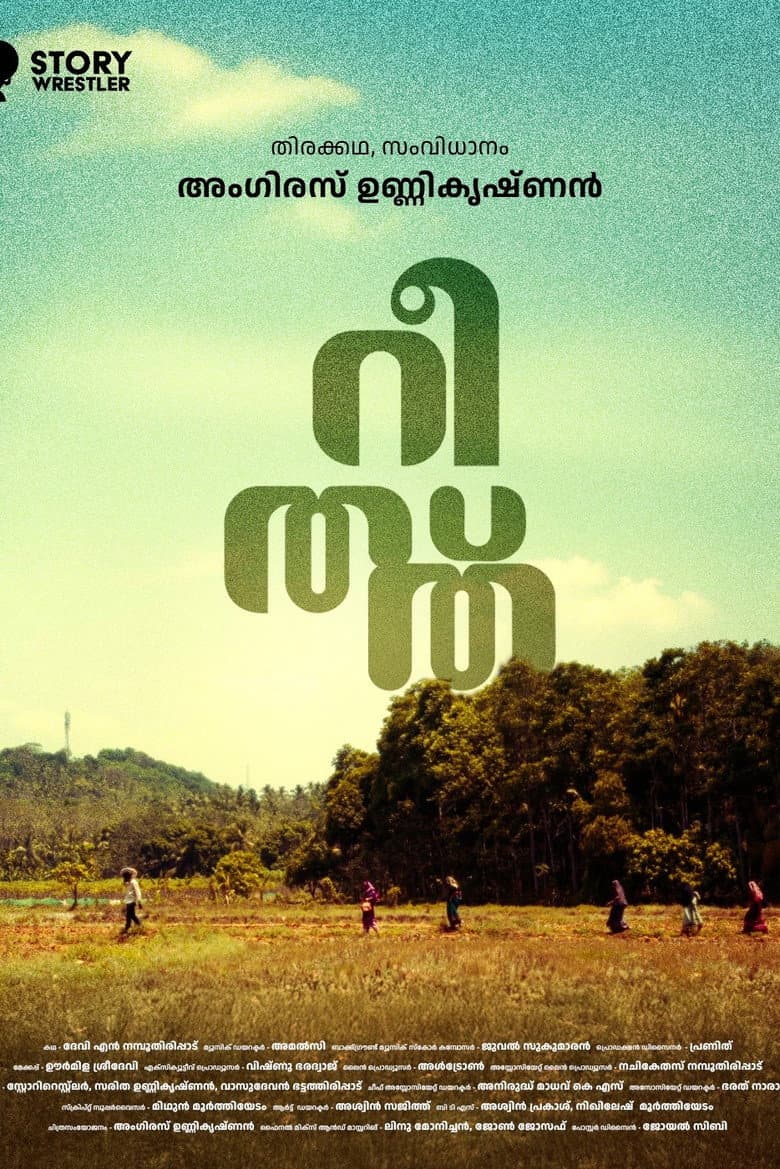
The first thing that strikes you about Angiruz Unnikrishnan's "Wreath" is its premise, which sounds less like a logline and more like the opening of a joke whispered in a staff room. A group of teachers, compelled by a principal's bureaucratic insistence, must attend the funeral of a former headmaster none of them ever met. They don't know the way. They don't know the man. They don't even have a map. What follows, over fifty-one unhurried minutes, is a journey toward a destination that refuses to reveal itself.
Released on October 1, 2026, "Wreath" arrives as one of the more curious entries in recent Malayalam cinema, a film that wears its Comedy, Documentary and Drama classifications lightly, moving between them without ever announcing the shift. It is a small film by design, and it seems to know it. There are no sweeping set pieces here, no grand declarations. Instead, Unnikrishnan builds his narrative out of the mundane friction of adults doing something they would rather not do.
The ensemble is led by Rajan Namboothiripad as the Headmaster, the absent figure whose funeral sets everything in motion, a presence felt more through the conversations of others than through any screen time. Around him, a cast of teachers carries the film's emotional weight. Devi Namboothiripad plays Latha Teacher, Parvathy Sudeep is Mini Teacher, Sreedevi P Namboothiripad appears as Rahna Teacher, Arya M.K as Suneina Teacher, and Bhawna Gupta as Anet Teacher. Nitin Thomas rounds out the staff as Joshy Master, while Amalzy appears as the Peon, a figure whose role in a funeral procession of reluctant educators hints at the quiet absurdity running beneath the surface.
What gives the film its texture is its refusal to treat the funeral as the point. The destination, after all, is a stranger. The real subject is the road, the bickering, the wrong turns, the silences between people who share a profession but perhaps little else. It is a comedy of obligation, and obligation, as anyone who has sat through a compulsory office function knows, is an endlessly renewable source of humour.
The documentary label attached to the film is intriguing, and it suggests Unnikrishnan is working in a register that blurs the line between observed reality and constructed fiction. Malayalam cinema has a long tradition of filmmakers who treat the everyday with anthropological seriousness, finding in ordinary rituals a kind of quiet revelation. "Wreath" appears to sit in that lineage, though its comedic instincts keep it from ever becoming self-important. A fifty-one-minute runtime is unusual for a theatrical feature, closer to an extended short, and it implies a filmmaker more interested in precision than in padding.
The title itself rewards a second look. A wreath is an object of mourning, but it is also circular, decorative, and slightly formal, the kind of thing purchased out of duty rather than feeling. That tension, between genuine grief and social performance, seems to be exactly the territory the film is mining. These teachers are not mourning. They are attending. There is a difference, and the film knows it.
It is worth noting that "Wreath" has arrived without the benefit of a populated rating on TMDb, where it currently sits at zero. For a film this small and this new, that says little about its quality and much about its reach. This is the kind of release that finds its audience slowly, through word of mouth and festival curiosity rather than opening-weekend noise.
What "Wreath" offers, then, is a modest proposition: a group of strangers, a journey without directions, and a dead man nobody can claim to have known. Unnikrishnan has assembled a cast of experienced performers and handed them a scenario that is equal parts comic and melancholy. Whether it lands as a gentle satire of institutional life or as something more tender is, for now, a matter of discovery. Still, the setup is irresistible. A funeral for a stranger, attended under duress, is a story that could only be told by someone who has spent real time inside a staff room, watching people navigate the small indignities of working together. "Wreath" appears to be exactly that story, told with patience and a dry, knowing smile.