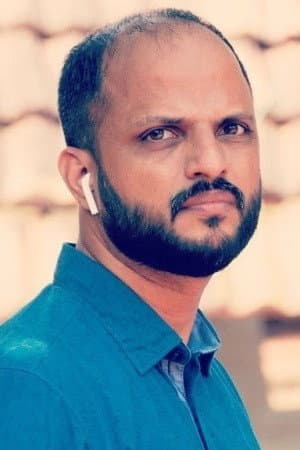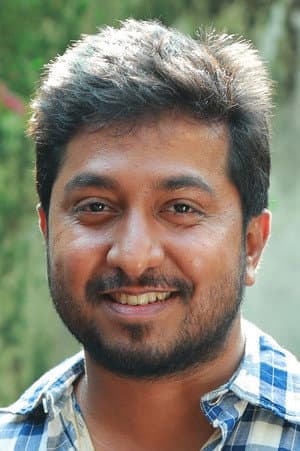
Vineeth Sreenivasan has sung, written, directed and performed in Malayalam cinema, and the range is the story. Call him a multi hyphenate and you have named the spread without explaining it. The songs came first. The screen followed. Writing and directing grew alongside both, and the performing never really stopped.
One term comes up whenever Indian film music is discussed. A playback singer is the voice recorded for a song that a performer on screen then mimes to, and it is how film songs are standardly made in Indian cinema. That matters here, because Vineeth Sreenivasan entered the industry through that door. The musical instinct runs underneath everything that followed.
His career makes more sense as a set of connected crafts than as a single job title. This piece follows the work, film by film, not the private life.
 Photo: Patti LaBelle Recording Session
From Singer To Screen
The film work began in music. He sang Kasavinte Thattamittu for Kilichundan Mampazham (2003), and the album Coffee @ Mg Road (2008) belongs to the same musical chapter. Acting arrived with Cycle (2008), so the singing and the screen work ran side by side from the start. Neither replaced the other. That overlap frames everything else.
Early Performance Work
Makante Achan (2009), Traffic (2011) and Chappa Kurish (2011) form the stretch that established him as a performer. Audiences outside the region tend to meet him here first, in films whose reputation carried well beyond Kerala.
Writing And Directing
Thattathin Marayathu (2012), as director and writer, announced a second function that was never really second. Hridayam (2022) and Varshangalkku Shesham (2024), both as writer and director, confirmed the point. The directing work carries his own voice. It does not read like a side venture bolted onto a performing career. The films he writes and directs share a sensibility with the ones he appears in, which is why the two strands are best discussed together.
 Photo: TMDb
The Comic And The Ordinary
A lighter register runs through much of the performance work. In Ohm Shanthi Oshaana (2014) he plays Dr. Prasad Varkey, in a film about a spirited young woman determined to marry the man who once helped her. Ormayundo Ee Mukham (2014), Oru Vadakkan Selfie (2015) and Kunjiramayanam (2015) share the same opening. These are comedies about recognisable people in recognisable families and towns, not heroes held at a distance.
Ensemble And Narrator Roles
Godha (2017) credits him as Narrator, a voice performance rather than an on screen one. 2018 (2023) casts him as Ramesh in a disaster film set during the 2018 Kerala floods, where he sits inside a large ensemble rather than at its centre. Thanneer Mathan Dinangal (2019) casts him as Ravi Padmanabhan. The pattern across these is scale: he works comfortably in a story that is not built around him.
The Darker And Stranger Turns
Mukundan Unni Associates (2022) gives him Adv. Mukundan Unni, a character driven by ambition and self interest rather than virtue, and Love Action Drama (2019) sits alongside it. Bha. Bha. Ba. (2025) casts him as Noble Joseph. Mollywood Times (2026) places him as Harris Basheer, in a story about a filmmaker chasing a dream of making horror pictures inside a difficult industry. Madhuvidhu (2026) includes him in a cameo, meaning a brief appearance by a known face that is usually not central to the plot.
What Connects The Work, And Why The Name Travels
Three threads hold the film work together. He writes his own material. He returns to comedy about ordinary people and families. And he takes on characters who are ambitious or self interested rather than heroic, which may be the most interesting recurring choice of the three.
None of this explains the whole industry to a reader outside Kerala, but it offers a starting point. A figure who sits across music, writing, direction and performance shows how the crafts of Malayalam cinema feed one another, and why a career there is often a cluster rather than a line. That is the reason the name is worth knowing. The story here is not one job done well but several done in conversation.