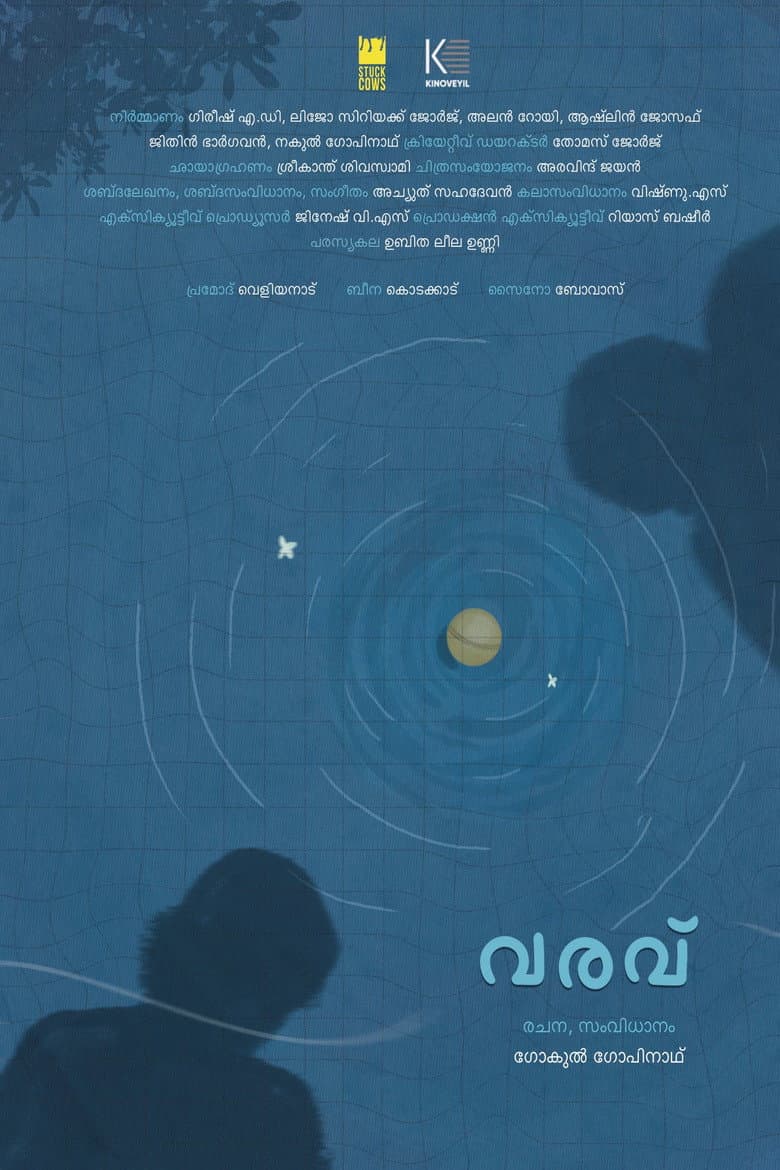
The mango is a stubborn fruit. It does not fall when called, nor does it ripen on command. It hangs there, a golden orb of patience, waiting for the right hand to pluck it. In Gokul Gopinath’s quietly devastating short film, Varav (The Visit), that hand belongs to Padmanabhan, and the act of reaching for it becomes the tremulous first step back into a life he thought he had already left behind. This is not a film about a fruit. It is a film about the weight of an ordinary request, and the extraordinary debris it unearths.
Released on July 9, 2026, and running a taut 27 minutes, Varav arrives with the humility of a whisper in a landscape often dominated by thunderous spectacle. Yet there is nothing small about its ambition. The premise is deceptively simple: a middle-aged couple, Padmanabhan and Sudha, exist in a state of mutual detachment, their days measured in the clink of teacups and the silence between sentences. Then Sudha asks her husband to climb to the terrace and pluck mangoes. That is the entire inciting incident. What follows is a masterclass in dramatic compression, where a single domestic chore becomes a psychological excavation.
The film’s strength lies in its restraint. We are not told why the distance between this couple has grown so vast; we are invited to observe it. Pramod Veliyanad, as Padmanabhan, delivers a performance of profound stillness. His body language suggests a man who has learned to occupy space without inhabiting it. He moves through the house like a tenant, not an owner. Opposite him, Beena Kodakkad’s Sudha is a portrait of coiled tension. Her request about the mangoes is delivered with a casualness that feels rehearsed, a line she has practiced in her head for years. The true drama is not in the words spoken, but in the pauses between them - the loaded glances, the hesitant hands, the breath caught before a revelation.
Gopinath, who directs with a confidence that belies the film's modest length, understands that the terrace is a threshold. As Padmanabhan ascends the stairs, the camera lingers on his feet, each step a descent into memory. The world above is sun-drenched and vivid, a stark contrast to the dim, cluttered interior of their home. It is up here, surrounded by the scent of ripe mangoes and the drone of bees, that the past begins to surface. The arrival of Shambhu, played by Saino Bovas, complicates the day further. Shambhu is not a catalyst but a mirror, reflecting back a version of Padmanabhan that has been long suppressed. His presence forces the quiet couple to confront the ghost that has been sitting at their table all along.
What makes Varav resonate is its refusal to sentimentalize. There is no sweeping score to tell us when to cry, no dramatic confrontation to release the pressure valve. Instead, the film trusts its actors and its silences. One sequence, in which Sudha watches Padmanabhan from the kitchen window, his silhouette framed against the harsh sky, is worth a thousand pages of exposition. You can feel the years of unspoken grief pooling in her gaze. Veliyanad, in turn, conveys a man's slow awakening to the cost of his own emotional frugality. The mangoes, when they finally fall, do not land with a triumphant thud but with a soft, almost apologetic roll across the concrete.
The title, Varav, translates to "The Visit." It is a clever misdirection. The visit is not Shambhu's, nor is it the mangoes' fleeting season. It is the visit of a feeling - of love, of regret, of recognition - that has been on a long journey and has finally decided to stop by. The film asks a daring question: Can a relationship be rekindled by the very thing that broke it? The answer it offers is neither hopeful nor cynical; it is simply human.
In a season of formulaic thrillers and overblown melodrama, Varav stands apart as a work of genuine cinematic craft. Gokul Gopinath has crafted a chamber piece that feels both deeply rooted in Malayali domesticity and universally moving. It is the kind of film that lingers not in the spectacle of its images, but in the space it leaves for the viewer to fill. Pramod Veliyanad and Beena Kodakkad deliver career-best work, their performances a duet of restraint and raw, buried feeling.
By the time the final frame fades, you realise that the film has not given you answers, but rather a feeling - the ache of a hand reaching for something just out of grasp, and the quiet miracle of finding it there after all. The mangoes will be eaten, the day will end. But the visit, as the film so tenderly suggests, is never truly over. It merely waits for the next ordinary request to bring it back to life.