There is a particular stillness that settles over a room when someone is close to death. It is not silence, exactly, but a gathered hush, as if the air itself is waiting. Malayalam cinema has long been drawn to that threshold, and this October it steps across it once more with The Soul Whisperer, a film that carries the quiet weight of its title without ever raising its voice. Directed by Leo Thaddeus, the drama opened in theatres on October 8 and runs a compact ninety-five minutes, yet in that span it asks a question that has outlived every generation that has ever asked it: how does a family finally lay down a grudge that was never theirs to carry in the first place?
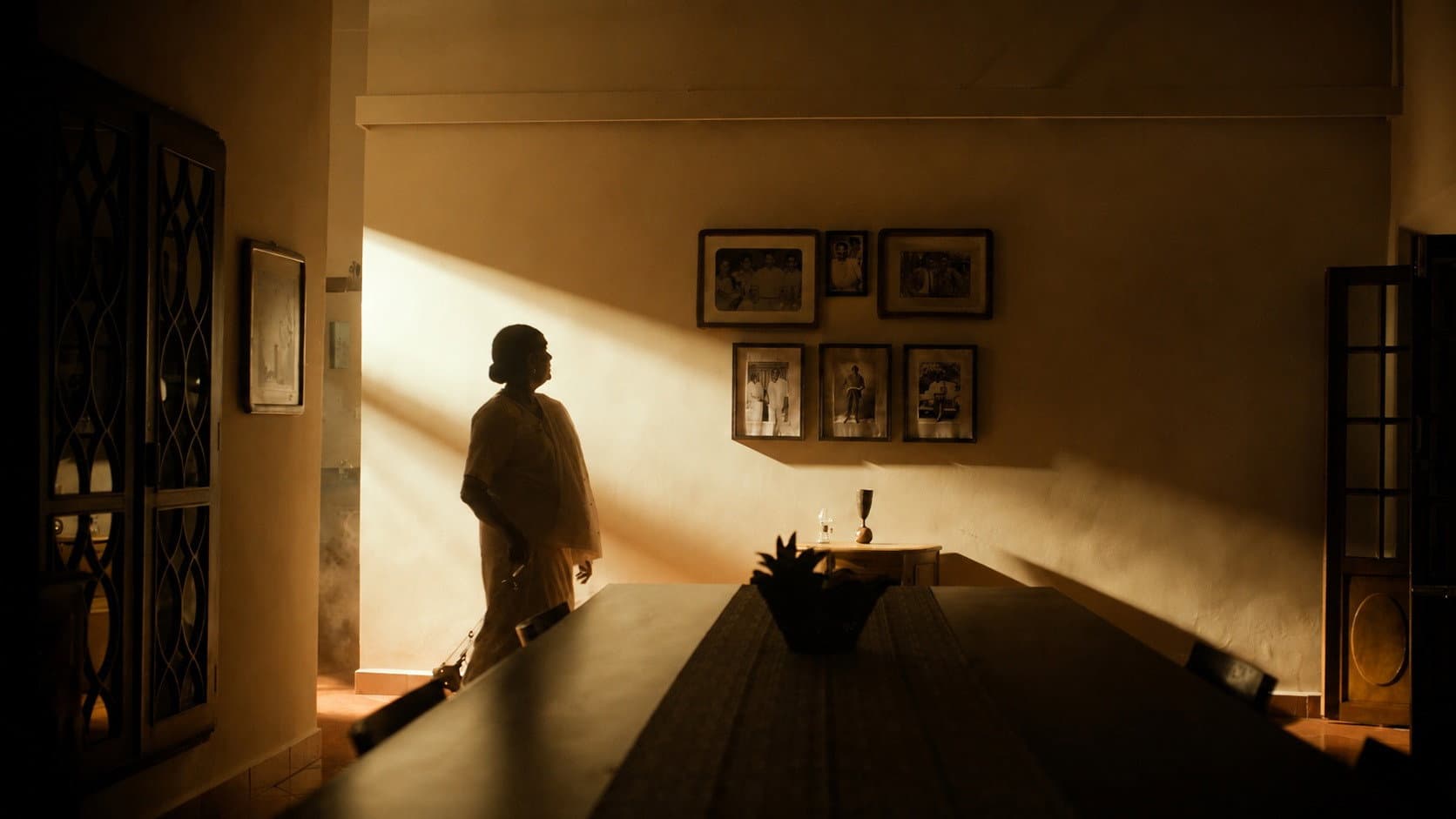
At the centre of the film is Theresia, played by Pauly Valsan, a woman who has made a vocation of other people's final hours. She sits by the bedsides of the dying, praying with them, steadying them, and gently guiding them toward whatever peace they are willing to accept. Hers is not a dramatic calling. It is the work of presence, of staying when others cannot bear to. When she arrives at the bedside of Payyammal Varkichan, a wealthy farmer portrayed by Dileesh Pothan, she finds not a man ready to be comforted but a man determined to refuse comfort altogether.
Varkichan is stubborn in the way that only the very proud can be stubborn. He has no intention of dying on anyone else's terms, and still less intention of showing weakness before his son George, played by George Kora, and George's wife, played by Parvathy Arun. The couple has returned after ten years away, and their arrival has the charged stillness of people who have come not to reconcile but to wait. The old man knows it. They know he knows it. And Theresia, sitting between them, must work with what little room that leaves her.
What follows, according to the film's own framing, is a reckoning with a long-suffering and inherited anger, the kind that passes from parent to child without anyone ever agreeing to receive it. Thaddeus appears less interested in who is right than in how a wound survives being handed down. The sin of the father, the silence of the son, the years neither of them will get back because neither will speak first, all of it circles the bed like a second pulse. Theresia's prayers are not magic. They are an invitation, and Varkichan, for most of the running time, is a man who has made a career of declining invitations.
The cast around Pothan and Valsan includes Srikant Murali, Jeo Baby, Parvathy Arun, and George Kora, a company of performers well suited to material that asks more of a glance than a monologue. Valsan, in particular, brings a weathered gentleness to Theresia, the sense of someone who has sat at so many bedsides that she no longer flinches at what she finds there. Pothan, meanwhile, gets to play a man whose bluster is itself a form of fear, and the film reportedly trusts him to let that crack show only when it costs him something.
It is worth noting what The Soul Whisperer is not. It is a Malayalam-language drama, made within the Mollywood industry, and it stays inside its own register rather than reaching for spectacle. At ninety-five minutes it does not sprawl. There are no reported box-office figures to weigh, no ratings to compare, just a TMDb score that currently sits at zero because, as of this writing, the votes simply are not in. The film's reputation will be settled by audiences, not by this page.
For now, what can be said is that the film arrives at a moment when Malayalam cinema keeps finding large truths in small rooms. A bedside, a prayer, a son who came back after ten years, an old farmer too proud to let go. The soul, the title suggests, needs whispering to. Perhaps the harder admission is that the living do too, and that the whisper is often the only inheritance worth leaving behind.