The Malayalam film industry has long possessed a peculiar genius for locating the uncanny in the most ordinary of settings - a family home, a fading afternoon, a chair that has known too many bodies. And on October 6, 2026, The Soul Whisperer arrives to stake its claim in that haunted territory. Directed by the quietly singular Leo Thaddeus, this 95-minute drama doesn’t announce itself with thunder. It creeps in through the back door, sits down in the drawing room, and waits - much like the death that refuses to arrive at the heart of its story.
Release Date & Where to Watch
Mark your calendars for Tuesday, October 6, 2026. The film will open in theatres across Kerala and select metropolitan centers in India, with a wider release pattern expected to follow in the weeks after. Given the industry’s current rhythms, a streaming premiere on a major Malayalam OTT platform is likely sometime in late 2026 or early 2027, but the producers have been wisely quiet on that front - this is a picture built for the dark, for the collective hush of a theatre where strangers hold their breath together. Malayalam Movie Buzz will confirm digital partners as soon as the ink dries, but for now, the theatrical window is the only gospel. At a taut 95 minutes, it’s the kind of film you plan an evening around, not a marathon.
Cast & Crew
The casting sheet reads like a roll call of Mollywood’s most reliable disruptors. Leading the charge is Dileesh Pothan as Payyammal Varkichan - an actor whose very stillness can generate more tension than most performers manage with a monologue. Pothan, better known to audiences as a director of immense restraint (Thondimuthalum Driksakshiyum, Joji), has been building a second career in front of the camera with selections that suggest a man allergic to vanity. Opposite him, the formidable Pauly Valsan takes on the role of Theresia, the old woman summoned to Varkichan’s home. Valsan, a veteran of Malayalam cinema’s character-acting renaissance, has an ability to suggest entire lifetimes in the droop of an eyelid. When she is on screen, the frame recalibrates around her.
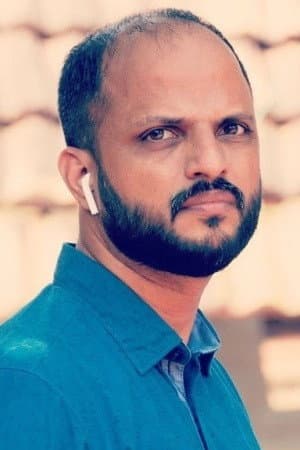
The ensemble is rounded out by George Kora, Parvathy Arun, Srikant Murali, and the ever-fascinating Jeo Baby - a filmmaker himself (The Great Indian Kitchen) who moonlights as an actor with unsettling ease. Behind the camera, Leo Thaddeus, a director whose previous work has been celebrated in festival circuits for its precision and moral ambiguity, operates with a clear vision. This is his most commercially positioned project yet, though “commercial” here is a relative term. The screenplay, reportedly developed over several years, treats its audience with uncommon respect.
Story & What to Expect
The setup is deceptively simple. Theresia, a woman whose reputation as a deathbed attender has made her a local institution, is summoned to the sprawling ancestral home of Payyammal Varkichan. The old patriarch is dying - or rather, he is failing to die. Days stretch into nights. The family hovers. Prayers are murmured. Food is brought and taken away untouched. But death, that most reliable of visitors, remains oddly absent.
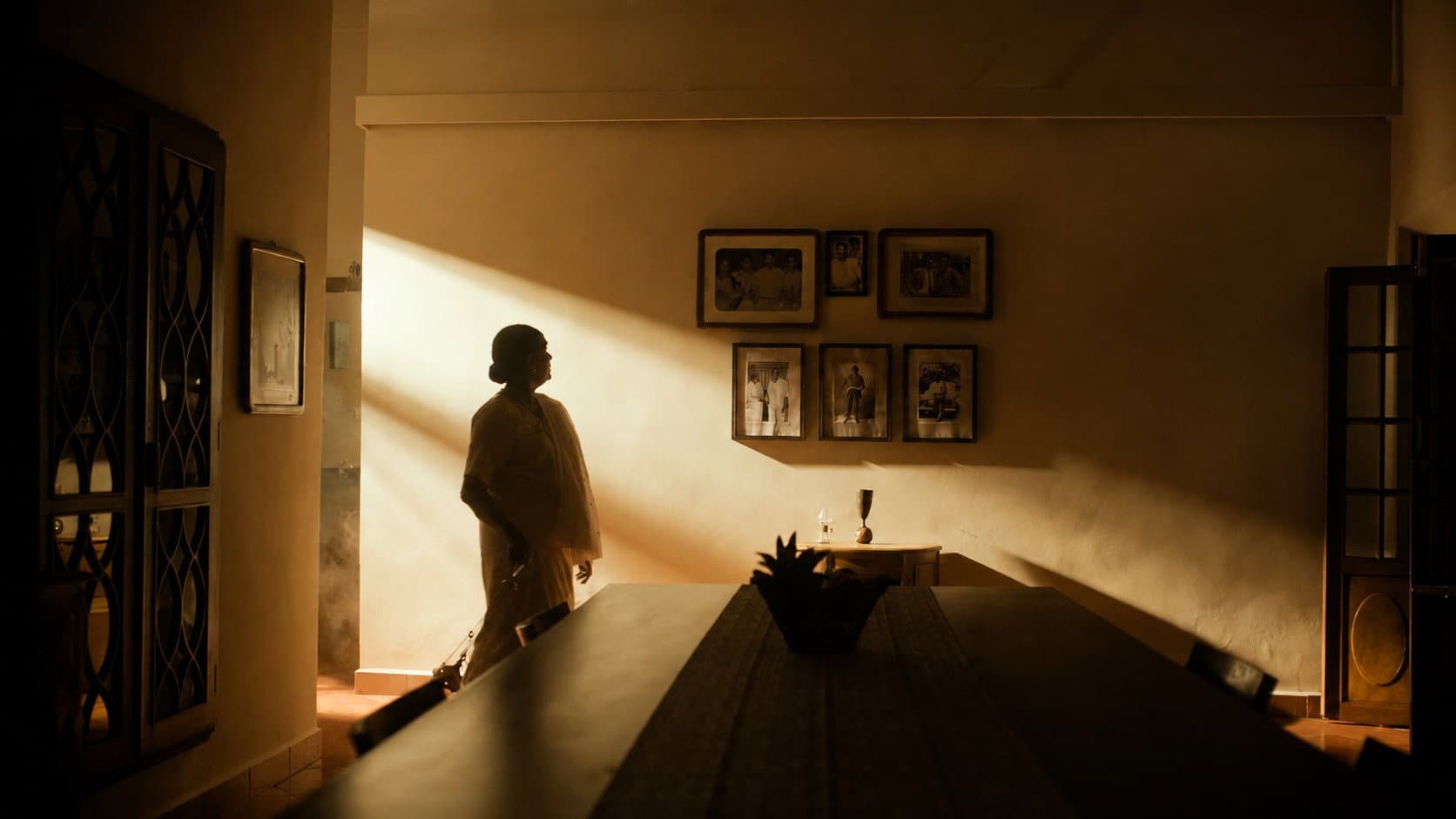
What begins as a ritual vigil - a formalised waiting game with its own ancient etiquette - mutates into something far less comfortable. Varkichan, suspended between this world and the next, becomes a mirror in which the living are forced to examine themselves. Buried histories surface. Long-suppressed grievances acquire voices. The house itself, with its creaking corridors and photograph-dusted walls, begins to feel less like a dwelling and more like a repository of everything no one dared say aloud.
Theresia is not a healer, nor is she a mystic in the cinematic sense - no glowing eyes, no cryptic pronouncements. She is a professional, a pragmatic woman who has learned that the dying often need more than comfort; they need confession, and so do the living. Her confrontation with Varkichan’s unresolved memories forms the film’s tense, unhurried core. Thaddeus reportedly shot the film in long, uninterrupted takes, trusting his actors to find the music in silence. Expect a movie that breathes slowly, that lingers on faces rather than plot points, and that treats the supernatural not as a genre convenience but as a psychological weather system.
Why It's Worth Watching
This is not a horror film, though its marketing may flirt with that vocabulary. The Soul Whisperer is a drama about the terror of unfinished business - the haunting that occurs when a person dies without having fully lived, or without having fully spoken. In an industry increasingly addicted to high-concept loglines and escalating spectacle, Thaddeus and his team have chosen patience as their primary special effect.
The pairing of Dileesh Pothan and Pauly Valsan alone justifies the price of admission. Pothan’s Varkichan is reportedly a man of few words but immense gravitational pull, a figure whose frailty masks a lifetime of hard decisions. Valsan’s Theresia, meanwhile, is no passive observer; she arrives as a function but becomes a force. Their scenes together, according to early whispers from the editing room, are the kind of two-hander performances that festivals build retrospectives around.
Moreover, the film’s thematic concerns are urgently contemporary beneath their period-gothic trappings. The notion of death as an event that must be managed, negotiated, even argued with, resonates in an era when so many of us avoid end-of-life conversations until they become emergencies. Theresia’s work is not about magic; it is about attention. And in a distracted world, attention can feel like the rarest miracle of all.
For audiences weary of films that explain everything and trust nothing, The Soul Whisperer offers a different contract. It asks you to sit with ambiguity, to accept that some doors are opened not by keys but by courage. It also promises that Dileesh Pothan, Jeo Baby, and Pauly Valsan will make you forget you are watching actors. The runtime is lean, the mood is thick, and the questions it poses will follow you out of the theatre and into your own quiet hours. On October 6, go see it. And if you can, bring someone you still owe a conversation.