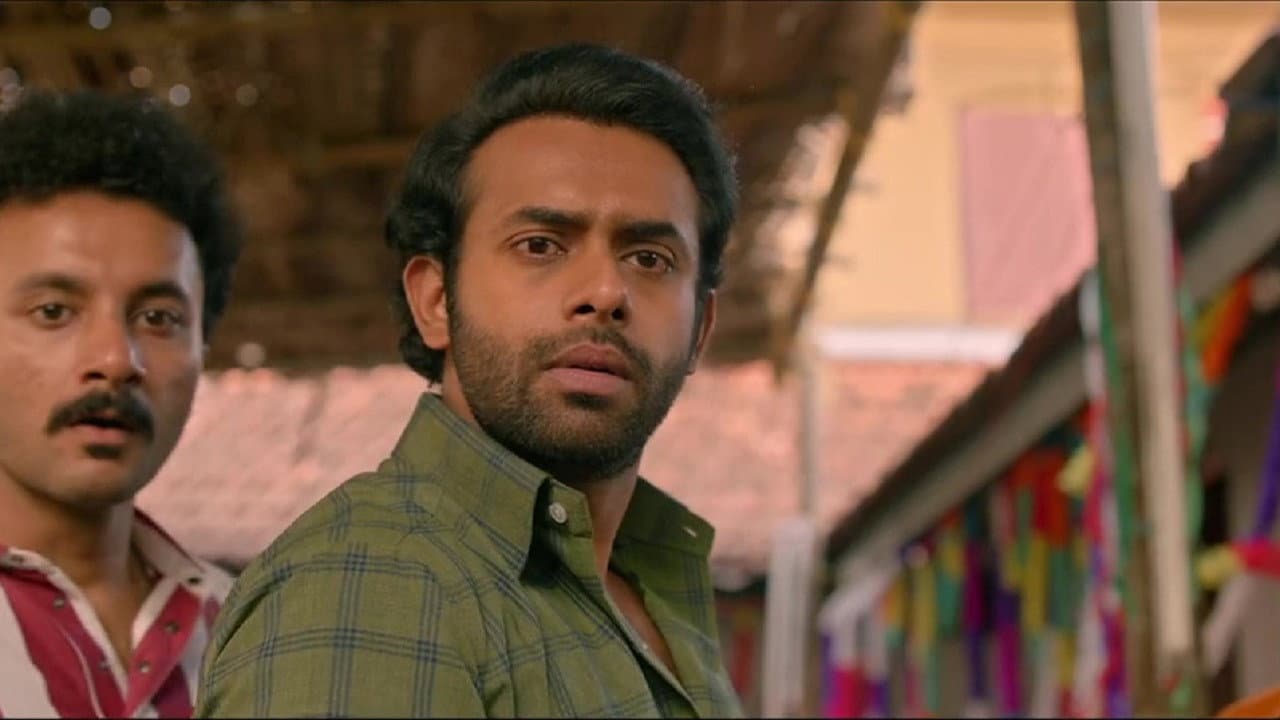
The curve doesn’t look like much on a map - just another bend in a sun-bleached road winding through rural Kerala. But ask anyone in the fictional town where Sumathi Valavu unfolds, and they’ll lower their voice, glance over their shoulder, and tell you the same thing: you don’t stop there after dark. Not since Sumathi.
That’s the playground director Vishnu Sasi Shankar has built in his latest feature, a genre-blending ride that arrived in theaters on August 1, 2025, and refuses to leave the conversation. Titled after the haunted stretch itself, the film uses a 1990s backdrop - all landlines, cassette players, and monsoon-soaked evenings - to spin a tale that’s equal parts chill, chuckle, and quiet tragedy. With a runtime of 135 minutes, it’s a long, unhurried drive down a road that rewards patience, even when the fog rolls in.
At its core, Sumathi Valavu is a mystery told through the eyes of those who intersect with the curve. We meet Appu (Arjun Ashokan), a young man whose casual bravado dissolves the moment his scooter sputters to a halt near the infamous spot. He’s not alone for long. A motley crew of seekers, skeptics, and believers converges: Bhama (Malavika Manoj) arrives with a journalist’s notebook and a rationalist’s frown; Hari (Saiju Kurup) is a middle-aged everyman carrying guilt like a second wallet; and then there’s Ambadi (Balu Varghese), whose comic timing gives the film its winking heartbeat. Around them orbit Deepa (Sshivada), Alli (Devanandha), Bhadhra (Geethi Sangeetha), and Mathi (Jasnya Jayadeesh) - women whose fates tether the narrative to Sumathi’s own unfinished story.
Shankar, known for his ability to juggle tones without dropping the ball, structures the film like a series of campfire stories that slowly braid into one. Each character encounters the same phantom - sometimes a flicker of a sari in the periphery, sometimes a disembodied humming that syncs eerily with the wind - but everyone experiences her differently. The trick isn’t in scaring you senseless. It’s in making you wonder whether the horror is supernatural or human. The film leans into that ambiguity with a screenplay that treats its ghost as a symptom, not the disease.
What’s striking is how seamlessly the comedy sits beside the dread. One moment, a character is fumbling with a broken flashlight, his panic played for laughs; the next, the camera lingers on a shadow that bends the wrong way, and the laughter dies in your throat. It’s a delicate balance, and the cast handles it with evident chemistry. Ashokan, in particular, does some of his most assured work here, pivoting from jittery comic relief to genuine pathos as Appu uncovers a detail about Sumathi that reframes everything. Malavika Manoj’s Bhama provides the film’s intellectual spine, but it’s Geethi Sangeetha’s brief, searing turn as Bhadhra that lingers longest - proof that Maxie’s shadow isn’t the only one that looms over this story.
The 1990s setting isn’t just nostalgia dressing. It allows Shankar to strip away modern distractions - no smartphones, no instant GPS - forcing characters to rely on word of mouth, old letters, and the kind of communal fear that spreads through tea shops and temple steps. The production design nails the era without fetishizing it; the phones ring with that metallic clatter, the buses wheeze diesel smoke, and the rain falls in sheets that blur memory and reality. Cinematographer [credit not provided] shoots the titular bend with a sense of architectural menace - it’s a road that seems to lean inward, conspiring against those who traverse it.
But for all its atmosphere, the film occasionally stumbles on its own ambitions. The tonal swings, while mostly controlled, can feel jarring in the second act, where a prolonged comedic sequence involving a bumbling local constable (a lively cameo) undercuts the dread that had been carefully accruing. And the final revelation - which ties Sumathi’s death to a land dispute and a patriarchal cover-up - feels both earned and slightly rushed, as if the script ran out of hairpin turns before the finish line.
Still, the mystery holds. The film’s title, translated as “Sumathi’s Curve,” is revealed to be less a place than a verdict.
Audience response has been as split as the road itself - user ratings hover around a middling 5.6/10, and you can feel why. Viewers expecting a pure horror thrill ride may shuffle in their seats during the extended character dialogues. Those who want a straight drama might find the spectral interruptions gratuitous. But Sumathi Valavu is neither fish nor fowl; it’s a hybrid, like Kerala’s own roadside bakeries selling both fresh pazham pori and instant noodles. It’s messy, occasionally unfocused, but always alive.
What elevates the film is its final act, when Shankar stops explaining and simply lets the road speak. Without spoiling the climax, suffice it to say that Sumathi’s ghost isn’t angry at the living. She’s waiting for someone to ask the right question. When Bhama finally does, the film doesn’t dissolve into cheap jump scares. Instead, it offers a moment of terrible, human clarity - the kind that makes you rethink every laugh you’d shared earlier.
In a Mollywood slate crowded with glossy actioners and star vehicles, Sumathi Valavu might be easy to miss on streaming menus. Don’t. It’s a flawed, fascinating detour worth taking - especially if you believe, as the film does, that roads remember everything. And that some curves, like some griefs, never really straighten out.


