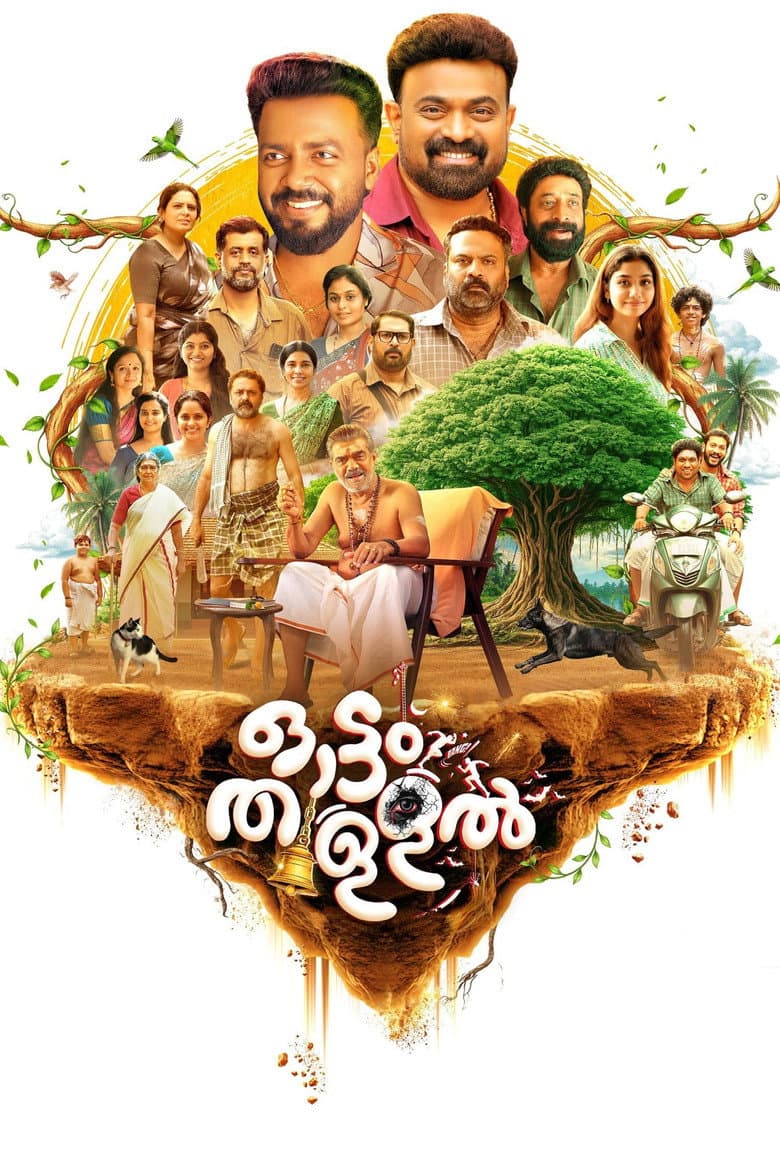
Priest Appu has a warning to give, and Methanam village would do well to listen. In G. Marthandan's Ottam Thullal, now running in Malayalam cinemas since September 18, that warning concerns a sacred Pala tree - and the consequences of ignoring it arrive with unsettling speed. Rajan, a local man, chops the tree down despite Appu's protest. Three days later, he is dead. That much is settled before the story truly begins.
What follows is where Marthandan's film finds its unusual rhythm. Appu, played by Vijayaraghavan, does not stop at one grim prophecy. He announces that five more members of Rajan's family will die within sixteen days. The village, already rattled, fractures into believers and skeptics. Leading the skeptic camp is Rajan's son, who dismisses the whole thing as superstition dressed up as fate. Rather than sit and wait to be proven wrong, the family begins a series of increasingly desperate - and increasingly comic - attempts to dodge what Appu has foreseen.
It is a premise that could have tilted fully into horror, and Ottam Thullal deliberately doesn't. The film is billed as a comedy-drama with family at its center, and the casting reflects that intent. Vishnu Unnikrishnan leads a deep bench of Malayalam screen favorites: Harisree Ashokan, Kalabhavan Shajon, Pauly Valsan, Tini Tom, Manoj K U, and Sreepath Yan round out the ensemble. These are performers audiences know well, and their presence signals that the film's scares are meant to share space with laughter.
The title itself is worth pausing over. Ottam Thullal is a traditional performance art from Kerala - a solo dance form known for its satirical edge, its quick-footed movements, and its habit of turning sharp social observation into entertainment. A film borrowing that name invites the question of how its characters move: dodging, running, improvising, trying to stay one step ahead of a deadline they cannot see. Whether the film engages with the art form directly or uses it as a suggestive metaphor, the title carries a distinctly regional weight.
G. Marthandan is no stranger to stories rooted in place. His filmography has consistently drawn on Kerala's interiors, its belief systems, and the friction between old customs and modern doubt. Ottam Thullal sits comfortably in that territory. The conflict here is not simply one man against a curse; it is a family negotiating what it believes, and a village deciding whose word to trust. Appu is not presented as a villain. He issues his prophecy and then watches, which may be the more unsettling position of all.
The runtime of 116 minutes suggests a film that takes its time with character even as it sprints toward a sixteen-day countdown. That structural tension - slow-burn relationships against a ticking clock - is a familiar formula in Malayalam cinema, which has long excelled at blending tonal registers that other industries keep separate. Comedy and dread are not opposites here; they are roommates.
It is worth noting that Ottam Thullal arrives with no aggregate audience rating yet recorded on TMDb, which is unremarkable for a film less than two weeks into its theatrical run. What matters more is the response of the audiences who have found it since September 18. In a crowded Malayalam release calendar, a film must offer something distinctive. A sacred tree, a priest who will not be ignored, and a family trying to outrun a countdown is, at the very least, a specific proposition.
The film's emotional core seems to rest on that family - on what people do when they are told their time is short. Some pray. Some panic. Some laugh, because the alternative is worse. If Ottam Thullal manages the balance its genre label promises, it will leave audiences doing something similar: caught between a shiver and a smile, waiting to see which one wins.
Ottam Thullal is in theatres now.


