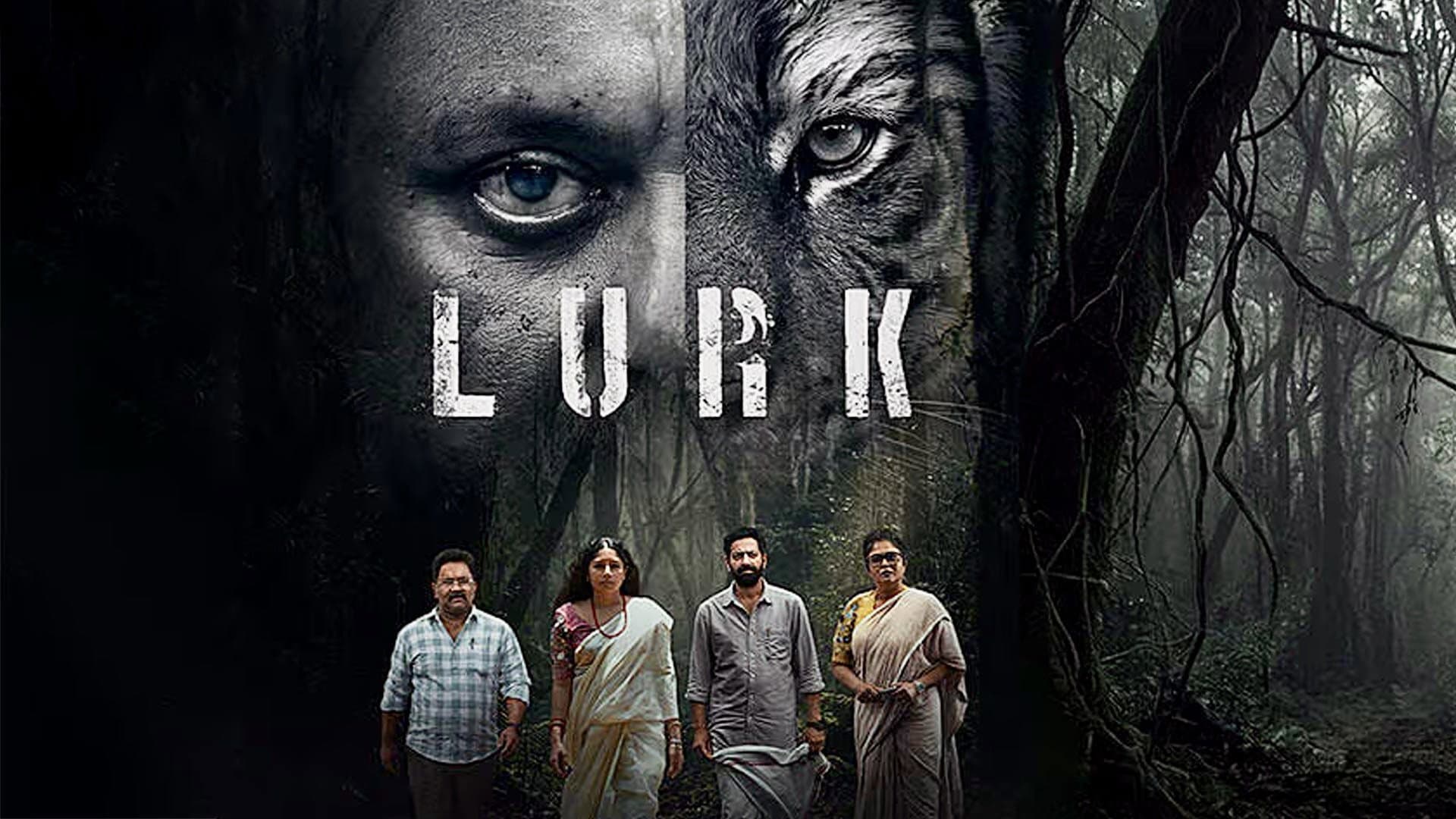
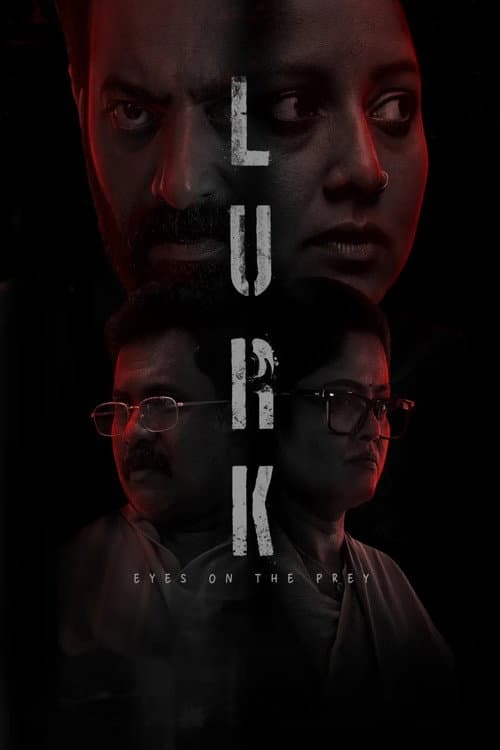
The air in the Kerala high ranges has a particular quality this time of year - heavy, damp, and charged with the tension of boundaries dissolving. The forest line creeps closer to homesteads, and the night sounds are no longer just background noise; they are warnings. It is this specific, visceral anxiety that Nishad M A captures in LURK, a taut thriller that arrived in theatres on July 24 and continues to linger in the collective imagination of Mollywood audiences. The film, clocking in at a lean 123 minutes, does not waste a single frame in its exploration of man-animal conflict, but the deeper question it posits is far more uncomfortable: who is the real predator in this equation?
The film’s premise is deceptively simple. A community on the fringes of a wildlife sanctuary finds its daily rhythm shattered by a series of incidents that blur the line between animal instinct and human malice. What begins as a familiar story of crop-raiding elephants or a rogue tiger quickly spirals into something more psychologically intricate. Nishad, working from a script that draws direct inspiration from real incidents reported across the Western Ghats, refuses to offer easy villains. Instead, he places his ensemble cast - a microcosm of village society - inside a pressure cooker where fear mutates into suspicion, and suspicion hardens into something far more dangerous.
At the heart of this maelstrom is Aju Varghese, and this is not the Aju Varghese of lighthearted comedy that audiences have adored for a decade. He sheds his affable everyman persona with startling ease, embodying a forest department officer whose idealism has been worn down by bureaucratic apathy and the relentless encroachment of human need. Varghese’s performance is a masterclass in restraint; his eyes carry the exhaustion of a man who has seen too many carcasses, both animal and human, and his quiet fury simmers beneath a placid surface. Opposite him, Saiju Kurup delivers a career-best turn as a local contractor whose business interests depend on the forest’s continued exploitation. Kurup is not a pantomime villain; he is unsettling precisely because his logic is so chillingly pragmatic. The ideological clash between these two men is the film’s engine, and their confrontations crackle with a tension that dialogue alone cannot defuse.
The film’s true strength, however, lies in its refusal to grant the audience a comfortable perspective. The cinematography by the technical crew deserves special mention - the jungle is not merely a backdrop but an active participant in the drama. The camera lingers on the dense undergrowth, the iridescent shimmer of a snake’s scales, the unnerving stillness of a waterhole at dusk. These are not tourist-postcard images; they are ominous, suggesting that the wilderness is watching, judging, and waiting. Nishad M A understands that the most profound horror is not the sudden attack but the anticipation of it. The sound design amplifies this dread, using the cacophony of insects and the distant rustle of leaves to keep the audience perpetually off-balance.
The supporting cast reinforces the film’s grounded realism. Manju Pillai, as a panchayat member torn between political survival and genuine concern, brings a brittle authority to her role. Anumol, playing a veterinarian who becomes the moral compass of the narrative, delivers her lines with a clarity that cuts through the hysteria around her. Prasanth Alexander, Biju Sopanam, and the veteran T G Ravi populate the periphery with characters who feel achingly authentic - farmers who have lost livestock, laborers whose livelihoods depend on timber, and elders who remember when the forest boundary was respected. Muthumani Somasundaran adds a layer of cultural complexity, representing a voice from a neighboring state, reminding us that wildlife conflict knows no administrative borders.
What elevates LURK beyond a conventional thriller is its philosophical ambition. The title is a double entendre; the animal lurks in the shadows, but so does the human capacity for greed, revenge, and self-deception. There is a sequence midway through the film, involving a baited trap, that is so morally ambiguous it will provoke debates long after the credits roll. Nishad does not spoon-feed his audience an environmentalist sermon. He presents the tragedy of the situation - the inevitability of conflict when habitat shrinks and desperation grows - and asks us to decide where our sympathy should lie. The answer, the film suggests, might be more complicated than we would like to admit.
With the TMDb rating still at a neutral zero, indicating a fresh release awaiting wider audience aggregation, LURK is a film that demands to be seen on its own terms. It is not a crowd-pleaser in the traditional sense, but it is an essential one. In a cinematic landscape often dominated by high-octane action or formulaic family dramas, Nishad M A has crafted a slow-burn thriller that respects the intelligence of its viewer. It is a haunting exploration of the fragility of the human-animal divide, and a reminder that the most terrifying beast is often the one that walks on two legs. As the monsoon rains lash the Kerala coast this August, the questions raised by LURK will continue to echo, refusing to be washed away.