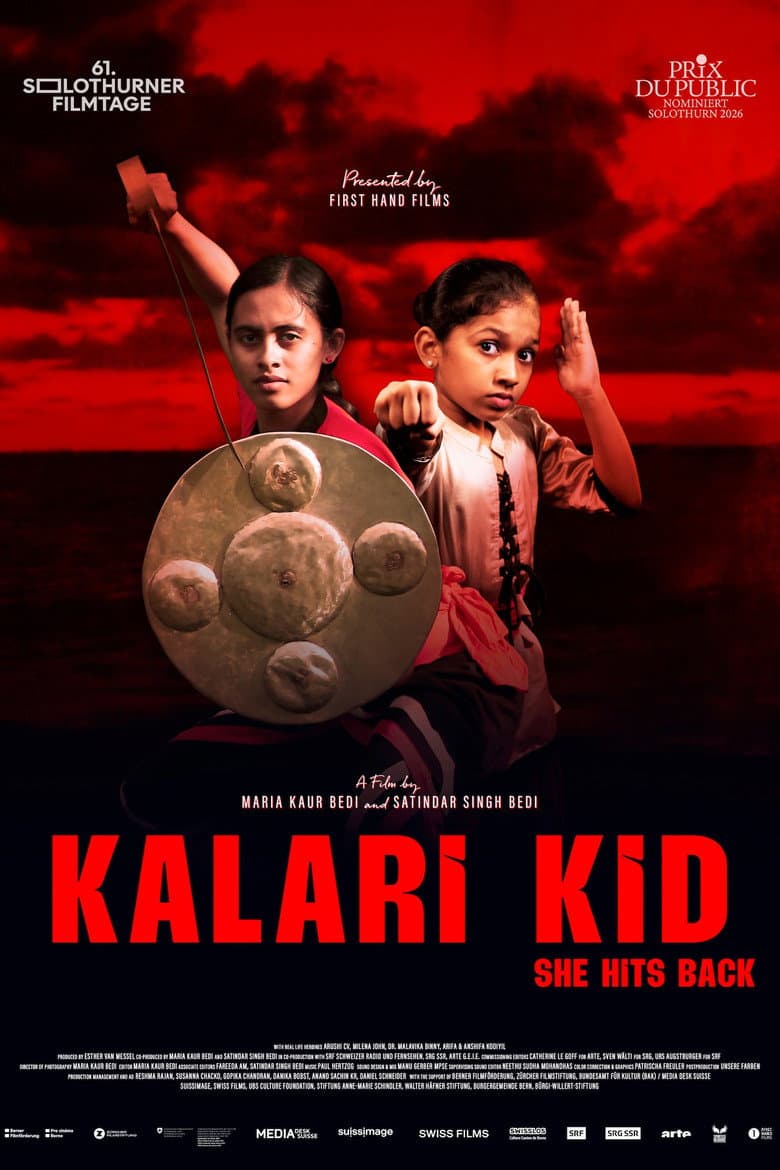
The sky over Thiruvananthapuram is the colour of a bruised monsoon, but inside the screening room, the air is electric with something far more potent than the pre-monsoon humidity. Today, September 1, 2026, a small, fierce film titled Kalari Kid - She Hits Back arrives in Mollywood, and it doesn’t so much premiere as it lands a punch. This is not the usual multiplex spectacle. It is a 93-minute documentary that feels less like a movie and more like a battle cry, delivered in the oldest martial language known to humankind.
Director Maria Kaur Bedi, whose previous work has quietly dissected the intersections of tradition and trauma, has crafted a film that refuses to be a passive viewing experience. At its core are two protagonists separated by age but united by a singular, urgent need: to reclaim space in a society that has systemically tried to shrink them. Nine-year-old Arushi and twenty-one-year-old Milena are not actors. They are practitioners of Kalarippayattu, the ancient martial art that Bedi’s camera captures with a reverence that borders on devotional. The film’s title is a misdirection; this is not a simple revenge fantasy. It is a study in the slow, sweaty, gruelling process of becoming unafraid.
The opening sequences are deliberately jarring. We see the world through Arushi’s eyes: the hesitant way she enters a room, the weight of a male gaze that she is too young to name but old enough to feel. Then, Bedi cuts to Milena, a young woman navigating the cramped corridors of a college campus where casual touch is a currency and silence is a survival tactic. The documentary’s genius lies in its refusal to dramatise the violence. There are no flashbacks of assault, no reenacted horrors. Instead, the threat is omnipresent, a low hum of gendered expectation that the film renders as a physical entity. You feel it in the way a bus conductor’s hand lingers, in the sharp command from a father to a brother, in the sudden, suffocating quiet of a room when a woman speaks too boldly.
And then, the Kalari. The mud floor of the training hall becomes the film’s true protagonist. Bedi’s camera does not flinch from the physical cost of empowerment. We watch Arushi’s small hands crack against a training pad until they are raw. We see Milena’s breath hitch as she is thrown, again and again, onto the packed earth. The soundtrack is not a soaring score but the percussive rhythm of breath and impact, the slap of feet, the hiss of exertion. It is unglamorous, and it is riveting. The film’s thesis is simple and devastating: empowerment is not a revelation, it is a rehearsal.
What makes Kalari Kid feel so vital is its refusal to offer easy catharsis. There is a sequence where Milena, after months of training, finally manages to disarm a male senior who has been asked to spar with her. The audience in the theatre I attended let out an involuntary gasp. But Bedi holds the shot. There is no slow-motion triumph, no triumphant close-up. Instead, Milena looks confused, then exhausted, then quietly, almost imperceptibly, proud. The moment is hers, but the film refuses to celebrate it as a cure-all. The next scene shows her walking home alone, her gait changed, but the streetlights are still dim.
Arushi’s arc is even more delicate. The documentary wisely avoids turning her into a miniature action hero. Her questions to her mother, her moments of childish frustration when the forms feel pointless, are given as much weight as her breakthroughs. In one haunting scene, she is asked why she wants to learn to fight. She pauses, her brow furrowed, and replies, as translated in the film, “Because I want to walk to the shop without being told to be careful.” It is a line of devastating simplicity, a child articulating a freedom that should be a given but is instead a privilege.
Bedi’s direction is restrained to the point of austerity. She eschews talking-head interviews for the most part, letting the bodies do the storytelling. The Kalari master, an older woman whose face is a map of discipline, offers little commentary, but her presence is a silent rebuke to a culture that often sidelines the wisdom of older women. The film’s Malayalam dialogue is sparse, and Bedi lets the physical language dominate. This is a documentary that understands that trauma is stored in the body, and it is the body that must be retrained to release it.
Kalari Kid - She Hits Back is not a comfortable watch. It lacks the polished narrative of a conventional sports documentary, and its 93-minute runtime is dense with unglamorous reality. Yet, it is precisely this rawness that makes it essential. In a Mollywood landscape increasingly dominated by big-budget star vehicles, this is a film that returns the medium to its documentary roots, using the camera as a tool for witness rather than spectacle.
As the credits roll, Arushi and Milena are shown practising outside, the monsoon rain hammering down on the mud. They do not stop. The water sluices off their limbs, and for a moment, the rain feels less like a threat and more like a baptism. The film’s title promises a fight, and it delivers - but the hits are not explosive. They are incremental, patient, and utterly unyielding. The final image is not of a knockout, but of two women standing in the rain, their stances grounded, their eyes forward. Tomorrow, they will go back to the shops, the buses, the streets. But they will go armed with something that cannot be confiscated: the knowledge that they can hit back. That is the quiet, thunderous victory of this film.