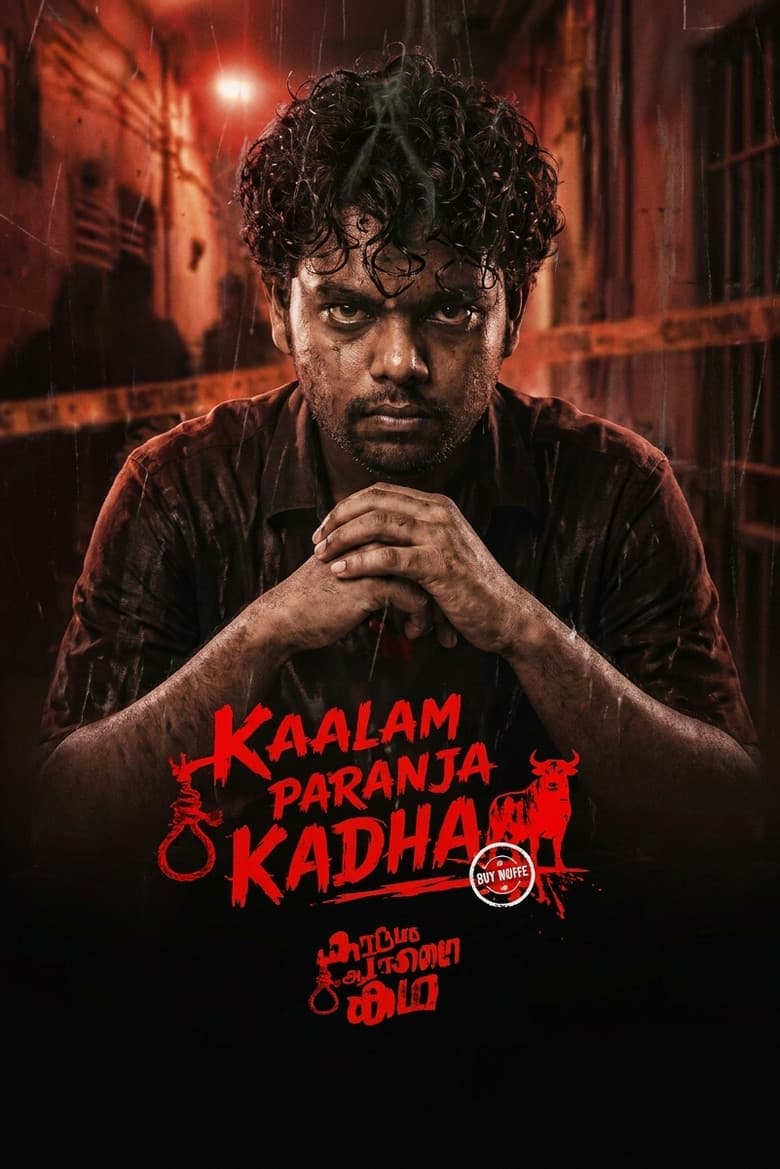
The image is almost incomprehensible in its clarity: a figure, unmasked and unhurried, committing murder number four, five, six - all before the sun has reached its apex. There is no shadow to hide in, no alleyway of moral ambiguity. The act is stark, illuminated, and utterly remorseless. This is the central, unsettling premise of Kaalam Paranja Kadha, the Malayalam crime thriller that released on July 31, 2026, and has since become the most talked-about, and arguably most disturbing, film of the year. It is not a whodunit. The audience sees the perpetrator from the very first frame. The profound, terrifying question that writer-director (whose identity remains a tantalizing mystery) forces upon us is not who, but why.
And that is precisely where the film refuses to give you a comfortable seat. The narrative does not offer a childhood trauma flashback to excuse the violence, nor does it dangle the tired trope of a split personality for a cheap twist. Instead, Kaalam Paranja Kadha - the title translating to "The Story Time Told" - functions as a cold, clinical dissection of a mind that has entirely renegotiated its contract with society. Our protagonist, a man whose name we barely register, is not a raving lunatic. He is disturbingly composed. He pays for his tea, nods politely at bystanders, and commits his atrocities with the detached efficiency of a man checking items off a grocery list. The film’s ninety-minute second act is a masterclass in tension, not because we root for him, but because we are trapped in his chilling pragmatism.
The genius of the film lies in its refusal to moralize. As the body count rises in broad daylight, the narrative pivots from the killer to the witnesses. We see a city that is simultaneously horrified and hypnotized. Here, Kaalam Paranja Kadha becomes less about the crimes and more about the societal schizophrenia they expose. The film posits a deeply uncomfortable question: in an age of hyper-connectivity and viral outrage, does a public atrocity become a performance? One sequence, destined to be studied in film schools, shows a crowd filming the aftermath on their phones, their faces a mix of terror and vacuous glee. The protagonist, standing amidst the chaos, looks directly into a lens and offers a subtle, almost imperceptible nod. It is the film’s thesis in a single gesture: the violence is not the point. The recognition is.
This is not a film for the faint of heart. The 139-minute runtime is lean, but the psychological weight is immense. The editing is surgical, cutting between the brutality and the mundane details of the killer’s life - his meticulously made bed, his neatly arranged spice rack. It is in this juxtaposition that the film finds its terror. This is not a monster lurking in the dark; this is the quiet neighbor, the polite commuter, the man who exists within the folds of normalcy. The screenplay dares to suggest that the logic driving these killings is not insane, but rather a horrifyingly rational extrapolation of a world that has become numb to spectacle. If no one truly sees us until we do something unthinkable, the film asks, then is the unthinkable not the only logical action?
Despite its bleak outlook, the film has become a phenomenon in Mollywood, igniting debates far beyond the cinema hall. Critics have been divided, with some hailing it as a nihilistic masterpiece that holds a mirror to our desensitized generation, while others have decried its unflinching depiction of violence without a cathartic resolution. Yet, the absence of a moral compass is precisely the point. There is no redemption arc, no final monologue explaining the "lesson." The film ends as abruptly as it began, leaving the audience in a vacuum of silence, forced to sit with their own conclusions.
The anonymity of the cast and director only amplifies the film’s bizarre mythology. In an industry driven by star power, Kaalam Paranja Kadha has stripped away celebrity to put the raw text front and center. You do not watch a star play a killer; you watch a killer. The lack of known faces lends a documentary-like authenticity that is deeply unnerving. It feels less like fiction and more like a leaked surveillance tape.
Kaalam Paranja Kadha is a violent poem about the loneliness of modern existence. It argues that the cruelest act is not murder, but indifference, and that in our frantic quest for relevance, we have all become potential protagonists in a tragedy we cannot comprehend. It is a film that does not ask for your empathy, only your attention. And in that chilling bargain, it manages to be the most essential and discomforting piece of cinema we have seen all year. You will not be entertained. You will be haunted. And that, perhaps, is the only honest reaction to a story that time itself was reluctant to tell.


