
A Performer The Industry Keeps Returning To
Jagadish: A Career In Malayalam Cinema is, on the plain record, a story about volume. The performer has acted in over 300 films across a career spanning more than three decades, a count supplied by his TMDb biography. That same entry notes the unusual shape of the career. He is best known for comedic roles, yet he also worked as a lead character performer in several sleeper hits during the early 1990s. A sleeper hit is industry vocabulary for a film that finds its audience slowly rather than on its opening weekend, building its reputation by word of mouth instead of a big first showing.
The biography adds two details that matter for anyone trying to understand the working life behind the filmography. Jagadish has also worked as a screenwriter on a handful of films, and before entering the film industry he worked as a college lecturer. Neither fact is a footnote. One explains why he reads a script the way he does. The other explains why he was never only a face on a poster.
For readers who follow Malayalam cinema from outside Kerala, the name may register first through a handful of comedies. The fuller picture is a working performer's performer, someone who took what the industry offered across decades and kept finding new registers inside it. That is the thread running through any honest account of Jagadish.
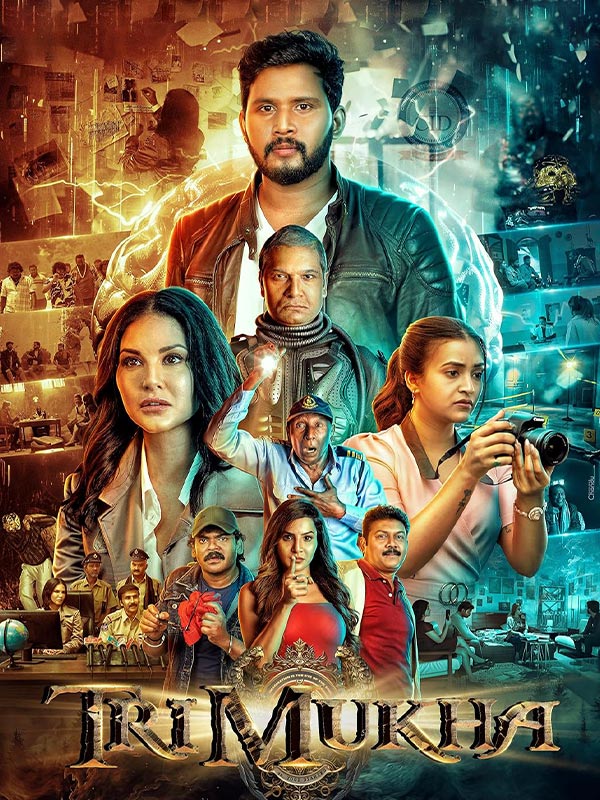 Photo: trimukha malayalam
The Films
The early breakouts
Ponnum Kudathinum Pottu (1986) is listed as his earliest confirmed credit here, with his work on it both as a college student and on the story. That dual role, in front of the camera and inside the script, set a pattern he would return to.
In Harihar Nagar (1990) and No. 20 Madras Mail (1990) arrived in the same year, and together they helped establish him as a comic presence audiences trusted. In the latter he played Kumbalam Hari. Two films, one year, one clear signal: here was a performer a director could hand a comic beat to and expect it to land.
The 1990s middle run
Godfather (1991), Butterflies (1993) and Hitler (1996) are the titles the biography names among his best known, and they sit at the centre of a decade in which he became close to unavoidable. British Market (1998) and Gramapanchayath (1998) followed, the latter casting him as Chakrapani, with Dreams (2000) closing out that stretch.
What the run shows is range rather than a single type. Comedy, character parts, and whatever the script demanded. A performer who can be funny on cue is useful. A performer who can be funny on cue and then carry a straight scene is the one a production schedules around.
The recent work
The newer titles show a performer still in demand, and the roles are not comic first. Karinkunnam 6's (2016) cast him as a Commentator. Marco (2024) gave him the role of Tony Issac inside a ruthless revenge narrative about the adoptive son of the Adattu family, a story of betrayal, loss and escalating brutality.
The 2020s crop is striking for its breadth. Kattalan (2026) places him as Ali in a story of power hungry forces and a cartel war where, in the film's own framing, compassion vanishes and only the ruthless endure. Mollywood Times (2026) casts him as Vaikom David in a film built around a filmmaker's struggle against the industry's own toxicity. Bharathanatyam 2 Mohiniyattam (2026) gives him the role of Eapen in a family crime drama about a cover up that spirals. Madhuvidhu (2026) has him as Rajkumar, also credited as Kizhikkattur Kochuraja, and Sukhamano Sukhamann (2026) as Iype.
 Photo: TMDb
What Connects The Work, And Why The Name Matters
Look across the filmography and a pattern holds. He is a supporting pillar, the performer a director trusts to make a scene work without centring it. In Kattalan he is inside a violent cartel story. In Marco he is inside a revenge epic. In Mollywood Times he is part of a film about filmmaking itself. The roles change. The function does not.
That function is worth naming for readers new to the industry. Malayalam cinema runs on ensembles, and within those ensembles there is a category of performer who arrives, does precise work, and leaves the film stronger without ever dominating it. It is not a lesser job. It is often the hardest one to cast, because the scene collapses without it.