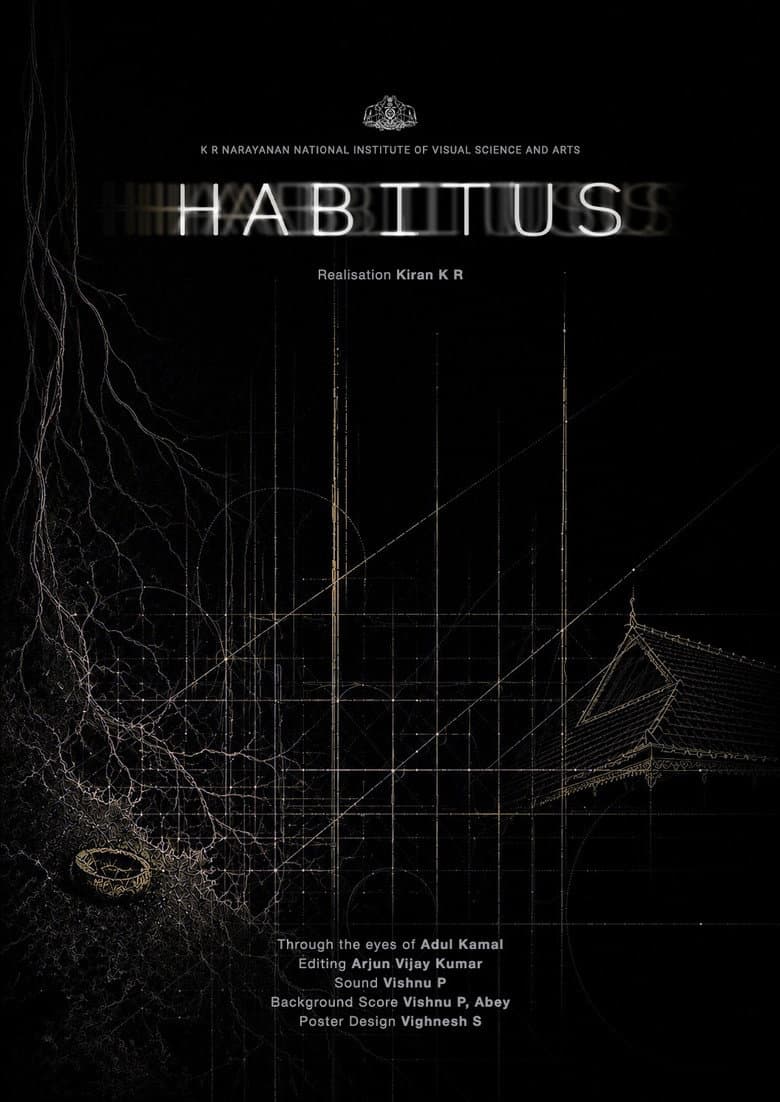
On a quiet Saturday late last month, a twenty-minute Malayalam documentary slipped into theatres with almost no fanfare, no star cast to plaster across posters, and no promotional machinery humming behind it. Habitus, directed by Kiran K R, arrived on September 26, 2026, and in the days since, it has been doing what the most interesting small films often do - circulating by word of mouth among viewers who stumbled into a screening and came out unsettled in the best way.
Clocking in at just twenty minutes, the film belongs to that rare breed of non-fiction cinema that trusts brevity over breadth. Its synopsis, brief but loaded, tells us this much: through an intimate memory shaped by ritual and inherited belief, Aavasam traces the quiet transformation of everyday customs and spaces as fluid lived traditions gradually give way to a dominant cultural and political order. Note the reference to Aavasam - the film's inner anchor, a remembered dwelling, a place that exists as much in the mind as on any map. That single word, roughly translatable as "residence" or "dwelling," carries the weight of everything the documentary seems to be circling: what it means to belong somewhere, and what happens when the terms of that belonging are rewritten by forces larger than any one household.
Kiran K R, the director, is not a name that has been pushed to the foreground of the promotional material, and that feels deliberate. This is a film that wants to be encountered through its images and its rhythms rather than through personalities. The cast is listed as unknown, which in the context of a documentary is less a gap than a statement. The people we meet in Habitus are not performers; they are inhabitants, observers, carriers of memory. Whatever faces appear on screen do so as themselves, and the film's emotional register depends on that authenticity.
What stands out from the available details is the film's central preoccupation with time and erosion - not the dramatic kind, but the slow, barely perceptible kind. Rituals that once felt fluid, personal, and alive can calcify into something else entirely when a dominant cultural and political order presses in from all sides. Habitus seems less interested in announcing that shift than in letting us feel it. A courtyard that used to host one kind of gathering now hosts another. A prayer that used to be whispered becomes something more public, more codified. A room that belonged to a family becomes a space claimed by an ideology. These are the transformations the film reportedly traces, and they are the kind that rarely make headlines precisely because they happen so gradually.
At twenty minutes, Habitus can afford to be impressionistic. There is no room for exhaustive exposition here, and there shouldn't be. Short documentaries often work best when they function like a single, sustained note - a memory, a mood, a question held long enough to sting. The runtime suggests a film that knows exactly what it wants to say and refuses to pad it out. For an audience accustomed to documentary as either investigative journalism or sweeping historical survey, that economy may come as a surprise, but it is also the film's most intriguing formal choice on paper.
Malayalam cinema has, in recent years, produced a steady stream of boundary-pushing independent work, and the documentary space within the industry has quietly grown more visible even as it remains structurally precarious. A twenty-minute film with no known cast and a reported TMDb rating of zero - simply because too few viewers have logged it yet - is not the kind of release that dominates conversations. It is, however, the kind that tends to surface later, when programmers, critics, and curious audiences go looking for the year's overlooked gems. The "Mollywood" tag places it firmly within the Malayalam industry, and the original language is Malayalam, though the film's themes of inheritance, displacement, and creeping majoritarian logic are hardly region-specific.
What Habitus appears to offer is a meditation rather than an argument. It watches. It remembers. It notices how a threshold that once meant welcome can come to mean something closer to surveillance, how a festival that once belonged to everyone can slowly become the property of a few. If the title itself refers to the ingrained habits and dispositions that shape how we move through the world, then the film seems to be asking what happens when those habits are no longer ours to form - when they are imposed, gradually and politely, until one day we cannot remember it was ever otherwise.
For now, Habitus remains a small, quiet presence on the release calendar, easy to miss and, by the sound of it, difficult to forget. Viewers curious about the formal possibilities of the short documentary, or about the ways cinema can capture the texture of cultural change without raising its voice, would do well to seek it out while it is still playing. Some films shout. This one, by all indications, simply remembers - and asks us to remember alongside it.