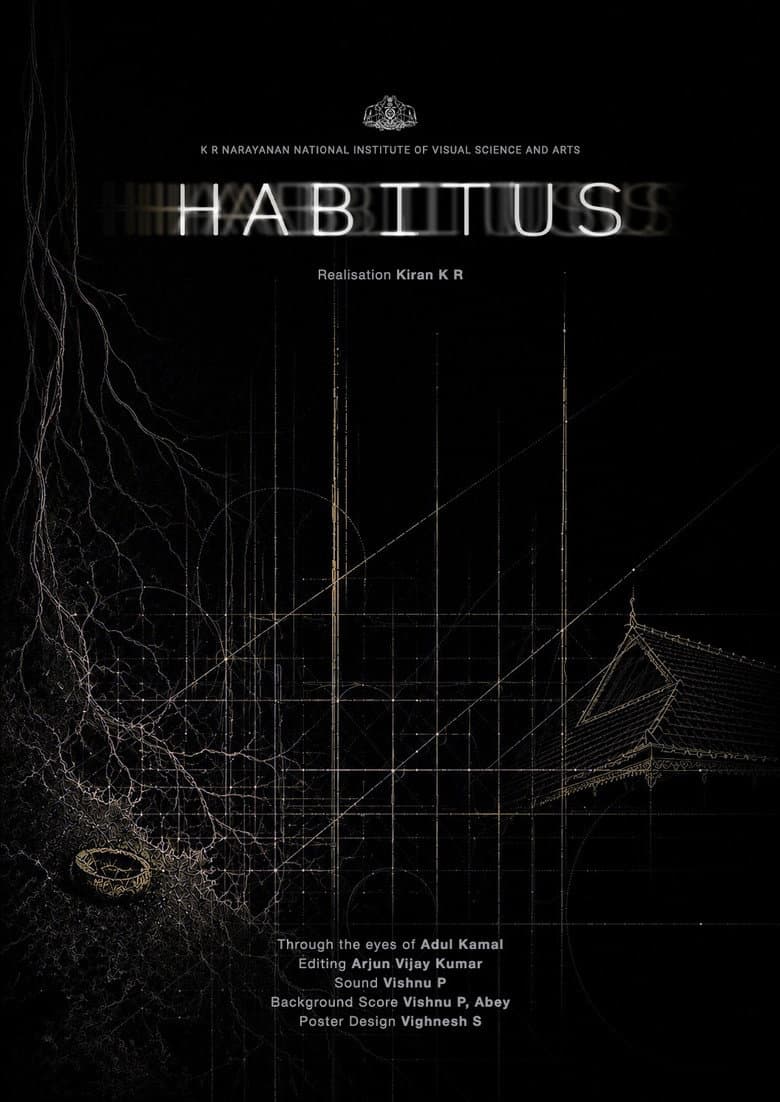
September 26, 2026 - There is a particular kind of silence that settles over a village when an old ritual is performed for what might be the last time. It is not dramatic. Nobody makes an announcement. The drums simply stop one year, and everyone pretends not to notice. That quiet erasure, the slow blink between what a community practices and what it remembers, is the terrain Kiran K R walks in Habitus, a twenty-minute documentary arriving in Malayalam today.
The title itself is a clue. It borrows from the sociological idea of habitus - the ingrained dispositions, customs, and unspoken rules we absorb from the world we are born into, so deeply that they feel like nature rather than history. Kiran's film takes that concept and plants it in the soil of everyday Malayali life, where ritual and inherited belief shape not just what people do, but how they occupy space, how they grieve, how they cook, how they gather.
Release Date & Where to Watch
Habitus releases on September 26, 2026, in Malayalam, and carries a compact runtime of twenty minutes - a length that suits its intimate, observational register. Short documentaries of this kind rarely announce themselves with a marketing blitz; they tend to surface at festivals, curated screenings, and specialised platforms before finding a wider audience. Viewers in Kerala and the diaspora should keep an eye on regional film circles and documentary showcases, where Malayalam non-fiction has been quietly flourishing in recent years. Given the film's focus on memory and inherited custom, it is the sort of work that benefits enormously from being seen in a room with other people rather than alone on a laptop.
Cast & Crew
Kiran K R directs. The cast is, as is common with this mode of filmmaking, uncredited - and that is not a limitation so much as a statement of intent. Habitus is built around presence rather than performance. The people who appear on screen are presumably residents, elders, and family members whose lives are the material. Their faces, gestures, and half-finished sentences carry the film rather than any scripted dialogue.
Documentaries of this scale live or die on the instincts of a small crew, and the decision to keep the film at twenty minutes suggests a director more interested in precision than in sprawl. There is no ensemble to speak of, no recognisable star to anchor the poster. What there is instead is a filmmaker with a thesis and the patience to let it emerge from ordinary moments.
Story & What to Expect
The official synopsis describes Habitus as tracing, through an intimate memory shaped by ritual and inherited belief, the quiet transformation of everyday customs and spaces as fluid lived traditions gradually give way to a dominant cultural and political order. That sentence is dense, but it unpacks into something quite moving.
Expect a film about erosion rather than explosion. Kiran appears less interested in the loud clashes between tradition and modernity than in the way one quietly absorbs the other - a courtyard repurposed, a festival shortened by a day, a prayer mumbled in a language the youngest person in the room no longer fully understands. The "dominant cultural and political order" here is not a villain with a face. It is a current, and the film watches how people swim in it, sometimes without realising they have changed direction.
The twenty-minute runtime matters. This is not a survey. It is a fragment, an intimate memory as the synopsis puts it, and its power will depend on its willingness to stay small - to let one household, one ritual, one room stand in for a much larger shift. Audiences who come expecting exhaustive history will be disappointed. Audiences who come expecting to feel something they have felt before, without being able to name it, will not be.
Given its documentary form and Malayalam-language context, the film likely moves at the pace of its subjects: unhurried, attentive, resistant to easy conclusions.
Why It's Worth Watching
Malayalam cinema has spent the last decade proving it can do almost anything - thrillers, comedies, sprawling family epics. Its documentary tradition, meanwhile, has been doing the harder, quieter work of recording what is disappearing. Habitus belongs to that lineage.
The film's real subject is time. Rituals are collective agreements about how to hold time, and when those agreements fray, something in a community loosens too. Kiran's camera, if the premise holds, is trained on the small evidence of that loosening: objects, corners, the way an older person pauses before performing a gesture they have performed a thousand times.
It is also worth noting what Habitus resists. There is no nostalgia bait here, no swelling score telling you to mourn. The synopsis describes traditions as "fluid" and "lived" - meaning the film understands that customs have always changed, and that what feels like loss today was itself once an innovation. That intellectual honesty is rare in films about heritage.
At twenty minutes, it asks very little of your evening and quite a lot of your attention. For anyone interested in how cultures actually change - not in headlines, but in kitchens and courtyards - this is essential viewing.