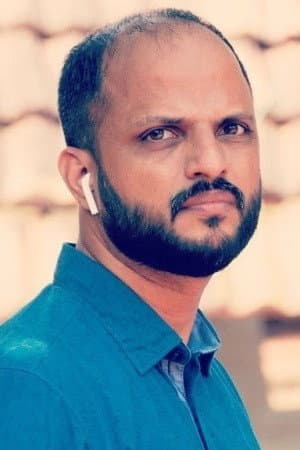
Girish A. D. works in Malayalam cinema, the film industry of Kerala, a state on India's south western coast. He is recognised as a director and a writer, and has also produced and appeared in films. What holds the body of work together is a habit of attention: young people at the edge of a decision, small towns, families, and the ordinary weeks in which something quietly changes.
Girish A. D.: The Films And The Filmmaking is, in that sense, less a story of a career climbing a ladder than of a filmmaker circling the same few questions from different angles. The titles change. The settings move from a school corridor to a wedding next door. The underlying curiosity stays put. That consistency is what makes his name useful to a viewer trying to find a way into contemporary Malayalam cinema from outside the region.
A Filmmaker Who Keeps Returning To The Same Questions
Start with Thanneer Mathan Dinangal (2019), which he wrote and directed. It established the register he would keep working in, and it announced a voice rather than a formula. The success of that film matters less than what it revealed about his instincts. He was interested in the texture of an ordinary stretch of weeks, in the way a young person behaves when nobody is watching, and in the small embarrassments and loyalties that sit around a bigger emotional turning point.
For a reader new to the industry, a useful piece of vocabulary: in Malayalam cinema, the person credited as writer and director is often the author of the film in the fullest sense, shaping the story on the page before shaping it on set. That combined credit is central to how his work reads. He is not a director who arrives to interpret someone else's script. He builds the world first, then films it.
His filmography also shows that he does not only make his own films. He wrote the screenplay for Allu Ramendran (2019), a screenplay being the written plan a film is shot from, and he directed I Am Kathalan (2024). Both suggest that the same sensibility travels when he writes for another filmmaker's set. Across all of it, the subjects repeat: adolescence, small town respectability, and the moment a young person realises they are allowed to want something.
The Films And What Each One Added
Super Sharanya (2022) came next, directed, written and produced by him. Its heroine is Sharanya, an ordinary small town girl from Palakkad who moves to Thrissur for higher studies and finds herself changing as she meets Deepu. It took the same curiosity about young lives and moved it out of the classroom. It also gave him a producer's credit on his own material, which matters: it means he was protecting the film's shape as well as making it.
Premalu (2024), which he directed and wrote and in which he also made a cameo, meaning a brief on screen appearance: Sachin, a carefree graduate, crosses paths with Reenu, a spirited IT professional, in Hyderabad. Friendship deepens, and unspoken feelings, career ambitions and life choices complicate it. The film showed his reach beyond Kerala settings and his instinct for the awkward middle of a relationship rather than its beginning or end. It is often the phase people skip in films. He lingers there.
Bethlehem Kudumba Unit (2026), directed and written by him, turns to a wedding: Ashley's homecoming from abroad takes an emotional turn when a ceremony next door stirs memories of her first love, Justin. In the same year, soulmates - oru saathukudi pranayam credits him as writer, and Varavu (The Visit) as producer. Taken together, they show a filmmaker whose name now attaches to projects in three different capacities at once.
The Work Away From The Director's Chair
His filmography is not only his own films. He wrote the screenplay for Allu Ramendran (2019). He produced Anurag Engineering Works (2022), acted as Sudheer in Poovan (2023) and produced it, and is credited in Archana 31 Not Out (2022) with the Pennukaanal Teams. He appears as Francis Alex in Balan - The Boy (2026), a teenage boy's search for his missing mother. He directed I Am Kathalan (2024).
That range says something about how the industry works. Producing, writing for others and stepping in front of the camera are not side projects here. They are how a filmmaker stays inside the ecosystem rather than above it. The producer's role, for clarity, is the person who arranges and safeguards the money and the production itself, a job that in mid budget Malayalam cinema often decides whether an unusual story ever reaches a screen.