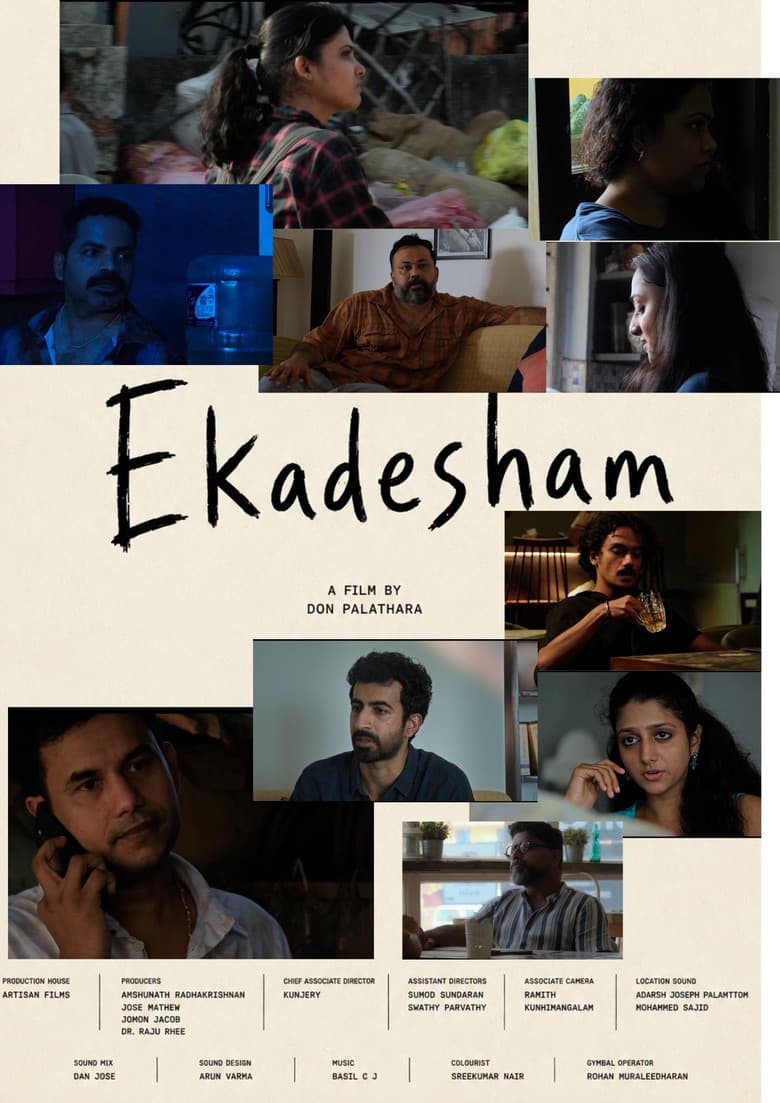
There’s a particular kind of chaos that only Kochi can produce. It smells of salt and diesel, moves at the speed of a scooter dodging a water tanker, and sounds like a dozen arguments happening simultaneously, all of them passionate, none of them entirely serious. Don Palathara, a filmmaker known for his unflinching, often austere examinations of life on the margins, has decided to plunge headlong into that chaos. His new film, Ekadesham, which hit theatres on September 23, is a drama-comedy that trades the silent, sun-bleached landscapes of his previous work for the clamour of the film industry itself. It is a world where everyone is hustling, and the line between a professional meeting and a personal crisis is perpetually blurred.
The title itself is a clue, a wonderfully slippery Malayalam word that can mean 'somewhat', 'a little', or 'almost'. It’s a fitting descriptor for a film about people who are all 'almost' there - almost successful, almost in love, almost certain of their next step. The narrative orbits a constellation of young creatives, each one trying to find a foothold in the treacherous terrain of Malayalam cinema. This isn't the glamorous, red-carpet version of the industry. This is the version populated by assistant directors running errands, aspiring actors waiting for a callback, and technicians who know more about the craft than the people signing the cheques.
At the centre of this swirl is Roshan Mathew’s Sarath. Mathew, an actor who can convey a universe of doubt with a single, hesitant glance, seems perfectly cast as a man navigating the shaky ground between ambition and pragmatism. He is surrounded by a formidable ensemble, including Divya Prabha as Shreya and Arsha Baiju as Nimisha, performers who bring a grounded, lived-in quality to their roles. The film’s strength appears to lie in its mosaic structure, weaving together the lives of Sarath, Shreya, and the rest of the group - Allen, Aswin, Steffy, Ravi, and Rahul - into a single, sprawling tapestry of aspiration and anxiety.
Palathara is an interesting choice for this material. His previous films have been defined by a rigorous, almost documentary-like minimalism, often exploring isolated communities and the quiet violence of social structures. To see him turn his lens on the bustling, self-referential world of filmmaking is a tantalising prospect. It suggests he isn’t just making a quirky insider comedy. He is likely using the film industry as a microcosm, a pressure cooker where the universal human needs for validation, love, and purpose are amplified to a fever pitch. The comedy, then, probably doesn't come from slapstick, but from the absurdity of it all - the ridiculous compromises, the misplaced confidence, and the sheer endurance required to keep chasing a dream that might never materialise.
The presence of Vinay Forrt, as Aswin, adds another layer of intrigue. Forrt is a master of portraying the frazzled, the beleaguered, and the hilariously exasperated. He can find the comedy in a sigh and the tragedy in a shrug. Placing him within this ensemble suggests that while the film will have its moments of sharp, observational humour, it will also be anchored by a deep well of empathy for its characters. And in a delightful piece of meta-casting, real-life cinematographer and director Mahesh Narayanan appears as Ravi, a nod to the blurry lines between reality and fiction that define the film’s very subject matter.
Ekadesham arrives at a time when Malayalam cinema is in a state of vibrant, restless flux. It is a film about the people who make the films, made by a director who has spent his career examining the fabric of society. It is a drama about the comedy of errors that is a creative life, and a comedy about the drama of simply trying to get by. With a runtime of 121 minutes, it promises to be a dense, immersive experience, a portrait of a generation caught in the churn of their own making. It is, in every sense of the word, a film about being ekadesham - almost there, and figuring out what to do next.