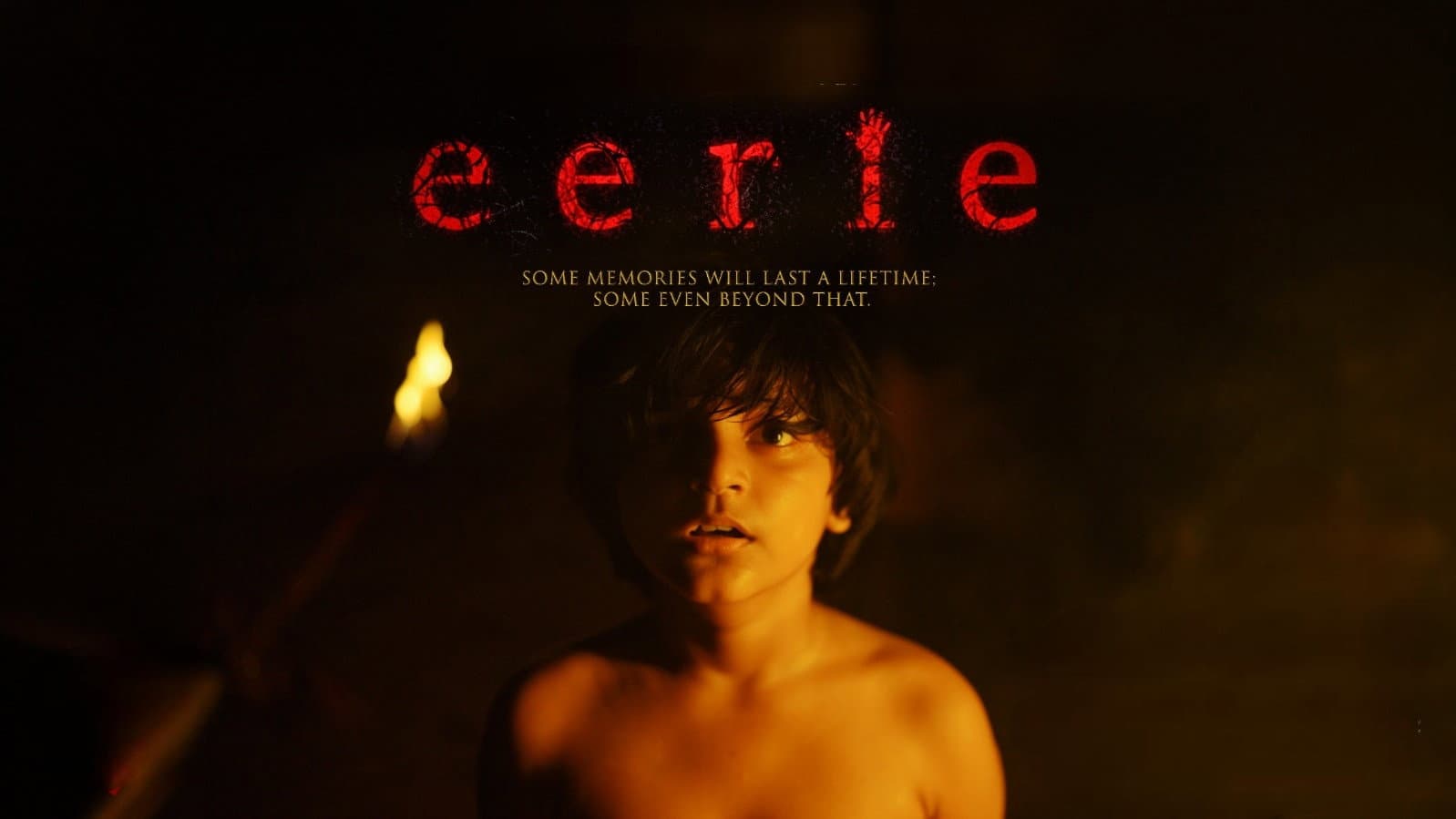
There is a particular kind of dread that settles in when a story refuses to stay where it happened. "Eerie," the new Malayalam short film from director Dileep VT, understands this instinctively. Clocking in at a tight twenty-seven minutes and released on August 14, 2026, it is less interested in jump scares than in the slow rot of a memory you cannot scrub away. The premise is deceptively simple: a city-born boy spends his summer vacation at his parental home, a place thick with unfamiliar rituals, smells and silences. What he encounters there does not end when the holiday does. It follows him through adulthood, through the rest of his life, and, as the film's own synopsis bluntly puts it, even after.
That is an ambitious claim for a short. Yet the runtime is precisely the point. Malayalam cinema has a long, rich relationship with horror, from the folk-inflected chillers of the eighties and nineties to the recent wave of atmospheric, slow-burn thrillers that have found audiences far beyond Kerala. "Eerie" slots into that lineage while operating on its own intimate scale. This is not a haunted-house spectacle. It is a haunted childhood, which is far harder to exorcise.
The casting leans on that intimacy. Hayden Hector plays Appu, the young boy at the centre of the story, carrying the weight of a film that asks its audience to see the world through a child's eyes without ever condescending to them. N. P. Nisa appears as Chithra, a presence in the narrative that the film wisely keeps slightly out of reach. Around them, an ensemble including Rajeev Pillath, Sonia Giri, Tajudheen, Nisha Ganesh, Kabani and Syam S Jude fills out the world of the parental home, a place that is at once welcoming and deeply, quietly wrong.
That contradiction is the engine of the film. The overview describes a boy welcomed with "a variety of things which he had never experienced before." Read that line again. It is not ominous on its own. It becomes ominous only in retrospect, once you know that these experiences haunt him for the rest of his life. Dileep VT appears to be building his horror out of exactly this gap between a child's perception and an adult's understanding. Children do not know which memories will wound them. They simply absorb everything, and the film lets us watch that absorption happen in real time.
At twenty-seven minutes, "Eerie" has no room for the padding that sinks so many feature-length horror films. It must establish a world, populate it, unsettle it, and land its final blow with ruthless economy. That constraint is a strength. Short-form horror in Malayalam has quietly become one of the more interesting spaces in the industry, a place where filmmakers can experiment with tone and structure without the commercial pressures that shape theatrical releases. A runtime this lean suggests a film that trusts its images and its silences rather than overexplaining them.
It is worth noting that the film currently sits with a TMDb rating of 0/10, which, given its recent release, simply reflects a lack of aggregated audience votes rather than any verdict on its quality. Early days. For a short with a limited release footprint, that number will tell us very little until more viewers find it.
What "Eerie" seems to be chasing is the specific texture of memory itself, the way a summer can be simultaneously golden and rotten, the way a house can be full of people and still feel like the loneliest place on earth. The horror here is not confined to a single night or a single room. It is longitudinal. It is the recognition that some experiences do not end, they just wait.
For audiences who grew up with the darker corners of Malayalam storytelling, and for newcomers curious about what the industry's independent edge is doing right now, this one deserves attention. It is a small film with a long shadow. Fitting, for a story about a haunting that never lets go.


