A year after its release, Senna Hegde's Avihitham remains one of Malayalam cinema's most quietly subversive pleasures. Released on October 10, 2025, the film arrived with little fanfare, ran for 104 minutes, and then did what the best gossip does - it lingered. It refused to leave the room.
The premise sounds almost like a joke setup. A drunken man stumbles into an encounter he cannot fully explain, and a town of secrets begins to talk. That's it. That's the spark. What follows is a chain reaction of whispers, each one wilder than the last, each one carrying the potential to destroy a life. The film's title translates roughly to "that which is not permitted," and Hegde uses that idea like a scalpel. What is forbidden here isn't an act. It's a story.
Unni Raja plays Venu, the drunk whose chance encounter becomes the town's favourite new topic. Raja, better known for broad comic work, plays the role with a slack-jawed bewilderment that is very funny and, by the final act, surprisingly sad. Venu isn't a villain. He's a man who was in the wrong place at the wrong time and now cannot remember enough to defend himself. The town fills in the blanks for him.
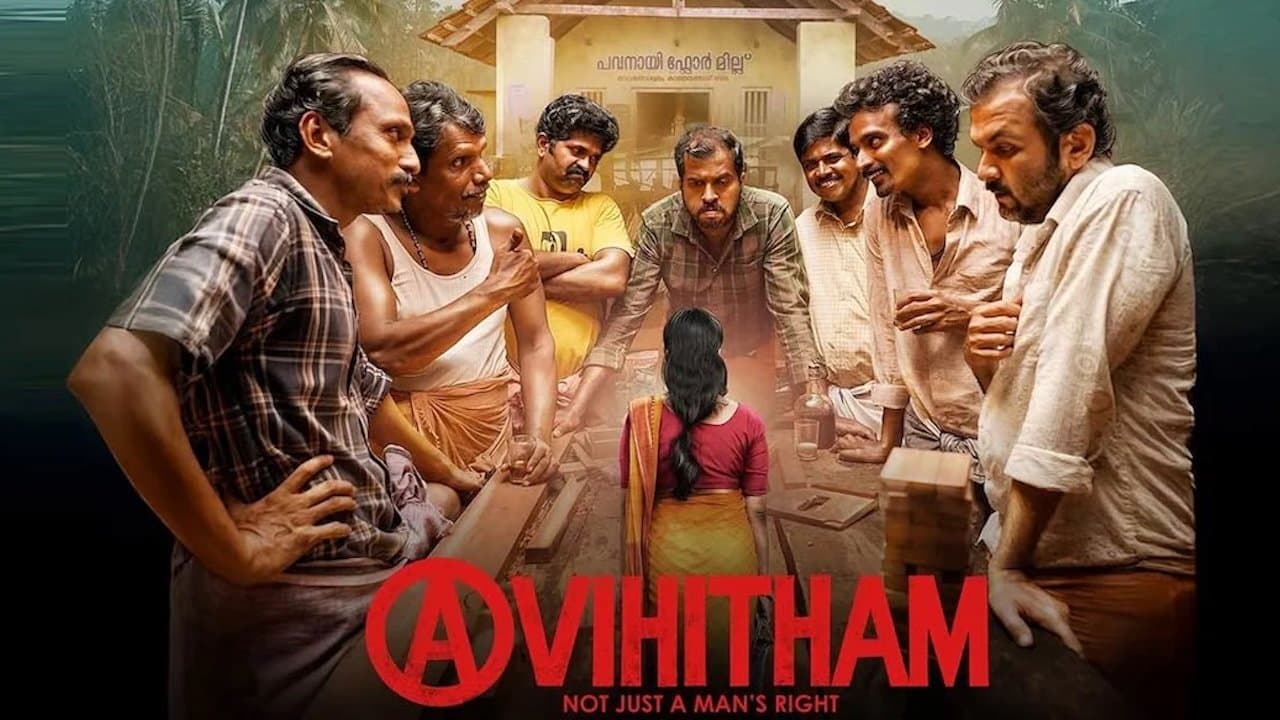
That town is populated by a superb ensemble of character actors who understand the specific rhythm of small-town gossip - the way a rumour travels not through malice but through boredom. Renji Kankol's Prakashan is the kind of man who pretends to be above the chatter while being its most devoted carrier. Rakesh Ushar brings a weary decency to Mukundan, a man who suspects the truth is duller and far more damaging than the lie. Dhanesh Koliyat, Vineeth Vasudevan, Ajith Punnad, and Unnikrishnan Parappa round out a cast of men who treat speculation like a competitive sport. Each gets a moment to shine, and none is wasted.
But the film belongs to Vrindha Menon as Nirmala, the woman whose hidden past becomes the gossip's final destination. Menon plays her with a stillness that borders on dangerous. She knows what the town is saying. She has heard versions of it before. Watching her absorb each new rumour is like watching someone count down from ten in a language only she understands. When her history finally surfaces, Hegde doesn't stage it as a twist. He stages it as an inevitability. The town was always going to get here. The only question was what would be left standing.
Hegde, who has built a reputation for finding comedy in the cracks of ordinary life, keeps the film's tone perilously balanced. Avihitham is marketed as a comedy-drama, but audiences expecting a steady stream of laughs may be startled by how much grief sits under the surface. The humour is real - a sequence involving a group of men trying to reconstruct the night's events from half-remembered boasts is a masterclass in escalating absurdity. But Hegde never lets you forget that these are people with something to lose. A woman's reputation. A man's marriage. A family's place in a community that never forgets.
The film's technical restraint deserves mention. There are no flashy montages, no swelling musical cues instructing you how to feel. The camera sits still and lets faces do the work. The editing trusts the audience to follow the thread of who knows what and when. It's a film that respects its viewers enough to let them lean in.
The ratings tell a story of a divided audience. TMDb's 5.8 suggests many came expecting a straightforward comedy and left confused. IMDb's 6.7 reflects a more patient crowd that found something worth sitting with. Neither number captures what Avihitham actually is: a film about how communities manufacture truth, and how the people caught inside those stories survive them. It's not a mystery. It's a mirror.
A year on, the film has settled into a comfortable afterlife as a word-of-mouth discovery - appropriately enough for a movie about word of mouth. Those who stumbled onto it at release keep nudging friends toward it, trying to describe the experience without spoiling its slow-build unease. Avihitham doesn't demand to be loved. It asks to be overheard. And in a small town of secrets, that's the most dangerous thing you can be.