Arjun Ashokan is a performer in Malayalam cinema whose name has travelled well beyond Kerala, largely because his credits refuse to sit in one lane. His father is the performer Harisree Ashokan, worth noting once as context before the work itself takes over. What follows is a reading of the confirmed filmography, role by role, as evidence of range rather than a list of titles.
A Filmography Built Role By Role
The earliest confirmed credits place him in small, grounded parts. In Parava (2017) he plays Hakeem, and in Varathan (2018) he plays Johnny. These are the kinds of roles that teach a performer how to hold a scene without dominating it, how to react, how to let an ordinary man carry quiet pressure. Nothing about them announces a future lead.
The move toward the centre arrives with June (2019) as Anand and Wolf (2021) as Sanjay, both parts that ask for more sustained presence. Then comes the run that viewers outside Kerala are most likely to have met him through: Super Sharanya (2022) as Deepu, Pranaya Vilasam (2023) as Sooraj, and Bramayugam (2024) as Thevan.
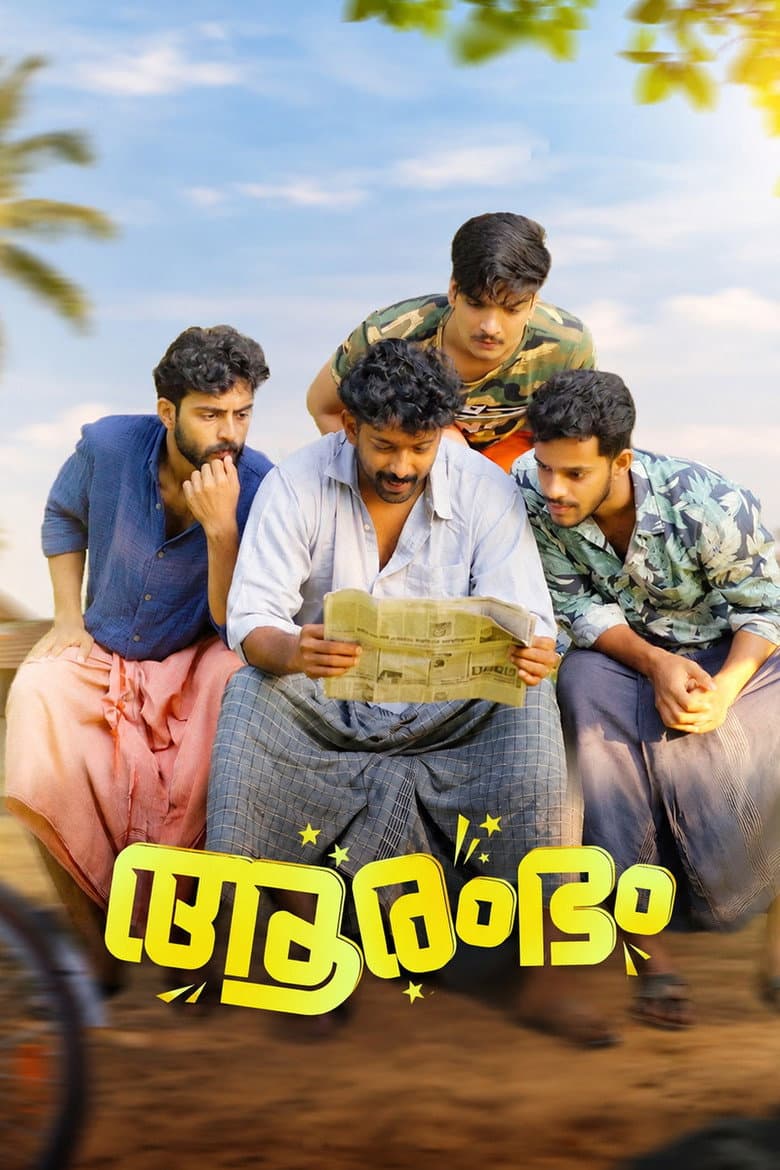
The most recent confirmed work widens the picture again. Sumathi Valavu (2025) casts him as Appu and Bromance (2025) as Shabeer, with a cameo in Thudarum (2025). A cameo, for readers new to the term, is a brief appearance in a single scene or two, often with no bearing on the main plot. Then come two 2026 credits: Varavu as Williams "Willy" and Chatha Pacha: The Ring of Rowdies as Savio "Loco" Lobo.
Where The Comedy Sits Next To The Folk Horror
Place Super Sharanya and Bromance on one side and Bramayugam on the other, and the same performer is credible in both. That is not a small thing.
What The Films Themselves Ask Of Him
The films are the real argument. Super Sharanya follows Sharanya, an ordinary small-town girl from Palakkad who moves to Thrissur for higher studies and finds herself changing as she meets Deepu. A character part, meaning a role that supports the central figure rather than driving the story, has to earn its space in a handful of scenes; Deepu registers because the warmth feels lived-in rather than performed.
Bramayugam works from a different register entirely. A folk singer in 17th-century Kerala discovers a mansion, and inside he encounters an enigmatic cook and a powerful master, setting off a chain of events that changes his life. Thevan is the outsider inside that house. A period setting changes a performer's job: the body, the speech and the stillness all have to belong to another century, and the audience has to believe it.
Pranaya Vilasam builds differently again. A revelation about a woman's old flame sends shockwaves through her family, tracing love stories of characters at different stages of life. Sooraj sits inside an ensemble rather than at its centre, which demands a different discipline: you serve the whole rather than your own arc.
Varavu (2026) gives him the clearest dramatic premise of the recent run. A family falls victim to the powerful elite in a small town, and one man's return forces a confrontation that exposes decades of lies and corruption. Williams "Willy" has to carry that weight while staying recognisably human. It is the kind of part that only makes sense if the earlier, smaller roles were taken seriously, and Parava and Varathan are where that instinct for unshowy men under pressure was first visible.
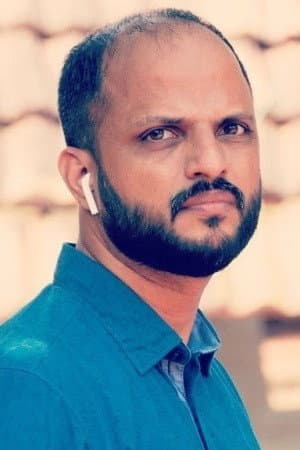
 Photo: TMDb
Why The Name Travels
The through-line is simple. This is a performer who moves between comedy, family drama, period horror and small-town drama without a fixed lane. Directors seem to reach for him when a film needs a face that can shift register on demand.
Bramayugam in particular placed him in front of viewers who had not tracked the earlier credits, because the film travelled as a piece of folk horror with a strong critical reputation. The spread of the 2025 and 2026 credits tells its own story about how the industry currently uses him: ensemble parts, central parts and brief appearances side by side. That mix is not indecision. It is a working rhythm.
For readers outside the region, the case for knowing the name rests on the filmography above. It rewards being read in full rather than by single titles.
For background on the Malayalam film industry, see the Wikipedia entry on Malayalam cinema, and for the broad context of Indian cinema, the Encyclopaedia Britannica overview.