Malayalam cinema is the film industry of Kerala, a state on India's southwestern coast. Its films are made in the Malayalam language, and for decades they have travelled far beyond that coastline through film festivals and subtitled releases. Antony Varghese: A Career In Malayalam Cinema is a study of one performer inside that industry, and it comes with a useful starting fact. His filmography is compact.
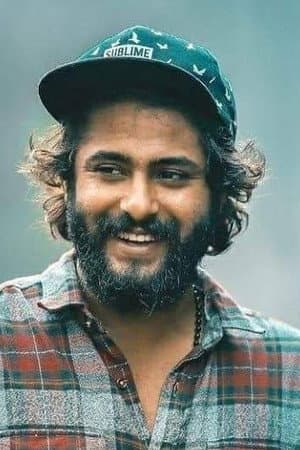
 Photo: TMDb
A Performer Built On Presence, Not Volume
Compact is the point. In an industry where a busy calendar is often read as success, Varghese has taken the other road: fewer titles, each one a considered choice rather than a scheduling exercise. The record runs from 2017 to 2026, a decade of Malayalam cinema, and the range inside it is the story.
What connects the work is physicality and stillness in equal measure. He is a performer of few mannerisms, and his roles tend to sit close to the ground: men from small towns, men under pressure, men who do not explain themselves. He does not arrive with a fixed persona and repeat it. He arrives with a body and a temper, and lets the film decide the rest.
The Films, And What Each One Added
Angamaly Diaries (2017), as Vincent 'Pepe', is the early defining credit. A film about a small-town food culture and the young men formed inside it, it gave Varghese a presence that was raw, local and unpolished. It also set the register he would keep returning to: energy held under pressure.
Swathanthryam Ardharathriyil (2018), as Jacob, showed how quickly the early career moved between registers rather than settling into one. Jallikattu (2019), as Antony, is the credit most likely to be familiar to viewers outside India and the moment his work reached an audience well beyond the region.
Then came a dense stretch. Super Sharanya (2022), as Sumeshettan, is a campus-set film in which the lead character, Sharanya, moves from Palakkad to Thrissur for higher studies and changes as she meets Deepu. Varghese's part sits inside an ensemble and proves he does not need the centre of the frame. Oh Meri Laila (2022), as Lailasuran, is another ensemble credit from the same period, a performer willing to be one piece of a larger machine. Innale Vare (2022) gives him two characters, Sharath and Vinod, a small but telling note on range within a single title.
RDX: Robert Dony Xavier (2023), as Dony, is the clearest example of him carrying a film built around action and brotherhood. The title names three central figures, and the name in that title is the role he plays. Poovan (2023), as Hari, is the smaller, quieter counterweight to the larger titles around it.
The most recent credits extend the pattern. Daveed (2025) casts him as Ashiq Abu. Maine Pyar Kiya (2025) places him as Danny in a story where Aryan searches for Nidhi in the streets of Madurai, faces mounting danger and watches time run short. I'm Game (2026) gives him Vignesh 'Vicky' Das, a fearless gambler who trusts luck more than life and gets caught in a series of unexpected events that turn his world upside down. Kattalan (2026) returns him to a role named Antony, inside a story of power-hungry forces clashing in the Ivory cartel war, where control, vengeance and survival push compassion out of the frame.
The Roles He Returns To, And Why The Name Matters
The recurring figure across the filmography is a young man in a situation that has stopped being manageable: a search, a rivalry, a gamble, a fight for control. What changes between films is the temperature, not the premise. Note too the range of film sizes on the list. He moves between titles built around a single name and titles where he is one strand among many, and he does not appear to treat the two differently.
The 2025 and 2026 credits show a performer still adding registers rather than consolidating one. That matters in context. Malayalam cinema has long been a place where performers with genuine presence can build a body of work that travels internationally without the scale of the larger Indian industries. The British Council's overview of Indian film industries and the International Film Festival of Kerala both illustrate how that circuit operates. Varghese is one of the names that found an audience that way.
For a reader outside the region, Jallikattu and the run of films that followed it are the entry points. From there the filmography is short enough to watch in full, which is rare and worth saying plainly. Antony Varghese: A Career In Malayalam Cinema is ultimately a record of restraint and physical commitment in equal measure, and of choices that have stayed consistent across a decade.