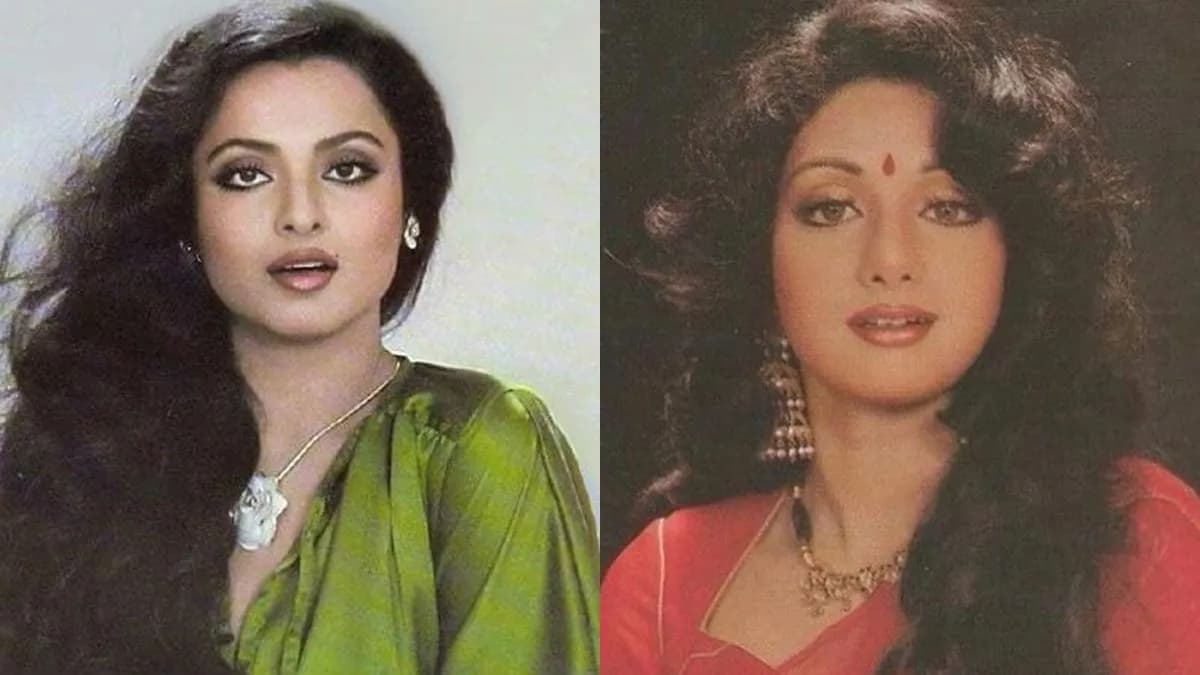
Veteran star Kamal Haasan's early closeness to actress Rekha became a talking point in the film world of the 1980s, and the episode is remembered today less for what happened on set than for how it landed on two of the era's biggest heroines. Accounts circulating from that period describe Sridevi as visibly unsettled by the attention Haasan was said to be paying Rekha - a reaction that, by several tellings, was one of the triggers that eventually nudged Sridevi toward Bombay and a career in Hindi cinema.
That chain of events is the substance of a widely shared retrospective now doing the rounds, which traces a line from a southern film set to a shift in the industry map: Haasan growing closer to Rekha, Sridevi growing uncomfortable, and Sridevi's departure for Bollywood. The recollection puts a human face on a professional migration that is usually told as a matter of market forces and better pay.
From Co-Stars to a Talking Point
Haasan and Rekha worked together at a time when both were establishing themselves as performers of unusual range, and their pairing drew notice well beyond the films themselves. In an industry where off-screen equations have always fed public curiosity, the association between the two was scrutinised, speculated over and, in some quarters, romanticised. By the telling that has resurfaced, that bond was close enough to unsettle Sridevi, who was then among the most sought-after leading ladies in the south and frequently paired opposite Haasan. Those who repeat the story describe a professional partnership strained by something more personal.
Whether every detail of that account holds up is difficult to settle decades later, and none of it has been formally confirmed in the current retelling. What is not in dispute is the career trajectory it seeks to explain.
The Turn to Bombay
Sridevi's move into Hindi films became one of the defining transitions of 1980s Indian cinema. She arrived in Bombay and soon built a filmography that made her a household name across the country, working with the biggest directors and stars of the day. The more conventional explanation for the shift cites the scale of the Hindi market, the money and the reach it offered. The anecdote now being recirculated adds a personal motive to the picture: that a difficult emotional chapter in the south made the move to Bombay easier to make.
That version of events has obvious appeal. It casts a major career decision as the product of human feeling rather than pure calculation, and it gives a familiar story about ambition a bittersweet edge.
What Rekha Did Next
The headline's second half points to a question that has long intrigued fans - how Rekha responded when Sridevi became a Bollywood headline name. The story suggests Rekha had her own answer to her southern contemporary's rise in the Hindi industry, and that it became part of the folklore of the period.
It is worth being precise about what such claims can support. The recollections are anecdotal, passed down through interviews and fan memory rather than documented record. They belong to the anecdotal history of Indian cinema - the kind of material that survives in retellings because it says something about the people involved, not because it can be verified line by line. Readers should treat the finer details as memory and hearsay rather than established fact. What remains beyond argument is the stature of all three figures at the centre of the story.
Three Careers, One Chapter
Haasan's career has since moved through remarkable phases - as a leading man, as a filmmaker with a taste for the ambitious and the politically charged, and as a public figure whose comments draw attention in their own right. Rekha's enduring screen presence has kept her a reference point for generations of cinephiles. Sridevi's place in the popular imagination only grew over the years, and her loss in 2018 prompted an outpouring of affection that showed how deeply she was held.
Seen through those later arcs, the old story of a strained triangle is less a scandal than a snapshot of an era when the line between the southern industries and Bombay was far less porous than it is now. The migration of stars was a big decision, made amid pressures that were personal as well as professional.
The headline's claim, in essence, is simple: Haasan drew close to Rekha, Sridevi felt the sting, and Sridevi's turn to Bollywood followed - after which Rekha made her own mark in Hindi cinema. Decades on, the story is best read as a piece of film-world memory, one that adds texture to three remarkable careers without settling the questions it raises.
Source: Filmibeat Malayalam