Dileesh Pothan works in Malayalam cinema, the film industry centred on the Malayalam language in the southern Indian state of Kerala. His career is unusual. He has spent much of it on both sides of the camera, directing as well as performing. A reader meeting his name for the first time will often meet it twice in the same set of credits, once among the performers and once among those who assemble the production.
That background shapes how viewers see him. The titles in his filmography run from family drama to thriller, and he moves between the two with the same working method rather than a change of register. The result is a body of work that rewards attention to the whole cast list rather than the top line of a poster.
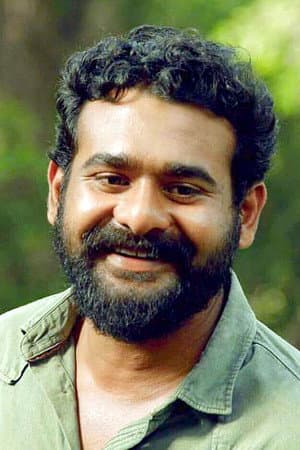
 Photo: TMDb
From the Assistant's Chair to Leading Credits
His route into the industry began behind the scenes before it began on screen. Pothan worked as an associate director on the 2010 film 9 KK Road, and he served as an assistant director under Aashiq Abu, assisting on five of Aashiq's films.
That spell accounts for the practical side of his filmography: an understanding of how a production is assembled, who does what, and how long each stage takes. An assistant director, for readers outside the region, carries a production's daily logistics, from call sheets to crowd movement. The role teaches the shape of a shoot from the inside. It is also why his later work as a producer reads differently from that of a financier who arrives at a project from outside the industry.
His directing credit on Maheshinte Prathikaaram (2016) sits alongside a performing credit in the same film, as Eldho. Few names in the industry appear in both columns for one title. It is the clearest single illustration of how his career is put together.
The Films, and What Each Added
The filmography reads as a sequence of different jobs rather than a list of titles. A defining large scale undertaking is Virus (2019), in which he plays Prakashan. The film assembles a large ensemble around a single crisis, and it depends on a company of performers rather than a lead. An ensemble film, in the local vocabulary, spreads its weight across many roles so that no single name carries the story.
Three films from the early part of the following decade show how wide his range runs. Trance (2020) casts him as Avarachan. CBI 5: The Brain (2022) casts him as a Chief Minister, a part far from his usual register, in a film that follows a series of bucket killing murders and the CBI officers who take up the investigation. In the same year, Bheeshma Parvam (2022) gives him the role of James, in a film built around a family hierarchy.
The most recent stretch is the most varied. Rifle Club (2024) casts him as Secretary Avaran. I Am Kathalan (2024) casts him as Chacko Periyadan. Am Ah (2025) casts him as Stephan. Sathyathil Sambhavichathu (2026) casts him as Lakshmanan.
He has also produced. Premalu (2024) follows Sachin, a carefree graduate, and Reenu, a spirited IT professional, in Hyderabad, as friendship, unspoken feelings, career ambitions and life choices test their bond. Bethlehem Kudumba Unit (2026) is about Ashley, whose homecoming from abroad turns emotional when a wedding next door stirs memories of her first love, Justin.
What Runs Through the Choices
The through line is not genre but construction. He tends to appear in films built around a group, a family or an institution, where a single performance has to fit an existing structure. That holds for Virus (2019), for Bheeshma Parvam (2022), and for Rifle Club (2024). It also explains why the producer credits sit comfortably beside the performing ones: in each case the job is to serve the whole film.
A producer, for anyone new to how credits work, assembles the money, the crew and the schedule, and carries the project from script to release. When that person has also spent years on set, the decisions tend to be practical rather than abstract.
Where He Sits in Malayalam Cinema
Malayalam cinema is known for modest budgets and script led filmmaking, and for a pool of performers who move constantly between projects of different scale. Pothan belongs to the working middle of that ecosystem. He is not the figure a poster is built around. He holds a scene together while the story moves through it, and he can be trusted with a part that carries the plot rather than the spotlight.