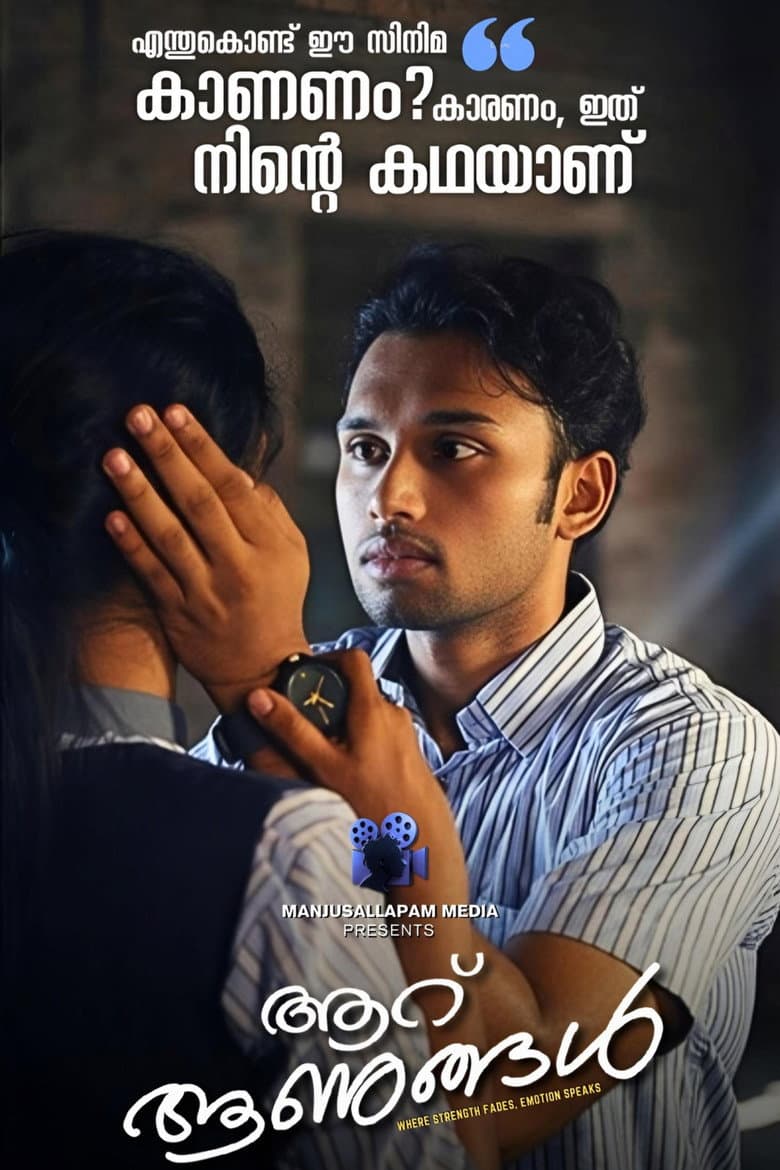
Six faces, one lifetime. That is the deceptively simple architecture behind Aaru Aanugal, Sambraj's new Malayalam drama that arrived in theatres on September 25 and has spent the weeks since quietly inviting audiences to look at a single man's existence from six different vantage points. The title translates to "Six Males," though the film's concerns reach well beyond any single gender: it is an attempt to map the arcs of a life, from the unburdened curiosity of childhood to the reckonings of old age, and to ask what a person accumulates, and loses, along the way.
The premise is elegantly lean. One man's journey is sliced into six distinct phases, each one revealing the roles he must play, the struggles he shoulders, and the responsibilities that settle onto him like sediment. Sambraj, who directs, has structured the film as a progression rather than a conventional three-act narrative, and that choice gives Aaru Aanugal its particular texture. Rather than following a plot toward a single climactic resolution, the film follows a person toward the end of his arc, pausing at each stage to take stock of who he has become and what it has cost him.
At its centre stands Shivamurali Balasubramanyan, entrusted with the unenviable task of anchoring all six phases. It is the kind of role that demands versatility above showmanship; the performance has to shift in register as the character moves from boyhood through youth and middle age into his final years, and the film leans heavily on his ability to suggest continuity across those transitions. He is supported by Deepa and Jini Elakkatt, whose presence in the narrative underscores something the premise makes plain: a man's six stages are never lived in isolation. The people around him absorb the consequences of his choices, and the film's emotional weight is distributed across those relationships as much as it is carried by its lead.
Aaru Aanugal runs 130 minutes, a runtime that suits its episodic design. Six stages in two hours and change means roughly twenty minutes per phase, each one treated as a self-contained movement within a larger composition. That structure places considerable demands on the editing and on the audience alike. There is little room for the leisurely digressions that a conventional narrative might allow, and viewers who prefer a straightforward through-line will find the film asking them to hold the shape of an entire life in view while each fragment unfolds.
What makes the project notable within the current Malayalam landscape is its resistance to easy categorisation. This is not a star vehicle built around set pieces, nor a high-concept thriller, nor a family drama of the familiar sort. It is, instead, something closer to a portrait study in motion, an attempt to treat a life as an accumulation of chapters rather than a single story. Malayalam cinema has a long and distinguished record of intimate, character-driven filmmaking, and Aaru Aanugal positions itself within that tradition while testing how fragmented a narrative can become before it stops cohering.
Sambraj's direction appears to favour restraint over flourish. The film's marketing has kept its particulars deliberately close, and much of what the six phases contain remains for viewers to discover in the theatre. What can be said is that the filmmaker is less interested in declaring what a life means than in showing what it feels like from the inside, stage by stage, as the roles multiply and the responsibilities deepen.
Since its release, the film has yet to register a rating on TMDb, where it currently sits at zero out of ten. That is not unusual for a relatively recent Malayalam release that has kept a low promotional profile, and it signals that Aaru Aanugal is still finding its audience rather than riding a wave of advance anticipation. For a film built on patient observation rather than spectacle, word of mouth built slowly, from viewer to viewer, may prove the more fitting route.
Aaru Aanugal is currently screening in theatres. It offers a meditation on the shape of a life lived in six movements, and for viewers drawn to Malayalam cinema's more reflective corners, it is a film worth seeking out and sitting with.