

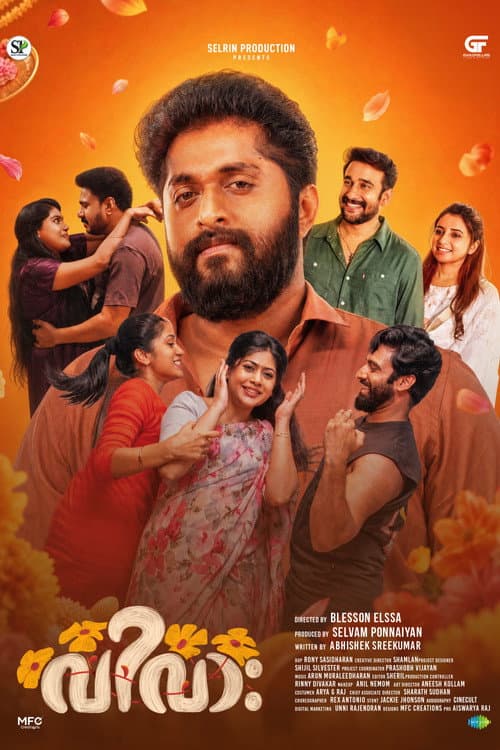
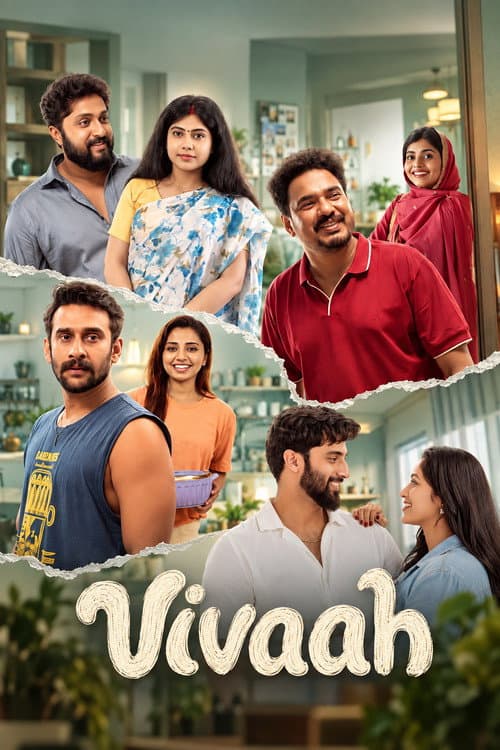
Four women. Four distinct battles. One shared, unhurried tapestry of life. That, in essence, is "Vivaah," the Malayalam family drama that slipped into theatres on September 11 and has quietly begun generating the kind of word-of-mouth that rarely accompanies a film with no fanfare and no superstar machinery behind it.
Directed by Blessonn Elssa, "Vivaah" runs a crisp 101 minutes and stars an ensemble that reads like a deliberate act of casting against the obvious: Dhyan Sreenivasan, Nayana Elza, Aneesh Gopal, Sruthi Jayan, Dhruvan, Archana Vivek, Abhishek Sreekumar and Naira Nihar. There is no marquee name engineered to carry the poster alone. Instead, the film leans on the collective weight of its performers, and by all early accounts, that gamble pays off.
The premise itself is deceptively simple. "Vivaah" follows four women navigating the struggles that define their lives, and it does so at a pace that resists the contemporary Malayalam cinema impulse to sprint. This is not a film that opens with a bang or a twist. It opens with breath, with the small rhythms of domesticity, and it trusts its audience to lean in rather than be yanked forward. In an era where even family dramas feel compelled to behave like thrillers, that restraint is itself a statement.
Elssa, at the helm, appears to understand that the material lives or dies on texture. The early buzz from theatres suggests a filmmaker more interested in the silence between arguments than the arguments themselves, more drawn to the glance across a kitchen than the monologue that explains it. That instinct is rare, and when it works, it produces the sort of cinema that lingers in the mind days after the credits roll.
What makes "Vivaah" particularly intriguing is its positioning within the broader Malayalam landscape. This is a film rooted firmly in the Mollywood tradition of intimate, character-first storytelling, the lineage that has given the industry some of its most enduring work. It does not pretend to be anything other than what it is: a romance-drama-family hybrid that wears its heart on its sleeve. The genre tag "Romance, Drama, Family" could describe a hundred films, but the execution here, by all indications, is where the distinction lies.
Dhyan Sreenivasan continues to make intriguing choices. His presence here, alongside a cast largely composed of performers who prioritize craft over visibility, suggests an actor increasingly comfortable in ensembles rather than spotlights. Nayana Elza, Sruthi Jayan, Archana Vivek and Naira Nihar form the emotional spine of the piece, and it is their interplay that reviewers have singled out. Aneesh Gopal, Dhruvan and Abhishek Sreekumar round out the ensemble with the kind of supporting work that family dramas depend upon but rarely celebrate.
It is worth noting the rating situation. As of this writing, "Vivaah" sits at 0/10 on TMDb, which, for the uninitiated, is not a verdict on quality. It is simply the empty placeholder that greets a film that has just released, before enough viewers have logged their responses to form a meaningful aggregate. Anyone treating that number as a review is reading tea leaves. The real measure will come over the next two weeks, as audiences in Kerala and beyond decide whether Elssa's film earns the slow, steady expansion that word-of-mouth hits enjoy.
The 101-minute runtime is a quiet virtue. In a market where three-hour epics remain the norm, "Vivaah" chooses concision. It says what it needs to say and exits, leaving the audience with the impression of a complete experience rather than an endurance test. For a drama centered on four women's lives, that discipline matters; it suggests the screenplay has been shaped, not simply accumulated.
Whether "Vivaah" becomes a commercial force or a critical darling, or both, or neither, is a question only the coming weeks can answer. What is already clear is that it represents a particular kind of Malayalam filmmaking that refuses to shout: measured, humane, and confident in the quiet power of ordinary lives. In a release calendar increasingly crowded with noise, that alone makes it worth a ticket.
For now, the film is in theatres, doing what good family dramas do, finding its people one conversation at a time.