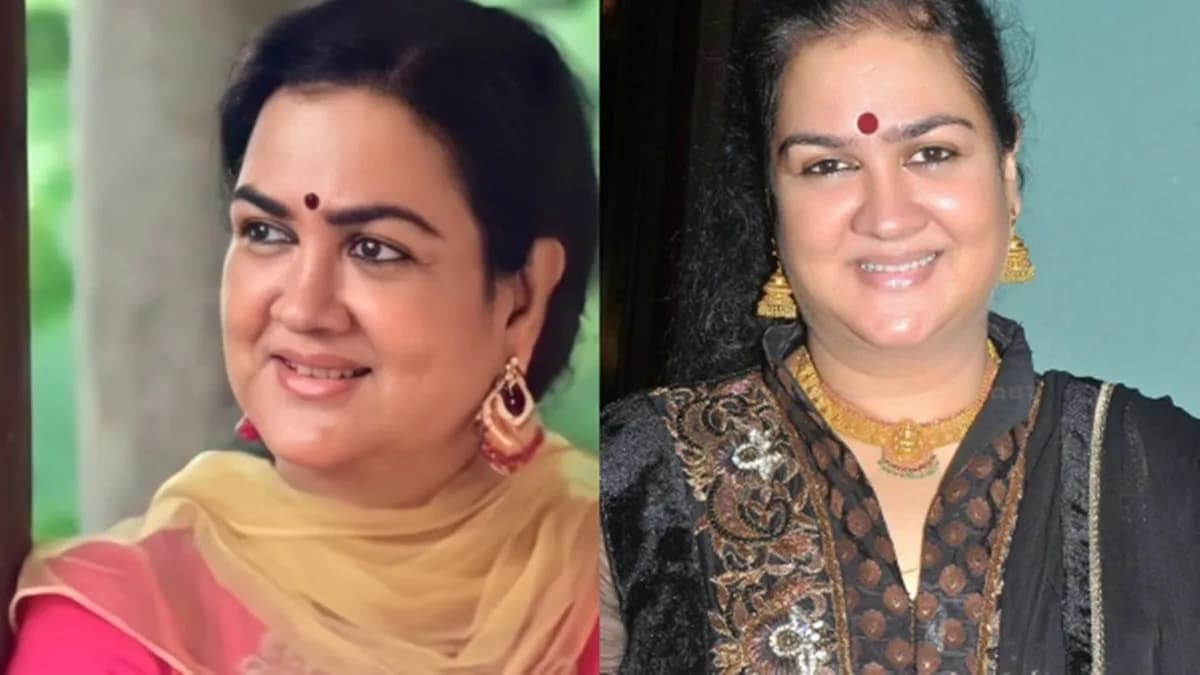
Veteran Malayalam actress Urvashi has opened up about the deep-seated social conditioning that shaped her generation of women, describing how they were raised to be accommodating figures who must adjust to whatever household they enter after marriage. Her candid remarks have sparked conversation across the Malayalam film fraternity, resonating with many who see her words as a reflection of broader societal expectations.
Speaking on a recent public platform, Urvashi reflected on the invisible yet powerful norms that governed her upbringing. She noted that women of her era were not merely encouraged but actively trained to suppress their own preferences and desires in favor of familial harmony. The actress articulated that this conditioning began early, with families preparing daughters from childhood for a future where adaptability would be their most prized virtue. According to her, the message was clear from a young age: a woman’s success in life would largely be measured by her ability to fit seamlessly into her husband’s home and family dynamics.
The actress’s comments highlight a generational shift that is now being openly discussed in the public sphere, particularly within the entertainment industry, where actresses have increasingly used their platforms to challenge outdated patriarchal structures. Urvashi, who has enjoyed a career spanning several decades, has been particularly vocal in recent years about her personal experiences and the lessons she has carried with her. Her latest remarks cut to the core of how familial expectations are internalized, a topic that has found renewed urgency in contemporary discourse surrounding gender roles in Indian society.
Urvashi’s reflection went beyond mere personal anecdote, touching on the psychological weight of such conditioning. She described how this training to adjust was so deeply ingrained that it often left little room for individual identity to flourish. The idea, she suggested, was that a woman’s own family was a temporary home, while her true, permanent place was with her husband’s family. This transient status, she implied, meant that daughters were often raised not as full members of their natal homes, but as future members of another, unknown household. The resulting pressure, she noted, was immense, as it required a constant, almost performative, state of compliance and amicability.
Within the movie industry, Urvashi’s status as a beloved and respected figure gives her words particular weight. She is known not only for her powerful performances in comedies and dramas but also for a grounded public persona that often contrasts with the more glamorous trappings of celebrity. Her observations have historically been taken seriously by fans and critics alike, often bridging the gap between cinematic storytelling and real-world realities. By speaking on this particular topic, she has effectively given voice to a silent struggle experienced by countless women of her generation, both in front of and behind the camera.
The response to her statement has been notable, with many colleagues in the film industry and members of the public taking to social media to share their own stories or to show appreciation for her frankness. Several younger actresses have reportedly engaged with her comments, noting how much has changed but also acknowledging the remnants of these expectations that still linger in modern households. Urvashi’s comments serve as a bridge between the experiences of older generations, who navigated these expectations without public discussion, and younger ones, who are actively renegotiating these terms within their own lives.
Her remarks come at a time when there is increasing scrutiny on family dynamics and the emotional labor historically expected of women. The actress clarified that she is not dismissing the value of harmony in relationships, but rather questioning the one-sided nature of the sacrifice that was demanded. She pointed out the inherent unfairness in a system that placed the entire burden of a successful marriage on the woman’s ability to adjust, change, and morph into an idealized version of a daughter-in-law, rather than placing any equivalent expectation on the receiving family or the husband to adapt in return.
This discussion is particularly poignant given the backdrop of the Malayalam film industry’s ongoing engagement with socially relevant themes. Films in the language have increasingly explored nuanced female characters, complex domestic situations, and the quiet rebellions of women within traditional frameworks. Urvashi’s personal testimony adds a layer of authentic, lived experience to this cultural conversation. It underscores that the narratives being explored on screen are not fictional abstractions but are rooted in the actual lives of the very people creating and starring in these works.
As the conversation continues to unfold, Urvashi’s contribution stands as a powerful reminder of the slow, often painful process of social change. Her phrasing, which described her generation as being born to adjust, has become a point of reference for many discussing the topic. By sharing her perspective so openly, she has not only articulated a shared grievance but also offered a measure of solidarity for those who felt they had to endure this conditioning in silence. Her voice adds a crucial, human dimension to the ongoing debate about gender, family, and identity in modern India, making it clear that the conversation is far from over.
Source: Filmibeat Malayalam