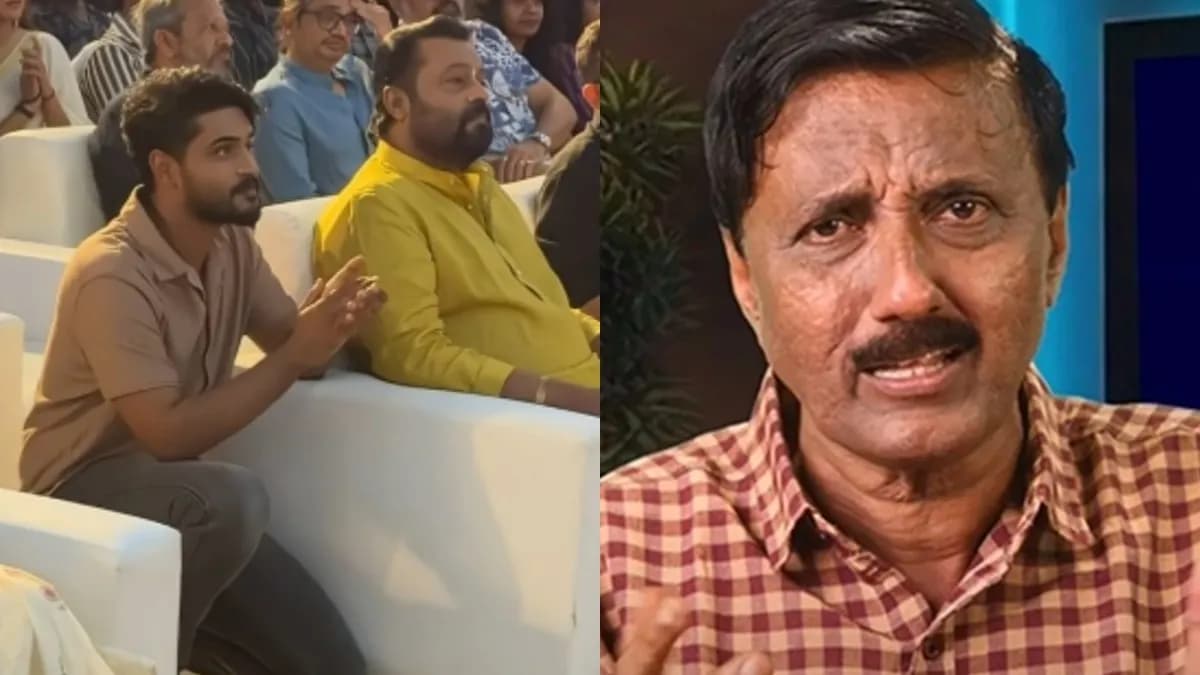
Veteran Malayalam actor and politician Suresh Gopi's long-held ambition to see the younger generation of artists speak their minds without restraint has drawn a measured defence from fellow actor Shanthivila Dinesh, who said there is nothing wrong with young people voicing opinions that may not sit comfortably with everyone. Dinesh's remarks, carried in the headline "Suresh Gopi's Wish: No Wrong in Those Kids Saying What Doesn't Sit Well in the Mouth," frame a familiar tension in Malayalam cinema between senior figures who prize discipline and a newer cohort that treats candour as a right rather than an offence.
The conversation centres on Suresh Gopi, the only figure verified in the story, whose publicly stated desire has been to see emerging talent express itself freely. Dinesh, responding to that position, argued that discomfort among listeners is not by itself grounds for objection. If the words are blunt, he suggested, the fault lies less with the speaker than with the expectation that young artists should soften their language to suit older ears.
A Generational Fault Line
Malayalam cinema has for years been negotiating a shift in temperament. The industry's senior ranks were shaped in an era when public statements were carefully weighed, when a young actor was expected to defer, and when a controversial remark could stall a career for years. The generation that followed grew up on social media, where hesitation reads as insincerity and a guarded answer invites more scrutiny than a frank one.
Against that backdrop, Suresh Gopi's stated wish reads as an endorsement of openness from a figure whose own career has straddled both worlds. An actor whose screen persona is built on authority, and who later carried that persona into public office, would not instinctively be cast as the patron of unfiltered youth. That he has taken that position anyway is what gives the discussion its charge, and it is why Dinesh's agreement carries weight rather than merely echoing a senior colleague.
Dinesh's formulation is deliberately plain. He does not claim the young are always right, nor that every blunt sentence deserves applause. His point is narrower and harder to dispute: the fact that a remark unsettles a listener does not make it wrong. Bluntness and impropriety are different things, he argues, and the industry has a habit of confusing the two when the speaker is young and the audience is older. Those in the industry who disagree will likely say that freedom of expression carries a duty of care, and that a platform is not a licence. Both positions can be held sincerely, and the disagreement is less about facts than about where the burden of restraint should fall.
What the Debate Means Beyond One Remark
For working artists, the practical stakes are real. A young performer who speaks out risks being labelled difficult, and that label can travel further than any single interview. When a senior actor publicly backs the right to speak plainly, he lowers the cost of doing so for those with less standing to absorb it. Suresh Gopi's expression of that wish, whatever its origin, does more than a private word of encouragement, because it is on the record and attached to a name that carries weight in the industry.
Dinesh's intervention also matters because it comes from a peer rather than a beneficiary. His defence is not that of a newcomer asking for latitude; it is the judgement of someone with nothing to gain from the argument, which makes the endorsement of the younger generation's candour harder to dismiss as self-interest. Taken together, the two positions sketch a broader claim: that the health of an industry depends on its ability to hear things it would rather not, and that the discomfort of the listener is a poor test of the speaker's conduct.
It is worth noting what this story is not. No particular film is attached to the discussion, and the remarks do not amount to a promotional campaign for any release. They stand on their own as an industry conversation about speech, seniority and the terms on which younger artists are permitted to be heard. Readers looking for confirmation of a project or a cast will not find it here, and none should be inferred.
What remains is the substance of the exchange. Suresh Gopi, according to the framing, wants young artists to speak their minds. Shanthivila Dinesh says they are entitled to do so, including when the words land badly. Whether the rest of the industry agrees will become clear in how it treats the next young actor who says something inconvenient, which is the only test that counts.
Source: Filmibeat Malayalam