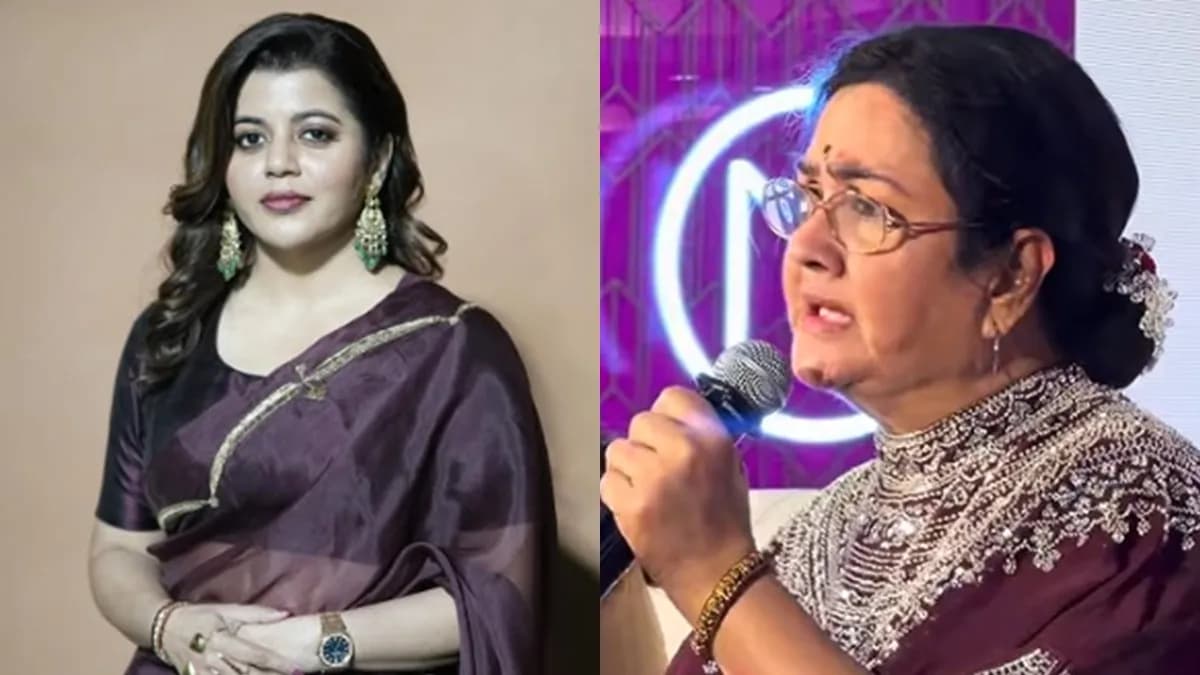
Actor Supriya Menon has publicly criticised fellow actor Urvashi, stating that she too has faced behaviour she found objectionable and questioning why speaking in English should invite a particular kind of scrutiny. Supriya's remarks, made in a widely circulated statement, centre on the treatment of Urvashi within the Malayalam film industry and on what she describes as a tendency to single out certain figures for their manner of speech.
"which translates to "I am also someone who has faced this directly; what is wrong with speaking in English?" - formed the core of Supriya's response, echoing a sentiment shared by many who have watched the unfolding controversy surrounding Urvashi.
Context of the Dispute
The dispute has drawn attention to longstanding debates about language, background and perceived elitism within the Malayalam film community. Urvashi, a veteran performer with decades of work behind her, has been at the centre of discussions that touch on how industry insiders are judged not only for their craft but for personal attributes such as the language they choose in conversation. Supriya's intervention reframes the issue as one that extends beyond a single individual, suggesting a broader pattern in how criticism is meted out.
By saying she has encountered similar treatment personally, Supriya moves the conversation away from an isolated incident involving Urvashi and toward a question of consistency - why some figures become targets while others escape similar commentary. Her phrasing is pointed but not elaborate; she does not name specific incidents or individuals beyond Urvashi, leaving the focus on the principle rather than a catalogue of grievances.
A Question of Language and Judgment
The English-language element of Supriya's statement carries its own weight in a film culture where the use of English can be read as a marker of class or aspiration, and where that reading sometimes curdles into resentment. Her rhetorical question - what exactly is the problem with speaking English? - pushes back against the assumption that linguistic choice should determine how a professional is assessed.
That framing matters in an industry that spans multiple languages and regions, where performers routinely work across linguistic boundaries. To treat English as grounds for suspicion or mockery is, in Supriya's implied argument, to confuse style with substance. The comment also implicitly defends Urvashi's right to express herself in whichever language she prefers without it becoming material for attack.
Solidarity and Its Limits
Supriya's remarks arrive as a show of solidarity, but they also raise the question of what such support accomplishes in practice. Public statements can shift the tone of a debate, yet they rarely resolve the underlying dynamics that produced the controversy in the first place. Supriya's contribution is notable for its directness - she asserts her own experience rather than simply defending Urvashi from a distance, which lends her criticism the authority of lived familiarity.
Whether the industry treats this as a moment for reflection or allows it to pass as another episodic flare-up remains to be seen. What is clear is that Supriya has chosen not to stay silent, and that her words connect an individual grievance to a wider conversation about how the Malayalam film world polices its own.
For now, the exchange stands as a reminder that reputations in the industry are shaped as much by off-screen conduct and commentary as by on-screen work. Neither Supriya nor Urvashi has indicated any further escalation, and the discussion continues largely through public remarks rather than formal action.
Source: Filmibeat Malayalam