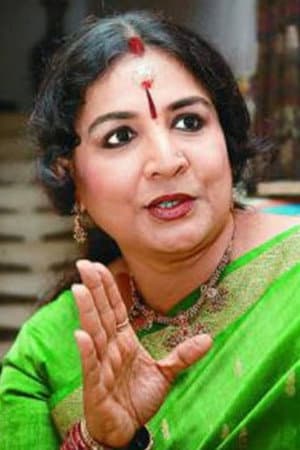
Veteran Malayalam actor Shanthivila Dinesh has offered a candid assessment of his working relationship with Jayabharathi, saying that problems were a constant feature on sets where the two shared screen space and that her working style was often difficult to navigate. Speaking in an interview, the actor linked those on-set frictions to what he sees as a wider cost: Jayabharathi, despite her stature, did not go on to receive the kind of strong films her talent deserved.
The remarks, which have circulated widely in Malayalam film circles, do not concern a single production but instead reflect Dinesh's broader recollection of the period in which the two actors worked together. His observation about the shortage of good roles carries a note of regret rather than mere complaint, framing the clash of temperaments as part of a larger story about how the industry treats formidable performers.
An Actress of Rare Range
Jayabharathi is one of Malayalam cinema's most celebrated performers, with a career stretching across decades and several generations of co-stars. She is particularly associated with the golden age of the 1970s and 1980s, a period in which she delivered a string of emotionally demanding roles opposite Prem Nazir, Madhu, Soman and others. Her ability to move between tragic heroines, strong-willed women and more lighthearted characters made her one of the most sought-after leading ladies of her time.
That reputation makes Dinesh's assessment a pointed one. He is not describing a marginal figure but a performer whose filmography is held in high regard. His suggestion that she did not receive the films she ought to have - coming from a colleague who worked alongside her - touches on a familiar lament in Malayalam cinema: that its finest actors are not always matched with material worthy of them.
Friction Behind the Camera
According to Dinesh, the difficulties were not isolated incidents but a recurring reality of the shoot. He characterized Jayabharathi's methods as demanding, and said that the atmosphere on set would frequently be strained as a result. The actor did not go into specific productions, and his comments appear to be a general reflection on their collaborations rather than an account of any one film.
Read in context, such remarks are not unusual in an industry where strong personalities and high-pressure schedules frequently collide. Senior actors often speak in later years about the discipline and intensity that defined sets in earlier decades, and disagreements over approach were not uncommon. What gives Dinesh's comments weight is the contrast he draws: a performer of evident ability, a difficult working environment, and a resulting gap between what she could have done and what she was offered.
A Career That Defied Easy Labels
Jayabharathi's place in Malayalam cinema has never been in doubt. Her filmography includes some of the most watched and most discussed titles of her era, and her partnerships with leading men of the period remain part of the industry's collective memory. She was also among the actors who moved comfortably between mainstream melodrama and more serious dramatic work, a versatility that Dinesh's remarks implicitly acknowledge.
The question he raises is a broader one about how the industry allocates its best writing. Strong female roles were, for much of Malayalam cinema's history, in shorter supply than the actresses capable of performing them. The result, as Dinesh suggests, was that even performers of the first rank sometimes found themselves in projects that did not test them fully.
A Conversation That Resonates
The actor's comments have found an audience because they reopen a discussion Malayalam cinema returns to periodically: how its senior artists are treated, both on set and in the material offered to them. Dinesh speaks as a colleague rather than a critic, and his tone appears to be one of retrospection rather than accusation.
For audiences, the remarks add a human dimension to a celebrated career. They serve as a reminder that the polished performances seen on screen were often produced under conditions of real tension, and that the films an actor makes are not always the films an actor might have hoped for. Dinesh's account of the working relationship is therefore less a verdict on Jayabharathi than an observation about the distance between talent and opportunity in an industry that has always struggled to close it.
Source: Filmibeat Malayalam