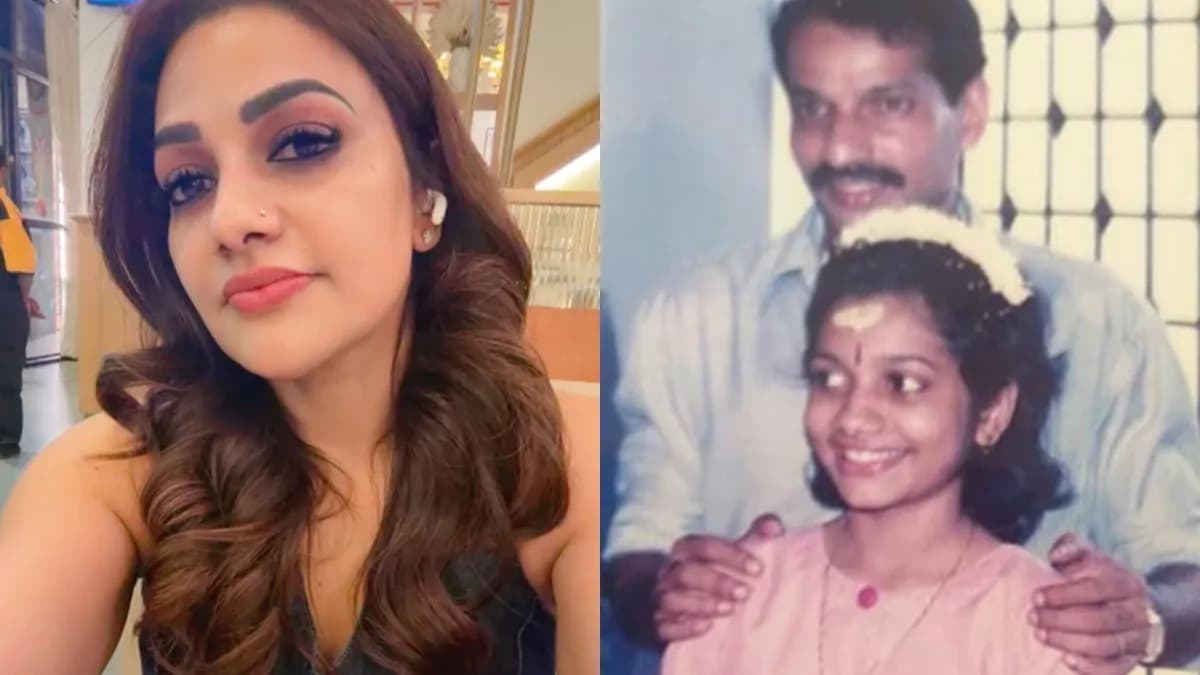
Rimi Tomy has spoken candidly about one of the hardest broadcasts of her career - a comedy show episode she had to film shortly after her father's death, when laughter felt impossible and every joke landed against a backdrop of grief. In an emotional reflection, the singer and television personality said going in front of the cameras in that condition was deeply painful, and she suggested that no sorrow in life quite compares to losing a parent.
The revelation offers a rare glimpse into the private cost of public work for performers, particularly those whose job description is to smile. Rimi, known to Malayalam audiences as much for her wit and screen presence as for her playback singing, described the experience as being caught between the obligation to entertain and a heart that simply was not in it. She recalled reaching the set while still processing the loss, unable to summon the ease her role demanded.
Her account underlines a difficult truth about the entertainment business: filming schedules and commitments often keep moving regardless of what artists are enduring away from the spotlight. For a comedy format, the contrast is especially stark. A performer is expected to spark laughter on cue, while privately grappling with the kind of grief that makes even a smile feel like an effort. According to Rimi, that dissonance during the show was almost unbearable, and she made no attempt to disguise how much it hurt.
Rimi's own words framed the loss as singular. She spoke of her father's passing as a wound unlike any other in her life - a formulation that carries weight coming from a public figure who has spent years in an industry where resilience is assumed and vulnerability is rarely displayed. By speaking plainly about it, she gives that sentiment the space it deserves rather than dressing it up.
The episode in question, and the show's exact timing, have not been publicly detailed in the accounts available, and the circumstances surrounding the broadcast remain largely a matter of the artist's own recollection. What emerges clearly is the emotional landscape rather than any production minutiae: a daughter walking into a studio while still mourning, then being asked to be funny.
For audiences used to seeing only the polished result, her honesty is a reminder that the person on screen is not separate from the life being lived off it. Artists frequently carry personal upheaval into their work because contracts, crews and broadcast dates do not pause for grief. Rimi's decision to describe that reality openly, instead of letting it pass unmentioned, turns a passing television memory into something more substantial - an acknowledgment that the pressure to perform cheerfully can collide painfully with what a person is actually feeling.
Her reflection also raises a broader question about how the industry supports performers during loss. Comedy and light entertainment rely on mood, timing and mood again, and there is little room in such formats for visible sorrow. When a host or judge is visibly struggling, audiences notice; when they carry on without a word, the struggle goes unseen. Rimi has chosen visibility over silence, and in doing so she places loss and love at the centre of the story, not the show itself.
The singer's remarks have resonated widely among listeners, touching on something universal: the expectation to keep going when life has been upended. Whether her disclosure prompts any change in how such situations are handled behind the scenes remains to be seen, though the conversation she has opened is about far more than a single episode or a single schedule.
For now, Rimi's contribution to that conversation is simple and unflinching. Losing one's father, she suggested, is a grief with no equal - and no professional obligation, however cheerful, can make it disappear. That she said so publicly, at a time when the easiest course would have been silence, says as much about her as anything she has done on stage.
Source: Filmibeat Malayalam