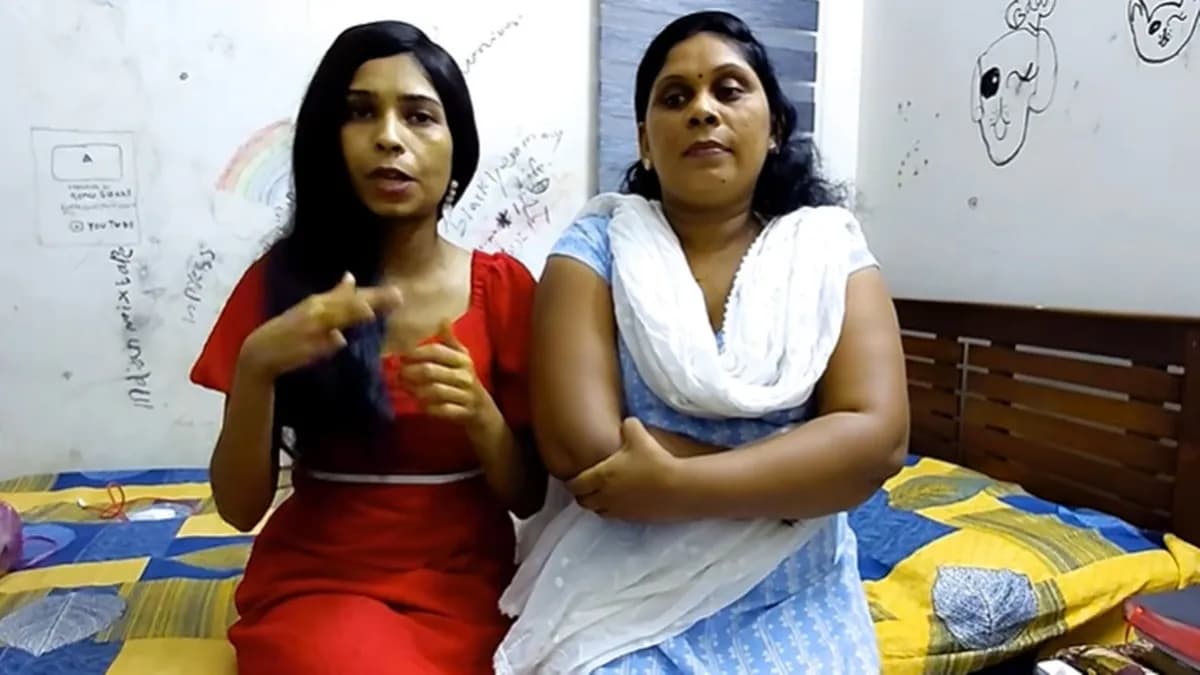
Actor Renu Sudhi has spoken publicly about an incident at a hospital that she says left her deeply shaken, describing the conduct of a nurse there as a grave wrong that cannot be justified for any reason. In remarks that have drawn wide attention, she framed the episode as a serious betrayal rather than a minor grievance, and her account has renewed discussion about how patients and visitors are treated in medical settings.
The actor did not hold back in her assessment. According to her, whatever the motive behind the act, the harm done was severe, and she characterized it as a mahamosham - a great calamity or grave misdeed - rather than something that can be explained away. Her decision to speak openly has been read by many observers as a signal that she intends the matter to be discussed in public rather than settled quietly.
A Personal Account, Not a Film Promotion
What has struck commentators is the context. This is not a promotional interview tied to an upcoming release, nor a carefully staged statement timed for publicity. Sudhi's remarks came as a personal testimony, and that framing has given them added weight. In an industry where public statements are often calibrated for visibility, a working actor choosing to describe a difficult personal experience carries a different kind of resonance.
The details she has chosen to share remain limited. She has focused on the nature of the wrongdoing rather than naming individuals or institutions, and she has not laid out a step-by-step chronology of what transpired. That restraint has not dampened interest; if anything, it has shifted attention to the broader question she appears to be raising - that conduct in a place of care carries an obligation beyond convenience or procedure.
Why the Setting Matters
Hospitals occupy a particular place in public trust. Patients arrive vulnerable, often frightened, and dependent on staff who hold both expertise and authority. When someone with a public platform says that trust was misused, the claim lands differently than a complaint about almost any other institution. Sudhi's words have therefore been received not simply as one person's grievance but as a prompt to examine how such situations are handled and whether they are taken seriously when they arise.
Her choice of language is notable. By insisting that the act was wrong regardless of its purpose, she rejects the idea that good intentions or institutional pressures can neutralize harm. It is a position that leaves little room for excuse, and it places responsibility squarely on the conduct itself.
The Response So Far
As of now, there has been no formal statement from Sudhi elaborating on the specifics, and no confirmation of any complaint or inquiry connected to her account. She has not disclosed where the hospital is located, who employed the nurse, or what precisely occurred. Those gaps have not prevented the remarks from circulating widely, but they do mean that much of the discussion rests on her characterization rather than on documented particulars.
For a news audience, that distinction matters. Sudhi's statement is a first-person assertion, and it deserves to be reported as such - her account, in her words, without added detail that has not been substantiated. What is clear is that she has chosen to attach her name to a strong condemnation rather than let the matter pass.
A Familiar Pattern in Malayalam Cinema
Malayalam cinema has seen a steady stream of actors using their public visibility to raise issues outside the realm of film. Sometimes those interventions concern working conditions within the industry; sometimes they concern matters of public life more broadly. Sudhi's remarks fit that tradition, though the subject here is unusually personal and the setting unusually sensitive.
The actor's willingness to describe the episode as a grave wrong, rather than softening it into a general observation about service standards, suggests she wants the seriousness of the claim to be registered. Whether that leads to any formal follow-up remains to be seen.
What Comes Next
For now, the story rests on Sudhi's own account, and further clarity will depend on whether she chooses to say more or whether any institution responds. Her statement has already done one thing: it has placed a question in the public domain about accountability in places where people are most dependent on the good faith of those caring for them.
Renu Sudhi has made her position plain - that the wrong she describes was serious, and that no justification can make it acceptable. The conversation she has started is now broader than her own experience, and how it develops will be watched closely.
Source: Filmibeat Malayalam