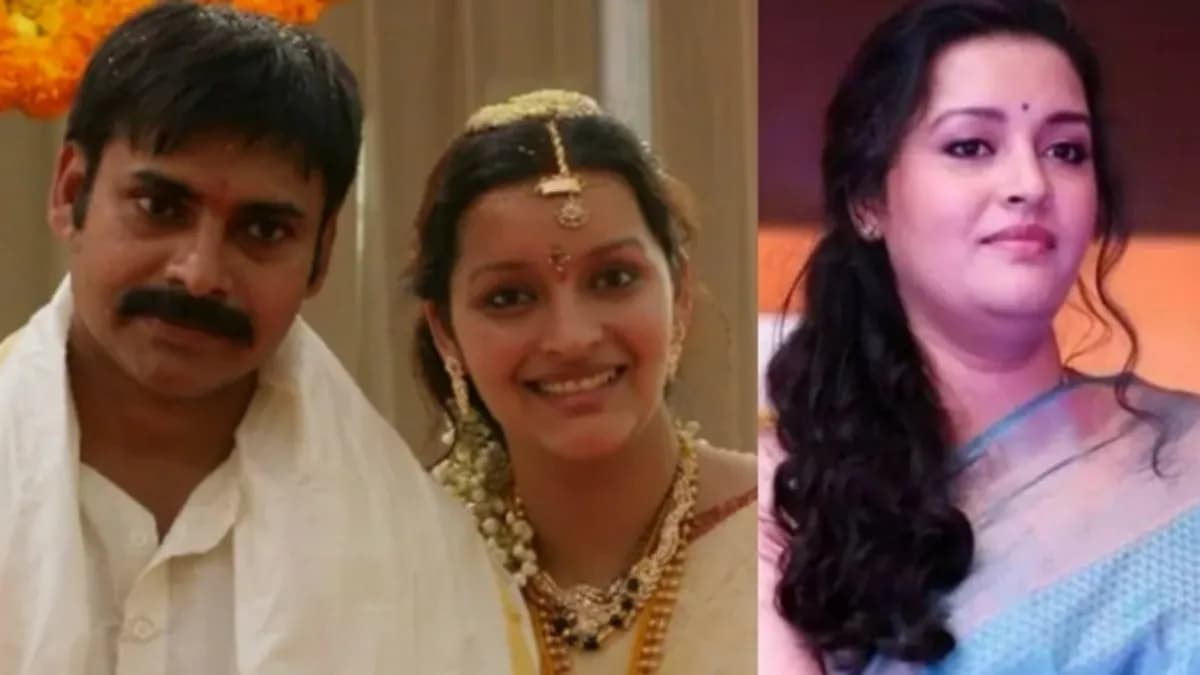
Renu Desai has once again addressed the speculation surrounding her personal life and public image, saying that some people around her seem to believe she has nothing left to live for, and questioning when her period of exile will finally end. The remarks, which surfaced in a widely shared statement, mark the latest instance of the actor and former wife of superstar Pawan Kalyan speaking plainly about how she is perceived in the public eye. The headline attached to the story captures her frustration directly: that some people think she has nothing to live for, and her asking when her "exile" will end.
Desai's comment is notable less for any new revelation than for its tone. She is not describing a professional setback or a specific dispute in the reporting available so far. Instead, she is pushing back at a narrative she believes others have constructed around her - one in which her life is treated as finished, and her withdrawal from the centre of things as permanent. By framing it as an "exile," she suggests a period imposed from outside rather than chosen, and by asking when it will end, she signals that she does not accept it as her final chapter.
The phrasing carries weight in a film culture where a woman's career and personal life are routinely read through the men she has been associated with. Desai's public profile has long been shaped by her marriage to Pawan Kalyan, its end, and her subsequent move away from the Telugu film industry's everyday bustle. Those facts are well known to audiences, and they are precisely why her words land with a certain charge. She is speaking to an audience that already has a fixed idea of who she is, and she is telling that audience the idea is wrong.
A Long History of Speaking Directly
This is not the first time Desai has used a public platform to challenge assumptions about her. Over the years she has been candid about the difficulties of life after a high-profile marriage, about the scrutiny that comes with being a public figure's former spouse, and about the choices she has made for herself and her children. She has also been open about her health and about the pressures of living under constant observation. The consistency matters: today's remark reads not as an isolated outburst but as another entry in a running commentary she has maintained on her own terms.
What makes the latest statement effective is its economy. She does not name anyone, describe a specific incident, or ask for sympathy. The two-part construction - an assertion about what others think, followed by a question about when it will end - does the work of a much longer statement. It invites readers to recognise the gap between perception and reality without requiring her to litigate the details in public.
The "Vanavasam" Framing
The word she uses for her situation translates roughly as a forest exile, a term loaded with cultural meaning. In the Indian imaginary it evokes a principled withdrawal, a period of testing, and ultimately a return. Invoking it is a deliberate choice: it reframes what might look like absence as endurance, and it implies that an ending is expected. Whether Desai intends the word in that classical sense or simply as a shorthand for isolation and distance from the industry, the effect is the same. It casts her as someone waiting out a sentence rather than someone who has faded away.
The metaphor also carries a quiet defiance. An exile, by definition, has a homeland to go back to. In asking when her exile will end, she is asserting that she still has somewhere to return to - a career, a public role, a life in the spotlight - and that the current arrangement is temporary.
Why It Resonates
Audiences in the Malayalam and wider South Indian film-reading public have grown used to stars' former partners being discussed more than heard. Desai's willingness to speak in her own voice, without a publicist's polish, has made her a figure who draws attention whenever she comments. Her remarks tend to travel quickly because they are short, direct, and feel unmediated.
There is also the broader context of how the industry and its audiences discuss women who step back from active work. Too often, absence is read as defeat, and a choice to live quietly is treated as evidence that nothing remains. Desai's statement pushes against exactly that assumption. She is not asking to be pitied. She is asking to be seen accurately.
For now, there is no indication of what prompted the comment or what she plans next. What is clear is that Desai is not content to let others write the story of her life for her - and that when she says her exile will end, she means it as a statement of intent rather than a question. Whether the industry and its audiences are ready to accept that framing is a different matter, and one she seems prepared to keep pressing.
Source: Filmibeat Malayalam