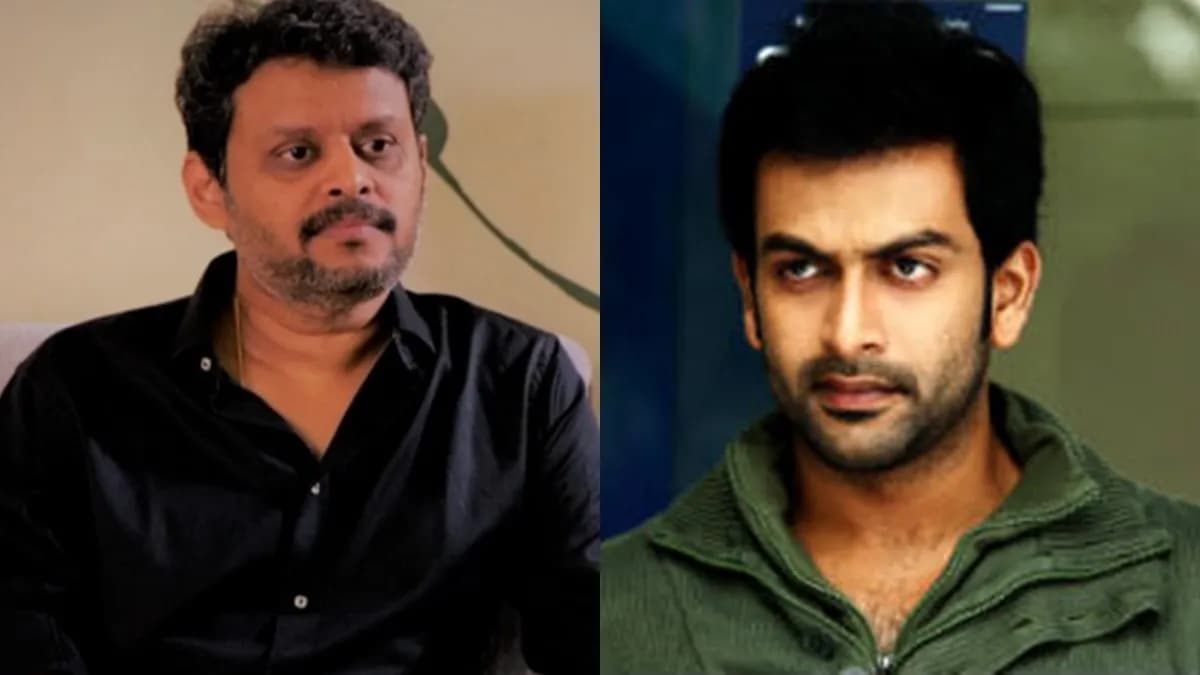
Prithviraj Sukumaran responds to a producer's request to cut his remuneration, and Ranjith Shankar opens up on the money debate in Malayalam cinema.
Actor Prithviraj Sukumaran has responded to a producer's request that he reduce his remuneration, and filmmaker Ranjith Shankar has now spoken openly about the episode, offering a rare public glimpse into how money conversations are playing out in the Malayalam film industry. The discussion surfaced after word of the producer's demand circulated, prompting the actor's reaction and then Ranjith Shankar's decision to address the matter candidly rather than let speculation fill the gap.
What is clear from the accounts is that the request came from a producer directly to the actor, and that Prithviraj did not dismiss it out of hand. According to Ranjith Shankar's public comments, the actor's response was measured: he acknowledged the producer's position while pointing to the realities that shape a leading actor's fee. The director's remarks have been read as confirmation that such negotiations are becoming more common in Malayalam cinema, where production budgets are under strain and stars are being asked to share the burden.
What Ranjith Shankar Said
Ranjith Shankar was candid about the exchange, framing it as part of a wider conversation the industry can no longer avoid. Speaking openly, as the headline suggests, he indicated that the producer's request was not an isolated incident but a signal of the pressure mounting on those financing Malayalam films. He did not present the demand as an insult to the actor, nor the actor's reaction as a refusal. Instead, his account suggests a working relationship in which such subjects can be raised.
The director's willingness to talk about it publicly is notable in a film culture where fee discussions are usually kept behind closed doors. His remarks have given the story an unusual degree of transparency, and they place Prithviraj at the centre of a question that touches every major star in the industry.
The Actor's Position
Prithviraj's reaction, as described, was neither defensive nor dismissive. He is understood to have engaged with the producer's request while explaining why a leading actor's remuneration is structured the way it is. That structure reflects more than a single film: it accounts for the market a star commands, the time committed to a project, and the risks an actor absorbs when a film's fortunes are uncertain.
For a performer of Prithviraj's standing, a fee is also a benchmark that affects how the rest of a project is priced. Lowering it in one case can ripple outward, shaping expectations for future deals. His response appears to have balanced that practical concern with an openness to the industry's financial difficulties, which is likely why Ranjith Shankar chose to describe the exchange in positive terms rather than as a standoff.
Why This Conversation Is Happening Now
The episode reflects a broader shift in Malayalam cinema. Producers have grown more vocal about the share of a budget consumed by star salaries, particularly as audience expectations for production quality rise and the margin for error narrows. The argument runs that if films are to remain viable, actors must be willing to adjust their terms when a project's economics require it.
At the same time, actors point out that they are not the only cost centre, and that a star's fee often comes with the marketability that helps a film find buyers and audiences in the first place. The tension between those two views is now being aired more openly, and the Prithviraj episode has become a talking point precisely because it puts a name and a face to a debate that has been simmering for some time.
Calm Over Conflict
What stands out in Ranjith Shankar's account is the absence of hostility. Reports of a producer asking a star to cut his fee can easily be framed as a confrontation, but the director's public comments suggest a professional conversation between people who understand each other's constraints. Prithviraj's reaction, as conveyed, was to listen and respond rather than to walk away.
That tone matters for an industry that depends on close working relationships. Malayalam cinema is small enough that producers, directors and actors often collaborate repeatedly, and a public fight over money can outlast any single project. The fact that this particular exchange has been discussed without rancour may encourage others to handle similar conversations the same way.
What It Means Going Forward
The immediate takeaway is that remuneration is no longer a subject reserved for private negotiation. Producers are willing to ask, and at least some actors are willing to engage. Whether that leads to a lasting change in how Malayalam films are budgeted remains to be seen, but the conversation has been opened, and Ranjith Shankar's frank comments have kept it in the public eye.
For Prithviraj, the episode adds another dimension to a career already marked by a willingness to take on production-side responsibilities and to speak about the industry's challenges. For the wider industry, it is a reminder that the relationship between stars and the people who finance their films is being renegotiated, sometimes quietly and sometimes, as here, in full view. The coming months will show whether this exchange becomes a template or an exception.
*Source: [Filmibeat Malayalam](https://malayalam.filmibeat.com/features/ranjith-sankar-opens-up-about-prithvirajs-reaction-when-requested-to-reduce-salary-146281.html)*