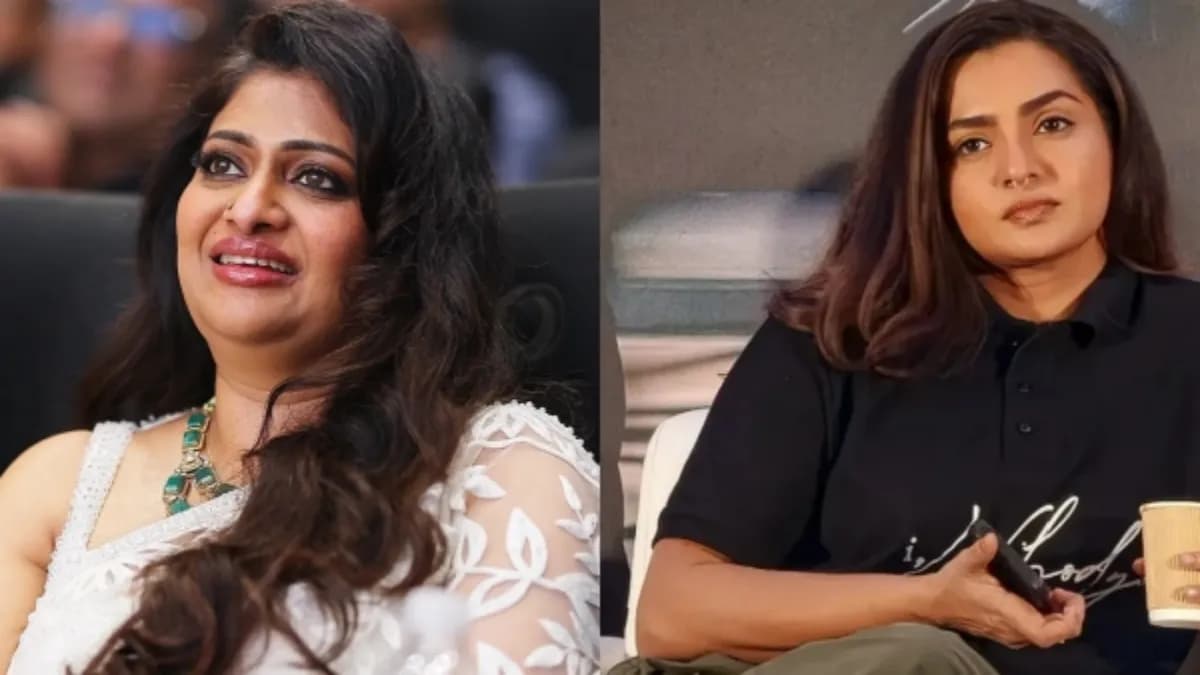
In the ever-evolving landscape of Malayalam cinema, few filmmakers command as much respect and scrutiny as Geetu Mohandas. The acclaimed director, known for her unflinching and deeply humanistic storytelling, has consistently pushed boundaries with her work. However, with her upcoming film featuring the rising star Parvathy Thiruvothu, the conversation has taken a sharp turn, moving beyond the screen and into the politics of personal relationships and public perception.
Speaking candidly ahead of the film’s release, Geetu Mohandas addressed the swirling debates surrounding both the project and her own artistic identity. Her comments, aimed squarely at the industry's inner circles, have ignited a fresh dialogue about mentorship, ambition, and the uncomfortable nature of growth. The director revealed a palpable tension, noting that some individuals who had initially attached themselves to Parvathy under the guise of being close friends have since distanced themselves. The reason, she suggests, is a fundamental discomfort with the actor’s professional and personal evolution.
"Those who came along pretending to be close friends did not like Parvathy's growth," Geetu stated, her tone reflective yet pointed. The remark cuts deep into the often-silent dynamics of support and envy within the film fraternity. In an industry where relationships are frequently transactional, the director’s observation speaks to a broader truth: success can be a lonely pursuit. Parvathy, who has transitioned from a promising newcomer to a formidable leading lady and producer, has never shied away from speaking her mind or choosing unconventional roles. This trajectory, Geetu implies, has made some in her orbit uncomfortable, preferring a more pliable and agreeable version of the actor.
This is not merely a sidebar of gossip; it is a foundational theme woven into the fabric of their current project. The film, which has been in the works for some time, tackles complex emotional terrain, and the parallels between its narrative and the real-world experiences of its lead actress are striking. Geetu’s willingness to vocalize these tensions adds a meta-textual layer to the movie, inviting audiences to consider how art often imitates the very lives that create it. The director’s assertion is that Parvathy’s authenticity, her refusal to be contained, is precisely what makes her such a powerful screen presence - and also what threatens those who prefer passive collaborators.
Beyond the personal dynamics with the actress, Geetu Mohandas was also forced to confront a label that has been applied to her with increasing frequency: feminist. In her latest interview, she rejected the descriptor with a characteristic bluntness that has become her signature. "Geethu is not a feminist," she said, correcting what she perceives as a misreading of her work and persona. The statement is jarring at first, given that her filmography often centers on women navigating oppressive systems. However, her clarification offers a nuanced understanding of her artistic philosophy.
For Geetu, the label feels reductive, a box that simplifies the complexity of her characters and narratives into a single political ideology. She contends that her interest lies in the human condition in its entirety - in injustice, loneliness, love, and resilience - not in championing a specific cause. By rejecting the term, she is asserting her autonomy as a storyteller who does not wish to be defined by a singular agenda. It is a provocative stance in a cinematic era where identity politics often dominate the discourse, and she knows it will generate headlines. Yet, the director remains unapologetic, insisting that her lens is simply that of an observer of truth, unfiltered by any prescribed ideology.
The convergence of these two statements - the observation about Parvathy’s “friends” and the repudiation of the feminist label - paints a portrait of an artist who is fiercely independent and unafraid of isolation. Geetu Mohandas understands that true creative partnerships require a degree of fearlessness that many do not possess. Her bond with Parvathy, forged through mutual respect and a shared willingness to take risks, seems to be exactly the kind of relationship that scares those who prefer the status quo.
As the film readies for its theatrical run, the chatter surrounding it has inevitably shifted from the technical merits of the filmmaking to the real-world drama of its key players. For some audiences, the backstory may enrich the viewing experience, adding weight to every glance and line of dialogue. For others, it may serve as a reminder that the Malayalam film industry, while progressive, is not immune to the petty politics of ego and insecurity.
What remains undeniable is the boldness of Geetu Mohandas’s vision. By openly discussing these uncomfortable truths, she has ensured that her film is not just a piece of entertainment but a statement of intent. In her view, a true artist must be willing to lose some friends along the way in order to keep their soul. Whether or not one agrees with her self-identification, her commitment to honest, uncompromising storytelling is a beacon for a new generation of filmmakers. The conversations she has sparked are perhaps as important as the film itself, forcing the industry to look inward at its own contradictions and the price of progress.
Source: Filmibeat Malayalam