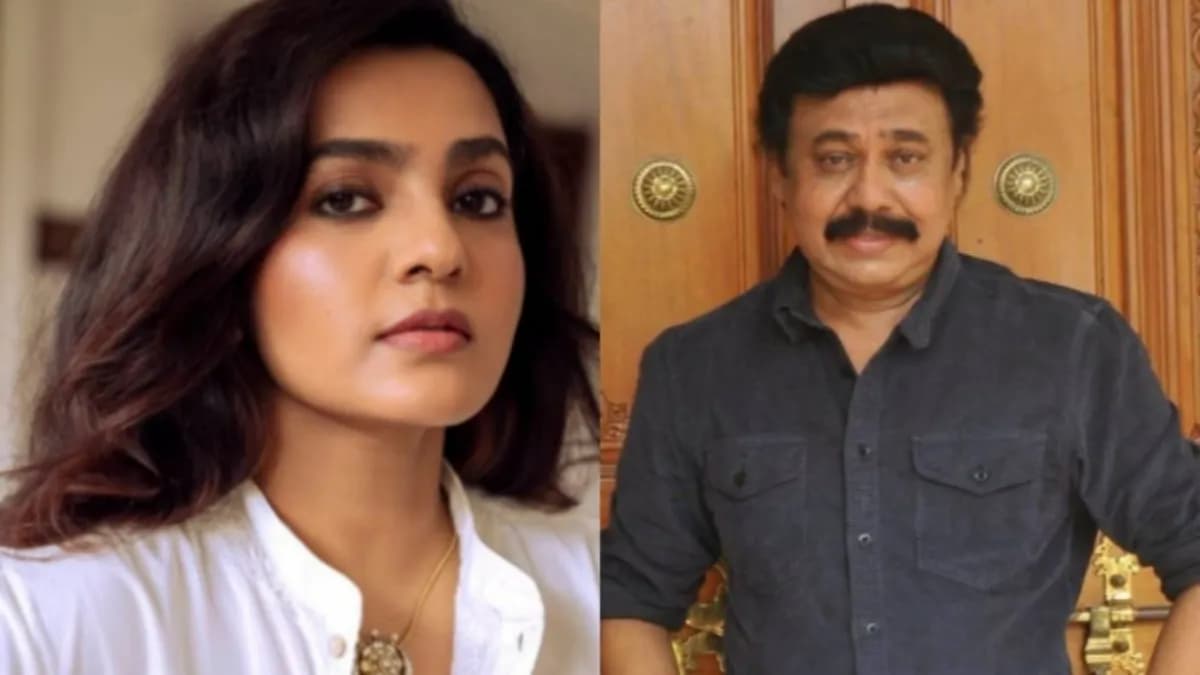
The Malayalam film industry is once again at the center of a heated debate, this time surrounding actress Parvathy Thiruvothu. A pointed question is doing the rounds in industry circles and among cinephiles alike: Is the talented performer being systematically sidelined precisely because she speaks her mind without fear? The murmur has grown loud enough that it now demands a closer look at what, exactly, is happening behind the scenes.
The crux of the matter appears to be a growing perception that Parvathy’s outspoken nature on social and professional issues has made her a target for exclusion. Despite delivering consistently strong performances and earning critical acclaim, the actress finds herself facing a peculiar professional freeze. The query, posed in its starkest form, is this: What mistake has she actually made? For many observers, the answer is nothing - except, perhaps, the crime of refusing to stay silent.
Parvathy has never been one to toe the line. Over the years, she has publicly questioned the industry’s handling of the Women in Cinema Collective’s demands, called out sexism in film criticism, and openly discussed the rampant inequality in Malayalam cinema. She has also been vocal about the need for better safety protocols on sets and the importance of equal pay. These are not fringe opinions; they are mainstream, progressive positions that many of her peers privately agree with but seldom voice. The contrast between her public advocacy and her dwindling presence in high-profile projects has become impossible to ignore.
The actress’s recent filmography tells the story more starkly than any press release. While she has been part of a few anthology segments and smaller productions, the big-budget, marquee releases that once came her way have noticeably dried up. Directors who previously queued up to work with her have, for the most part, fallen silent. Meanwhile, actresses with similar or lesser range continue to land prominent roles with regularity. This disparity has not gone unnoticed by audiences, who have begun to ask uncomfortable questions both online and offline.
Industry insiders suggest that the issue is not a formal blacklisting but an informal, unspoken consensus. Producers, already wary of controversy, are said to be cautious about casting someone who might publicly call out problematic behavior. In a market that thrives on packaged hero worship and safe narratives, a woman who challenges the status quo is often viewed as a liability. This is not a uniquely Malayalam phenomenon, but the smallness of the industry here makes the repercussions far more acute. There is no vast parallel cinema circuit to fall back on, and streaming platforms, while expanding, still look to mainstream budgets to anchor their big-ticket releases.
Yet, the narrative that Parvathy is being punished is not universally accepted. Some argue that her career choices have simply shifted toward more selective, content-driven work. They point to her collaborations with emerging filmmakers and her deliberate move towards roles that offer substance over screen time. However, this defense conveniently overlooks the sheer volume of actresses who manage to balance both commercial and artistic work without facing the same drought. The logical conclusion, many argue, is that the industry has made space for her talent but not for her voice.
The public reaction has been one of growing solidarity with the actress. Social media has been flooded with posts sharing the original question, with hashtags calling for transparency. Film buffs are revisiting her past interviews and performances, many expressing renewed admiration for her courage. Fan clubs and women’s rights groups have organized discussions, not just about Parvathy, but about the broader culture of silencing dissent in the film world. Her silence on the matter, which has been deafening, is itself being read as a statement - a refusal to play the victim or to beg for work.
Parvathy herself has not issued any statement addressing the speculation directly. In past interviews, however, she has spoken about the cost of honesty. She has acknowledged that being direct often makes people uncomfortable and that she has had to accept the professional consequences of her principles. She has also maintained that she has no interest in apologizing for who she is. This unwavering stance has only endeared her further to her fanbase, even as it has complicated her professional relationships.
The Malayalam film industry has a proud legacy of being progressive in its storytelling, but its off-screen dealings remain mired in age-old power dynamics. The Parvathy question exposes a painful truth: that merit alone rarely guarantees success when it is accompanied by outspokenness. It forces a reflection on whether the industry truly values women who lead, not just in front of the camera, but in conversations that shape the culture itself. As audiences become more conscious and demanding, the pressure is mounting on producers and directors to answer a simpler query: Will they let good work and bold voices coexist, or will they continue to quietly punish one in favor of the other? For now, the silence in offices and studios across Kochi remains the loudest response.
Source: Filmibeat Malayalam