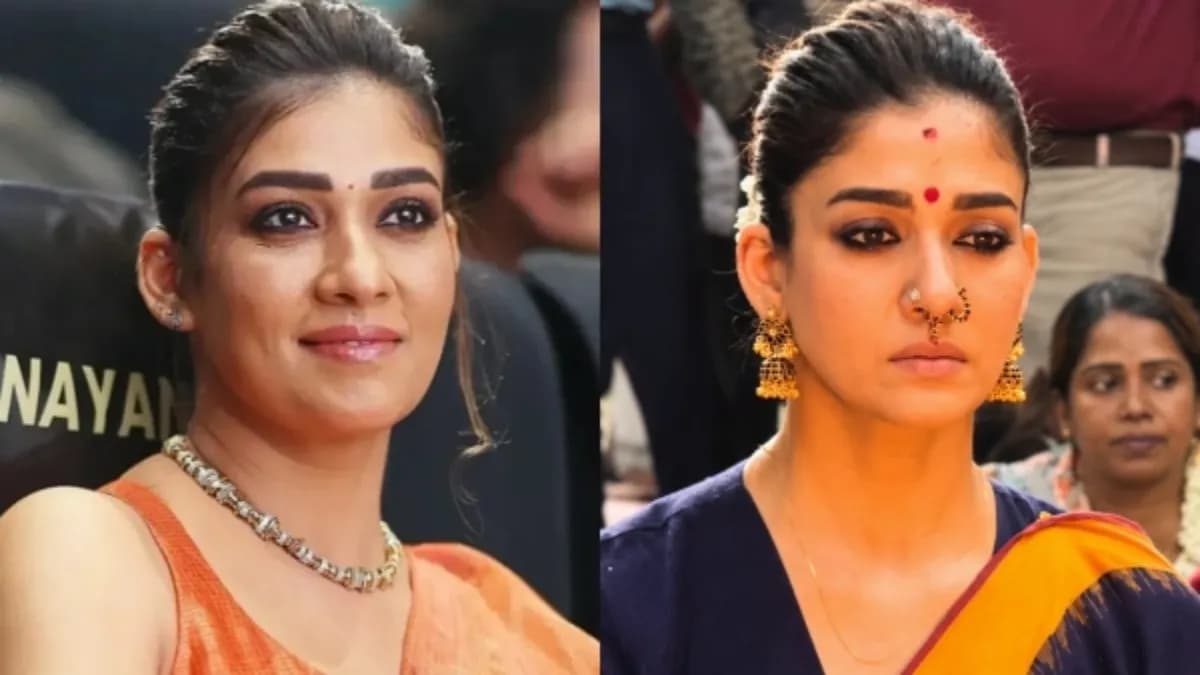
The conversation around Nayanthara has rarely been only about her looks, and a headline now circulating in Malayalam film circles frames that idea sharply: the gravity in her face and the sharpness in her eyes, a screen presence that goes beyond beauty and feels almost divine. The phrase has taken hold among admirers of the actor, who argue that what she brings to a frame cannot be reduced to glamour or to the familiar language of stardom.
The observation is a critical one rather than a promotional claim. It speaks to the way Nayanthara holds a shot - the stillness she can summon, the sense that something is being withheld rather than performed. In an industry that has long celebrated expressive excess, her register is quieter and, for many viewers, more unnerving. The seriousness in her expression and the intensity in her gaze are not decorative; they are the tools through which she makes a character feel inhabited.
Her career has been built on that discipline. Over roughly two decades, Nayanthara has moved across Tamil, Telugu and Malayalam cinema, and she has repeatedly chosen roles that ask for restraint rather than display. In the Malayalam film Bhaskar the Rascal she played a mother with a hard, protective edge; in Puthiya Niyamam she carried a story of trauma and revenge without reaching for melodrama. Those performances are often cited by the admirers making the current argument: the face goes still, the eyes do the work.
There is a commercial dimension to her presence as well. Nayanthara became one of the very few women in South Indian cinema to be positioned as the central draw of a film, with titles built around her characters and openings that did not depend on a male star. That standing was earned partly through the same quality being praised now - the sense that she is not asking for the audience's affection but commanding its attention.
The headline's use of the word divine is rhetorical, not theological, though it captures something about how her strongest screen moments land. When she plays a woman wronged or a woman protecting someone, the anger seems to arrive from somewhere deep rather than from the script. It is a presence that makes the frame feel heavier, and it is why directors have trusted her with silences that other performers would fill.
Her Malayalam roots matter to this discussion. Nayanthara began in the language's cinema and has returned to it periodically, including in the recent film Rakkayie, which placed her at the centre of a period action story. For Malayalam audiences, watching her command a scene carries a particular weight, since she is one of the industry's most prominent exports and a reminder of the range that has travelled with her.
The argument in the headline also pushes back against a persistent habit in film writing: the tendency to evaluate women performers first on appearance and only later on craft. By locating her power in severity and focus, the framing asks readers to look at the eyes rather than the styling. It is a small reframing with larger implications for how female stars are discussed.
Not everyone will agree with it. Nayanthara's choices have drawn criticism as well as praise, and her range has been debated throughout her career. Yet even her detractors tend to concede the authority she carries in a close-up - the sense of a performer who is thinking behind the line. That quality is difficult to manufacture and harder to teach.
What the current discussion reveals, more than anything, is how firmly Nayanthara has settled into the imagination of South Indian cinema. She is no longer judged against the debutante who arrived years ago, but as a screen presence with a signature. The face holds its gravity, the eyes keep their edge, and the audience keeps watching. That, her admirers insist, is the part that beauty alone cannot explain.
Source: Filmibeat Malayalam