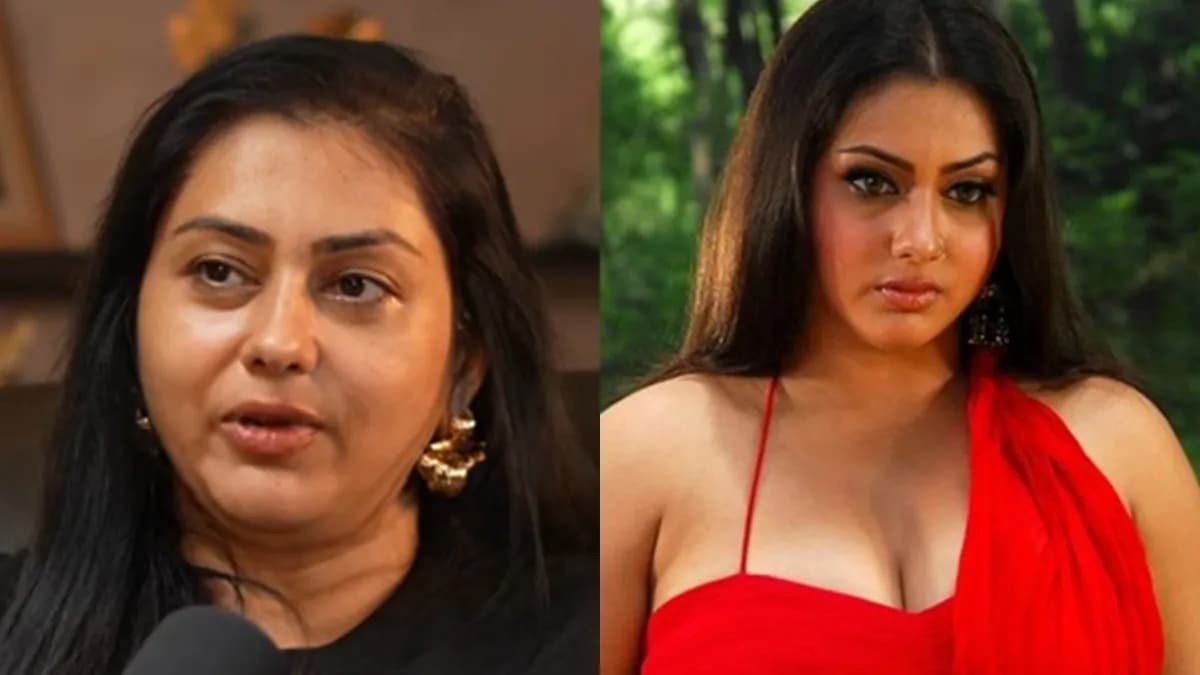
Actor Namitha, known to Malayalam audiences through films such as Brother and Red Chillies, has spoken publicly about a long relationship she calls the most significant of her life - and about the slow, painful way it ended. In an interview that has drawn wide attention in Kerala's entertainment circles this week, she described a partner who shielded her from the world for thirteen years, and then, in her account, turned that same protectiveness into a form of control.
The core of Namitha's account, as reported from the interview, is a contradiction she says she lived with for more than a decade. "He protected me from everyone," she said, "but what he did to me over those thirteen years - that is the story of how we broke up." She did not frame the relationship as abusive in legal terms, nor did she name the person involved, and the interview offers no specific incidents, dates or allegations beyond her own characterization of the dynamic. What she describes instead is an emotional pattern: a partner who positioned himself as her sole safeguard, and a relationship that, over time, left her increasingly dependent on him rather than free.
A Relationship That Resembled a Shield
Namitha presented the early years as genuinely caring. The man, by her telling, managed her surroundings, decided whom she could trust, and presented himself as the only person acting in her interest. To outsiders, she suggested, this looked like devotion. From the inside, she said, it gradually became something else - a structure in which her judgment was replaced by his, and in which questioning him came to feel like betraying the one person who had stood by her.
She was careful in the interview not to reduce the relationship to a single betrayal. Instead, she described the deterioration as cumulative, a slow erosion rather than one dramatic incident.
A Breakup She Says She Had to Choose
According to Namitha, the decision to end the relationship came after she recognized that staying meant continuing to live inside his version of events. She spoke about the breakup as something she had to actively choose, describing the difficult realization that the protection she had relied on was also the thing holding her back.
The account is her own and remains uncontested publicly; no response from the other party has been reported, and the interview offers no specific incidents, dates or allegations beyond her own characterization of the dynamic. That should temper how it is read. Still, the themes she raises - isolation framed as care, control experienced as love - are familiar to anyone who has followed similar conversations in the Malayalam film industry and beyond.
For Namitha, the year since the breakup appears to have been about reclaiming her own reading of her life. She described emerging from the relationship with a clearer sense of what she had allowed and why, and a resolve not to let the same pattern return. Describing what she expects from future relationships, she emphasized that love should not require surrendering one's own judgment, and that being cared for must not come at the price of being overruled. Both statements are her words as carried in the interview translation.
The Industry Angle
Namitha's willingness to discuss the relationship in detail marks a departure from the usual discretion that surrounds personal lives in Malayalam film circles. Actors in the industry have increasingly been candid about relationships and emotional health in recent years, but public reflection on the mechanics of an unequal partnership - as opposed to a simple announcement of a split - remains relatively rare.
Her account also underscores the difficulty of describing harm that leaves no visible evidence. She never alleges violence, financial wrongdoing or any act that would invite legal scrutiny. Instead, she argues that a person can be diminished by care itself when that care is administered as ownership. It is a difficult claim to prove and an easy one to dismiss, but her telling is unusually specific about the mechanics of the setup: the gatekeeping, the isolation, the slow transfer of authority from her to him.
What happens next is unclear. Namitha has not indicated whether she plans to address the relationship further, and the interview stands as her only public statement. For an audience that knows her primarily through films, the interview offers something different from a publicity piece - a personal accounting, delivered on her own terms, of thirteen years spent inside someone else's protective custody, and a breakup she presents as the act of reclaiming authorship of her own life. She did not ask for sympathy in the interview, and she did not offer a villain either; she offered instead a warning about what love can become when one person decides to speak for another.
Source: Filmibeat Malayalam