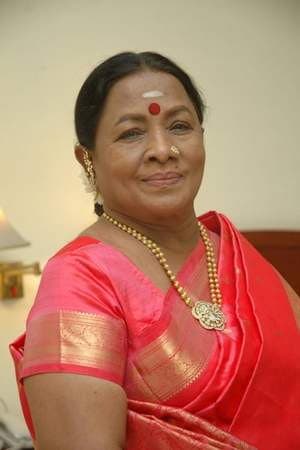
Veteran Malayalam actress Manorama once opened up about a chapter of her personal life that she had kept largely out of public view for decades - a marriage she has described as so damaging that she believed remaining in it would have cost her her life. The actress, whose career in Malayalam cinema spanned more than half a century, spoke in an interview about a husband who, she said, left her while she was still recovering in bed after childbirth, and about the fear and exhaustion that defined their time together.
That account is the only verified element behind the headline now circulating: Manorama herself. No feature film has been matched to this story, and the details below are drawn strictly from her own general recollections rather than from any production, release or box-office record.
A Household Where Fear Came Before Everything Else
Manorama's telling of the marriage was not built around dramatic single incidents but around an atmosphere - the sense that ordinary domestic life had been replaced by unspoken dread. Children in the home, she suggested, quickly learned to keep quiet, to avoid provoking a mood, to read a room before entering it. The fear was not the stuff of a single day's quarrel; it was the air the family breathed.
She did not present herself as a passive figure in that house. Her professional life in the Malayalam film industry was already considerable by then, with the schedules, the sets, the long hours that the work demanded. But the emotional arithmetic of the home, as she recalled it, left her with little space of her own. The fear ran constantly in the background, and the basic routines of a working mother - leaving for a shoot, returning home, sleeping - had to be negotiated against a mood that could shift without warning.
It is the kind of portrait that feels jarring when set beside the public image she carried for generations: the sharp, warm, funny presence remembered by Malayalam audiences in hundreds of films. That gap between the performer and the private person is what gives her testimony its weight. What looked like an unbroken career from the outside had, by her account, a domestic cost that was never visible on screen.
Left While Still in a Maternity Bed
The episode she described most starkly was the end of the marriage. According to her account, her husband walked away while she was still bedridden after giving birth. The abandonment came not in some gradual, negotiated separation but in the rawest possible period of a woman's life - physically recovering, caring for a newborn, and simultaneously absorbing the fact that the person who should have been beside her had chosen to leave.
She framed that moment as a kind of turning point, though not a clean or easy one. Even as she described the abandonment as a wrong done to her, she also suggested that the marriage could not have continued without destroying her. The departure, painful as it was, removed a threat she had been living under, and survival - for herself and for her children - became the priority that guided the years that followed.
In interviews she returned again and again to the idea that living in that marriage would have ended in death. She was not speaking in metaphor. She described a sustained condition of fear that wore down the body and the mind together, and she presented her own survival as something that required leaving, not endurance. The sentence that gives the headline its force - that continuing the marriage would have been fatal - was, by her telling, a simple statement of fact about what she had been living through.
Why She Chose to Speak Now
Manorama's decision to revisit that period late in her life gave Malayalam cinema one of its more revealing behind-the-scenes accounts of a woman's working life. Her story registers on two levels. The first is personal: a career that audiences knew intimately, and a private life they barely knew at all. The second is collective. It puts a familiar question in a different frame - how an industry that celebrated her on screen could coexist with a domestic reality that, as she described it, was dangerous.
Her testimony also raises a broader point about the era in which she built her career. In the Malayalam film world of her generation, actresses were expected to project a composed, even cheerful, public presence, and marriage itself was treated as the natural center of a woman's life. A performer who stood up and said plainly that her marriage had been dangerous, that her husband had left her while she was recovering from childbirth, and that leaving had been a question of survival was speaking against a prevailing silence.
Manorama's screen work has been written about endlessly. Her own account shifts the emphasis. It is a reminder that behind a long and celebrated career in Malayalam cinema there can be an unchronicled history of fear and resilience - and that, in her case, the resilience is the part she wanted on the record.
Source: Filmibeat Malayalam