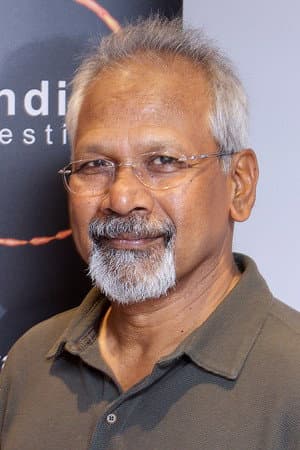
A recent Malayalam-language entertainment headline has stirred fresh discussion about access and hierarchy in Indian cinema, asking why some industry figures reportedly cannot even get close to Aishwarya Rai - and linking that distance to how Mani Ratnam's dates are secured. The framing, which translates roughly to the question of why certain people cannot approach the actress while the director's calendar is obtained, has circulated widely as a talking point. No specific film project has been matched to the headline, and the only verified figure at its centre is Mani Ratnam himself, so the discussion sits at the level of industry observation rather than a confirmed production announcement.
That distinction matters. In the absence of any named project, cast confirmation or official statement, the story is best read as commentary on the way access works inside the film business rather than as reporting on a particular shoot. Still, the question it raises is one that recurs often in Indian cinema: why some names command immediate attention while others wait at the door.
Why Mani Ratnam's Calendar Is Different
Few filmmakers in India carry the kind of scheduling weight that Mani Ratnam does. Across a career spanning decades, he has built a body of work that actors, technicians and financiers treat as a career milestone rather than just another assignment. That reputation has a practical consequence - his dates are not casually available, and the process of securing them is widely understood to be long, structured and selective.
For a director with that profile, a film is typically planned well in advance. Story, casting and production timelines tend to move together, and the window for joining a project is narrow. The headline's suggestion that getting Mani Ratnam's dates is itself an achievement is therefore not surprising; it reflects how demand concentrates around a small number of filmmakers whose involvement is treated as a guarantee of serious attention.
The flip side of that concentration is the perception of distance. When a director's schedule is locked early and guarded closely, those outside the inner circle can feel shut out - and that is the idea the headline leans on when it contrasts access to the director with access to the actress.
The Aishwarya Rai Factor
Aishwarya Rai occupies a peculiar place in this conversation. She is among the most recognised Indian actors internationally, with a career that has combined mainstream cinema, international appearances and a public profile that extends well beyond film. That visibility has always come with controlled access: public appearances are managed, interviews are selective, and professional proximity is not the same as personal proximity.
The headline's phrasing plays on that gap. Being unable to "even get close" to her is presented as a marker of standing within the industry - a way of saying that access to a star of her magnitude is itself a form of currency. It is a familiar trope in entertainment writing, where physical and professional proximity to major names is read as a signal of influence.
What neither the headline nor the available information establishes is any specific incident, meeting or project involving Aishwarya Rai and Mani Ratnam. The two names are connected in public memory through their past collaborations, but nothing in the verified material points to a current production, negotiation or dispute. Readers should treat the framing as a prompt for discussion rather than a report of something concrete.
Reading the Headline Carefully
Malayalam film journalism has a long tradition of punchy, question-led headlines, and this one fits that pattern. The interrogative form - asking why the director's dates are obtainable while proximity to the actress is not - invites the reader to supply the answer. That structure is effective for engagement but leaves the underlying claim unverified.
This is exactly the kind of story where the absence of a matched film matters. Without a project, there is no casting to confirm, no schedule to check and no statement from any party to weigh. The only solid element is Mani Ratnam's standing as a filmmaker whose time is in demand, which is uncontroversial and widely documented.
For now, the takeaway is less about a specific development and more about how the industry's informal hierarchies get talked about. Access to a major director and access to a major star are both scarce, both negotiated, and both frequently used as shorthand for where someone stands. Whether that shorthand tells us anything new about Mani Ratnam or Aishwarya Rai is doubtful - but it does tell us something about how film audiences and outlets like to frame the question.
Source: Filmibeat Malayalam