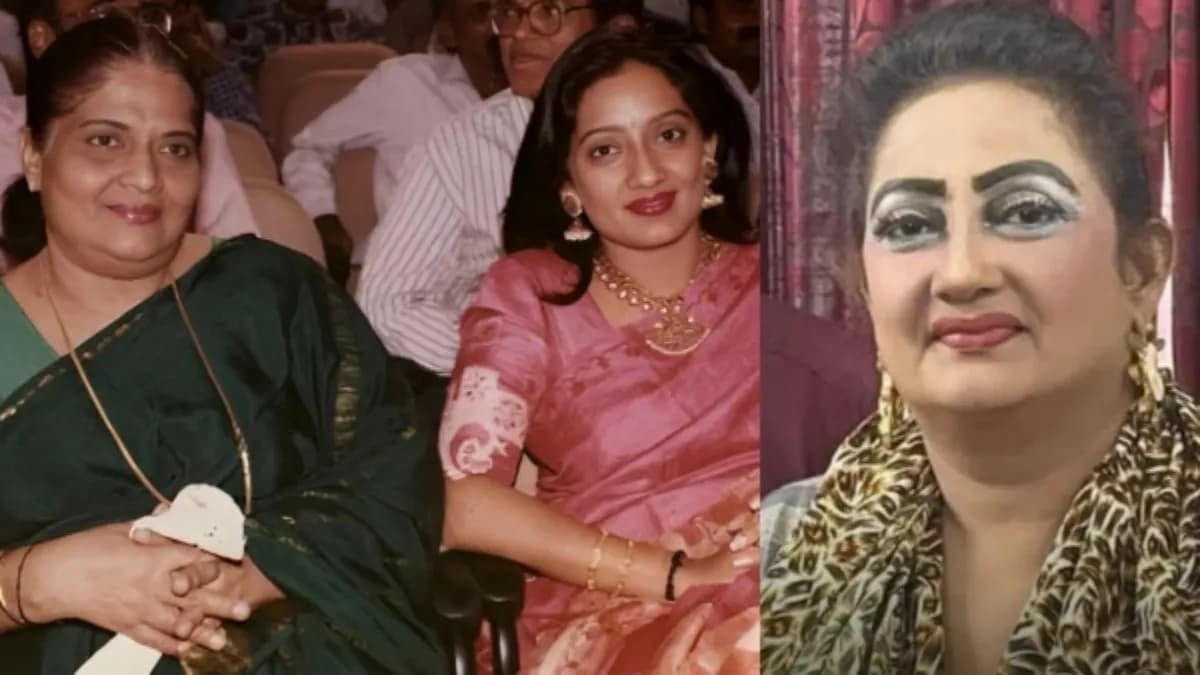
The Malayalam entertainment world is once again turning its attention to the long and painful public saga surrounding Kanaka, the veteran actor whose life off screen has often proved as dramatic as any role she played on it. A fresh round of discussion has been prompted by remarks attributed to her father, in which he is said to have described his wife as a sex worker and his own daughter as mentally unstable. The claim that Kanaka had no authority to make decisions of her own has also resurfaced in the conversation, alongside references to the considerable wealth attached to her family. The details are distressing, and they land at a time when questions about how the actor was treated, both inside her home and in the wider public sphere, are still far from settled.
At the centre of the renewed debate is the assertion, attributed to her father, that Kanaka was not in a position to decide anything for herself. Such a characterization carries enormous weight. If accepted at face value, it suggests a life in which a working actor's choices, finances and personal autonomy were being spoken for by others. Supporters of Kanaka have long argued that she was surrounded by people who sought to control her, and that the narrative about her mental state was used to justify that control rather than to help her. The latest remarks appear to reinforce that suspicion for many observers, who see in them an attempt to define the actor entirely through the words of her family.
Allegations That Go to the Heart of a Family
The statement about Kanaka's mother is perhaps the most startling element of the episode. To publicly describe one's own wife in those terms is a serious claim, and it raises immediate questions about the household in which Kanaka grew up and the atmosphere that shaped her early years. In the Malayalam film industry, Kanaka was known for her screen presence and for a career that placed her in front of audiences from a young age. What happens within a family, away from the cameras, rarely matches the image projected on screen. Here, the gap between the two appears especially wide.
The description of Kanaka herself as mentally unstable has also drawn sharp reaction. Mental health is a subject the industry has begun to discuss more openly in recent years, but it remains one where stigma travels quickly. When a family member makes such a characterization publicly, it can shape how the public remembers a performer for years. Critics argue that labels of this kind have often been used to discredit women who assert themselves, and that in Kanaka's case they served to undermine her credibility whenever she spoke about her own life.
The Wealth Factor
Running through the story is the question of property. The reference to an abundance of assets is not incidental. Whenever a family dispute involves significant wealth, the motives of everyone involved come under scrutiny, and the public tends to read such statements through that lens. Kanaka's earnings from a successful acting career, and the question of who manages or benefits from them, have been a recurring concern in discussion of her circumstances. For many who have followed her story, the suggestion that she had no independent decision-making power sits uneasily beside the reality of a woman who built a career of her own and accumulated assets through her work.
The actor has, over the years, given interviews that touched on her personal struggles, and those interviews have been revisited by fans and commentators alike in light of the latest remarks. The recurring theme is one of a performer who felt unheard, and of a family dynamic that outsiders can only guess at. Public sympathy for Kanaka has been considerable, and it has only grown as more of this private history is aired in the open.
A Story Still Unfolding
It is important to note that this is a matter involving real people and real pain, not a plotline to be resolved by the final scene. Family disputes of this nature are rarely settled in the court of public opinion, and the version of events that emerges in headlines is seldom complete. What the latest remarks do achieve is to keep the conversation alive, ensuring that the questions surrounding Kanaka's autonomy and her family's role in her life are not quietly forgotten.
For an industry that has produced some of the most celebrated women in Indian cinema, the case remains uncomfortable. Malayalam cinema has given audiences actors of extraordinary talent, and Kanaka is remembered among them. Yet the story that now dominates discussion of her name is not about a performance or a film. It is about whether she was allowed to be the author of her own life. The answer, on the evidence of these remarks, appears to be one that many of her admirers will continue to demand, and continue to dispute, until the full picture is known.
Source: Filmibeat Malayalam