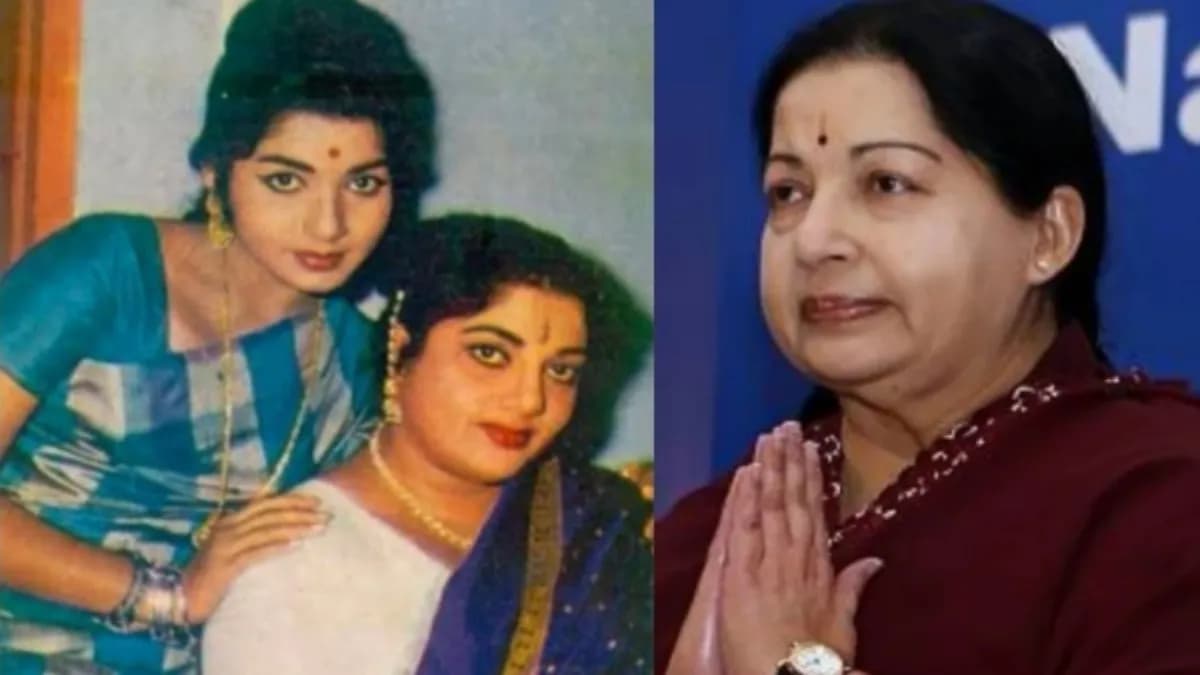
The passage of time has done little to soften one of the most searing personal regrets in the life of J. Jayalalithaa, the late chief minister of Tamil Nadu and a former screen icon. A widely circulated recollection now brings back into focus the painful episode involving her mother, Sandhya, whom she is said to have spoken to harshly in a moment of frustration, a clash that left the older woman deeply wounded. According to the account, Sandhya never recovered from the hurt caused by her daughter's words, and her eventual death came as a shock from which Jayalalithaa found it hard to recover. The story resonates far beyond politics, touching on a theme that many families recognise: the argument that cannot be taken back and the remorse that arrives too late.
The narrative centers on a confrontation between mother and daughter in which harsh words were exchanged. In the retelling, it was Jayalalithaa's own sharp language that cut deepest, and Sandhya carried that injury with her. The suggestion that her passing was bound up with that emotional wound has circulated for years among those who followed the family's private struggles. The account does not offer a precise chronology, and it should be read as a piece of remembered personal history rather than a documented record. What emerges clearly is the sense of guilt that followed. For a public figure known for her steel and her command of the political stage, this was a wound that no amount of power could close.
The relationship between Jayalalithaa and her mother has long drawn interest in Tamil Nadu, where the actress-turned-politician's life was followed as closely as any film she ever made. Sandhya, herself associated with the world of cinema, was a formative presence in her daughter's early years. Their bond was not without friction, and the reported quarrel became one of the more painful chapters in a life that already carried its share of turbulence. Those who knew the family described Jayalalithaa's grief after her mother's death as genuine and lasting, the kind of sorrow that reshapes a person. The episode has since become a reference point in countless retellings of her personal story, a reminder that even the most formidable figures carry private grief.
The Weight of Words Left Unsaid
What gives the account its emotional force is its universality. It is not the story of a chief minister but of a daughter who realised too late how much damage a sharp tongue can do. The reported exchange, in which Jayalalithaa addressed her mother with a harshness that the older woman felt keenly, stands as a cautionary tale about the cost of anger within the family circle. The claim that Sandhya's hurt contributed to her death adds a layer of tragedy that makes the recollection difficult to dismiss. Jayalalithaa's subsequent difficulty in coming to terms with the loss suggests that the argument haunted her long after the words had faded.
The recollection also raises questions that no biography can fully answer: how much of the regret was rooted in guilt, and how much was simply the raw pain of losing a parent. In the years after her mother's death, Jayalalithaa built a public persona defined by control and reserve, rarely allowing glimpses of the private sorrow that the episode describes. Yet the story persists, passed along by those who believe it reveals something essential about her. The intensity of the grief, as the account frames it, matches the intensity of the regret, and it is that pairing which continues to draw attention.
A Recollection That Still Moves Audiences
That such a personal account continues to circulate speaks to the enduring fascination with Jayalalithaa's life, which has inspired books, documentaries and biographical films. Her journey from a celebrated actress to one of the country's most powerful political leaders carries an almost cinematic sweep, and the human frailties behind the public image give that story its depth. The quarrel with her mother, and the remorse that followed, has become part of that legacy, quoted in conversations about fame, family and the things people wish they could unsay.
For readers of the account, the message arrives with quiet insistence: speak kindly to the people closest to you, because time does not always allow for an apology. The story of Jayalalithaa and Sandhya, as it is remembered, remains a mournful illustration of that truth, and it is likely to be retold for as long as her remarkable life is discussed.
Source: Filmibeat Malayalam