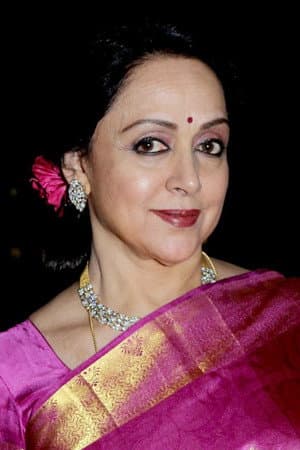
The life of veteran actress Hema Malini has once again become a talking point, with a widely circulated account of her personal history drawing attention to the unusual circumstances of her marriage to actor and politician Dharmendra. According to that account, the actress entered the household as a wife while another home - and another family - remained part of the arrangement, a situation that has long fascinated and perplexed observers of Indian cinema in equal measure.
The specific claim under discussion is that Dharmendra did not ask Hema Malini to separate from his first wife and children before the marriage, and that she went on to live as a wife in a household that was not the only one he maintained. The headline summarizes this as a life lived as a wife in another home. No new film project is attached to the story; the only verified subject here is Hema Malini herself, and the discussion is entirely about her biography rather than any screen release.
A Marriage That Defied Convention
Hema Malini and Dharmendra married in 1980, at the height of her career as one of Hindi cinema's most bankable leading ladies. Dharmendra was already married to Prakash Kaur, with whom he had children, and that first family remained intact. What set the arrangement apart, as the account notes, was that there was no insistence that the earlier marriage be dissolved or that the children of the first marriage be cut off. Hema Malini is said to have accepted the situation as it was, and the two households continued in parallel.
For a star of her stature, the decision carried obvious risk. In an era when the film industry and the press scrutinized actresses far more harshly than their male counterparts, a marriage of this kind invited endless commentary. Yet Hema Malini built a public life that rarely addressed the arrangement directly, choosing instead to let her work and her composure speak for her.
Two Homes, One Public Life
The actress and her husband went on to have two daughters, Esha and Ahana, and the family based in Mumbai became a familiar presence in the city's cultural and social circles. Dharmendra's first family, meanwhile, maintained its own identity, and his sons from that marriage - Sunny and Bobby Deol - became successful actors in their own right. Over the decades, the two sides of the family have appeared together at public events, and Dharmendra has himself acknowledged the complexity of his personal life in interviews, though he has generally kept the details private.
What the account highlights is the extent to which Hema Malini carved out a defined space for herself rather than dissolving into the shadow of a complicated marriage. She continued acting into the 1980s and beyond, moved into direction and production, and later became a prominent dancer performing classical pieces on national stages.
From the Silver Screen to Public Office
Hema Malini's career has been one of the longest and most varied in Indian entertainment. She was among the leading heroines of the 1970s, pairing with the biggest stars of the period and earning the nickname "Dream Girl" from audiences. In later years she turned to television, choreography and stage productions, and she also entered politics, serving as a Member of Parliament. Her public image has remained remarkably steady through all of it - disciplined, poised and rarely drawn into controversy by her own choosing.
That composure is part of why the story of her marriage continues to resurface. Readers remain drawn to the question of how a woman at the peak of her fame chose a path that ran against the expectations of the time, and how she sustained it for more than four decades without letting it define her career.
Why the Story Still Resonates
The renewed interest is not tied to any film or anniversary. It is a reminder of how closely audiences still follow the personal lives of the stars who shaped their youth, and how much curiosity surrounds a marriage that was never fully explained by the people in it. Neither Hema Malini nor Dharmendra has issued a fresh statement on the matter, and there is no indication that the family intends to address it publicly now.
For readers in Kerala and elsewhere, the story is a familiar one told again: a celebrated actress, a marriage outside the conventional mould, and a life that continued to be lived on her own terms. Whether viewed as a compromise or a quiet assertion of independence, the arrangement remains one of the most discussed personal chapters in the history of Indian cinema - and one that the actress herself has chosen, for the most part, to leave unspoken.
Source: Filmibeat Malayalam